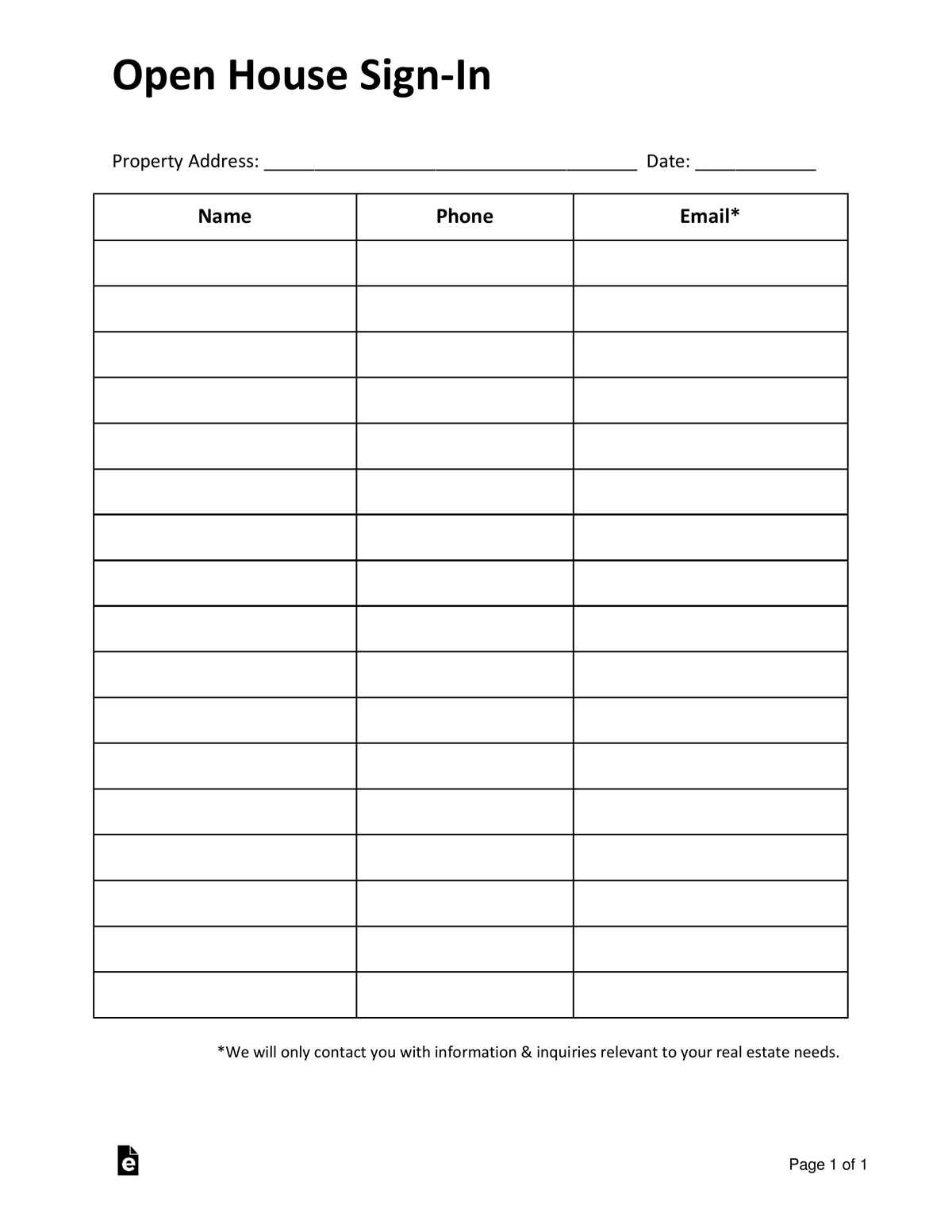
Use a customizable visitor log to record names, contact details, and comments from attendees at your next property viewing. This approach helps maintain a reliable database for follow-ups and marketing outreach.
Include columns for phone numbers, email addresses, and preferred contact methods to streamline post-event communication. Adding a notes section allows you to track specific interests or questions from each participant.
Print or distribute the form digitally to ensure every guest can register easily. Using a standardized format reduces errors and keeps records consistent across multiple showings or events.
Organize collected information immediately after each visit by sorting contacts by interest level or follow-up priority. This enables timely responses and helps convert leads into confirmed appointments or offers.
Free Printable Open House Sign In Sheet for Tracking Visitors and Contacts
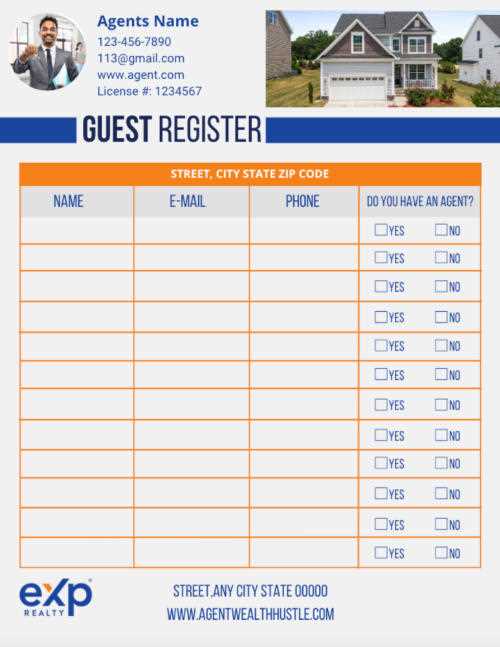
Prepare a visitor log with clear categories to capture full names, phone numbers, email addresses, and preferred contact methods. Include extra fields for comments or property preferences to gather actionable insights for follow-ups.
Arrange the form for quick registration by using a table layout or numbered list. Suggested format:
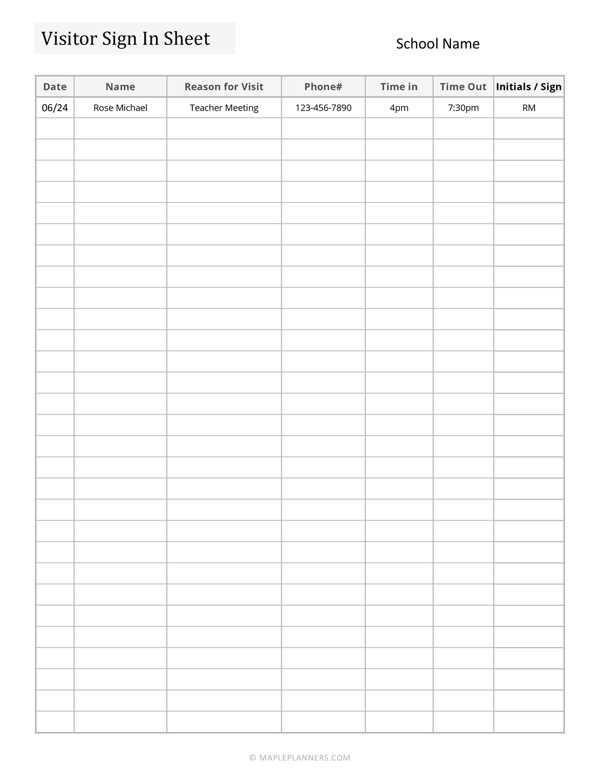
- Name
- Phone
- Preferred Contact Method
- Notes or Questions
This structure minimizes mistakes and ensures complete records.
Store and organize collected data immediately after the event. Use spreadsheets or CRM tools to sort contacts by interest, appointment requests, or specific inquiries. Regular updates of the contact list allow timely communication and better conversion of attendees into confirmed clients or participants.
How to Customize Your Open House Sign In Sheet for Different Properties
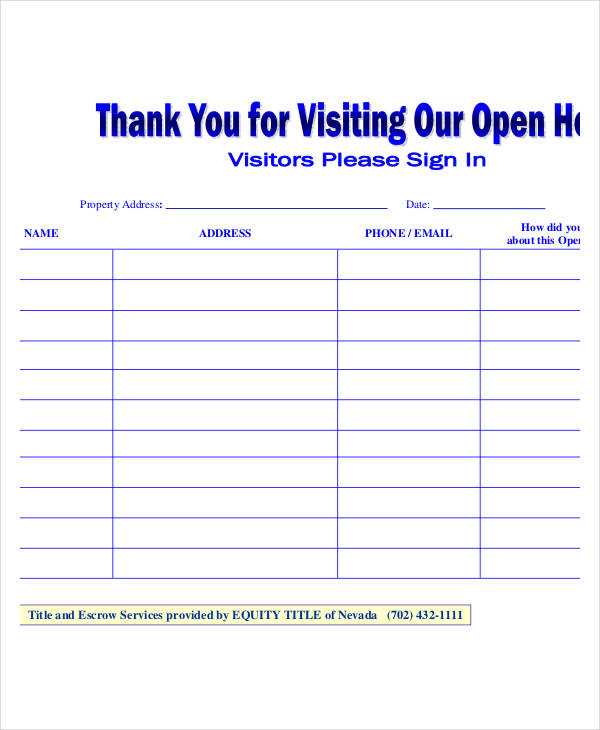
Adapt the visitor log for each property type by adjusting fields according to size, amenities, and target audience. For family homes, include sections for the number of children and desired room types.
Highlight unique features of the property in the form header or notes column. This encourages attendees to record specific interests, such as garden space, garage capacity, or proximity to schools.
Use different color codes or layouts for residential, commercial, and rental properties. Color differentiation makes it easier to organize multiple events and prevents confusion when reviewing responses later.
Include optional checkboxes for preferences like preferred floor, number of bedrooms, or pet-friendly features. This provides quick insights without requiring long written responses from visitors.
Adjust the contact method options depending on the property’s communication strategy. Some events may prioritize email newsletters, while others benefit from immediate phone follow-ups.
Add date and time slots for multiple showings of the same property. This allows attendees to indicate which session they attended, making it easier to track interest trends and schedule follow-ups.
Provide space for agent notes to record observations about visitor questions, feedback, or objections. These details improve personalized follow-up and help refine marketing strategies for similar properties.
Review and test the customized form before distribution to ensure clarity and completeness. Verify that all fields are easy to understand and that the layout accommodates all necessary data for proper tracking and analysis.