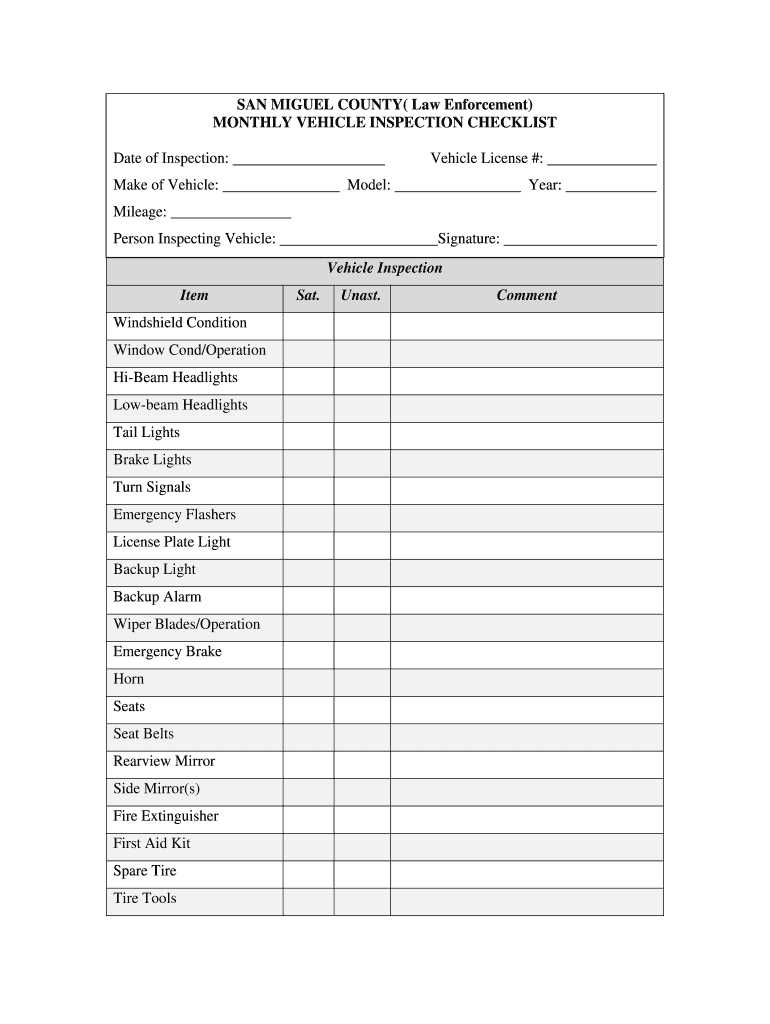
Start by organizing your car’s upkeep with a detailed checklist that covers all critical components. This will help you monitor the state of your car consistently and prevent potential issues from going unnoticed. Make sure your checklist includes areas such as tire pressure, brake function, lights, fluid levels, and windshield condition.
Having a printed checklist makes it easier to inspect your vehicle regularly. You can note down any issues immediately, which is a more reliable method than trying to remember everything between visits to a mechanic. It’s a good practice to fill out the form during routine checks, such as before long trips or seasonally, to keep an accurate record of your car’s health.
For added convenience, choose a template that suits your needs, and ensure that all necessary sections are clearly laid out. A well-structured sheet will allow you to track any recurring problems, making it easier to identify patterns or areas that need immediate attention. Having a record at hand also helps when dealing with maintenance providers or preparing for inspections.
How to Organize Your Car’s Maintenance with an Easy Checklist
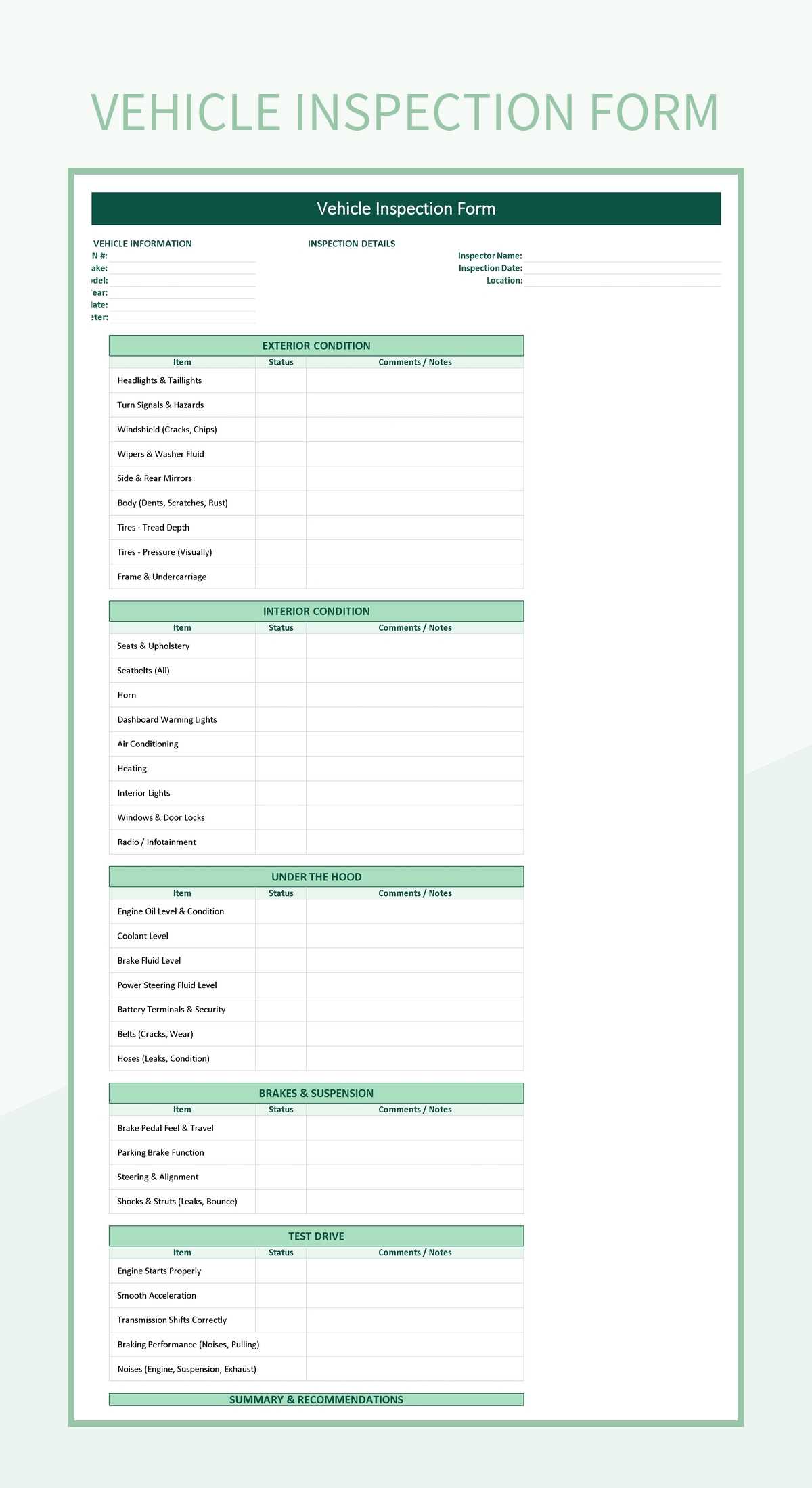
A simple checklist can help you track the condition of your car without missing any crucial details. When creating one, ensure that all major areas are covered, including the engine, tires, brakes, and lights. This approach not only saves time but also keeps your maintenance routine consistent.
Start by focusing on safety-related components like brake pads, tire tread, and fluid levels. Regularly monitoring these elements helps avoid accidents and unnecessary breakdowns. For instance, checking tire pressure and tread depth every month can prevent uneven wear and improve gas mileage.
Be sure to include a section for visual inspections, such as the condition of the windshield and mirrors. Scratches or cracks on the glass can significantly impair visibility. Mark these issues down immediately, and address them before they become safety hazards.
- Check tire pressure and tread every month
- Inspect fluid levels such as engine oil, coolant, and brake fluid
- Verify that all lights (headlights, taillights, blinkers) are working
- Look for cracks or chips in the windshield
Another helpful feature is adding a column for notes or repairs needed. This ensures that you stay on top of tasks that may require a mechanic’s attention. Keeping detailed records can also help you spot recurring issues that might signal larger problems.
For those using these checklists for regular inspections, consider organizing them by seasons or trips. For example, before a long drive, you can quickly check the most critical systems, like brakes, tires, and fluid levels. Seasonal checks help ensure your car is ready for harsher conditions like winter or summer driving.
- Winter: Check antifreeze levels and tire conditions
- Summer: Ensure cooling systems and air conditioning are functioning
Once your checklist is set up, print a copy and keep it in your car for easy access. This ensures you can complete a quick check before each trip. It’s an easy way to stay proactive and prevent minor issues from turning into costly repairs.
Finally, remember that keeping track of your car’s health goes beyond simple maintenance. Having a well-maintained record not only improves safety but also helps with resale value. Buyers appreciate knowing the history of care given to a car, which can set your vehicle apart from others on the market.
How to Download and Print a Vehicle Inspection Form
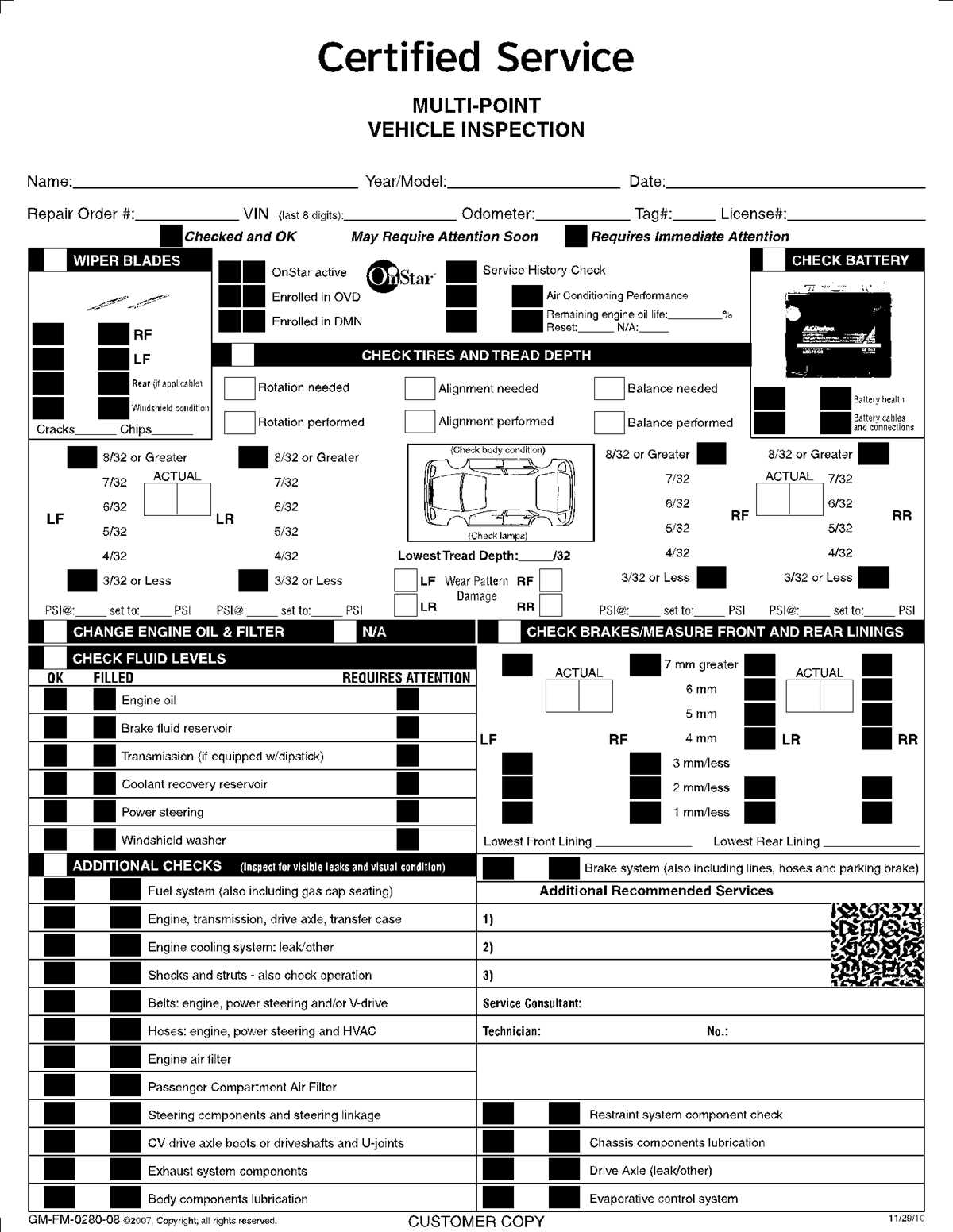
To download the checklist, visit a trusted website that offers templates for this purpose. Most of these websites allow you to select the format you prefer, such as PDF or Word, which can easily be printed at home. Once you find the template that suits your needs, click on the download link to save the file to your device.
After downloading, open the document on your computer and review it for accuracy. You may want to adjust some sections based on your specific needs or preferences, such as adding extra fields for personal notes or additional vehicle components. Once satisfied, select the “Print” option from your device’s menu.
Ensure your printer settings are correct before printing. Use standard paper size for the best results, and double-check that the document fits correctly on the page to avoid cutting off any information. Print a few copies for use during future maintenance checks and keep them in your car for easy access during inspections.