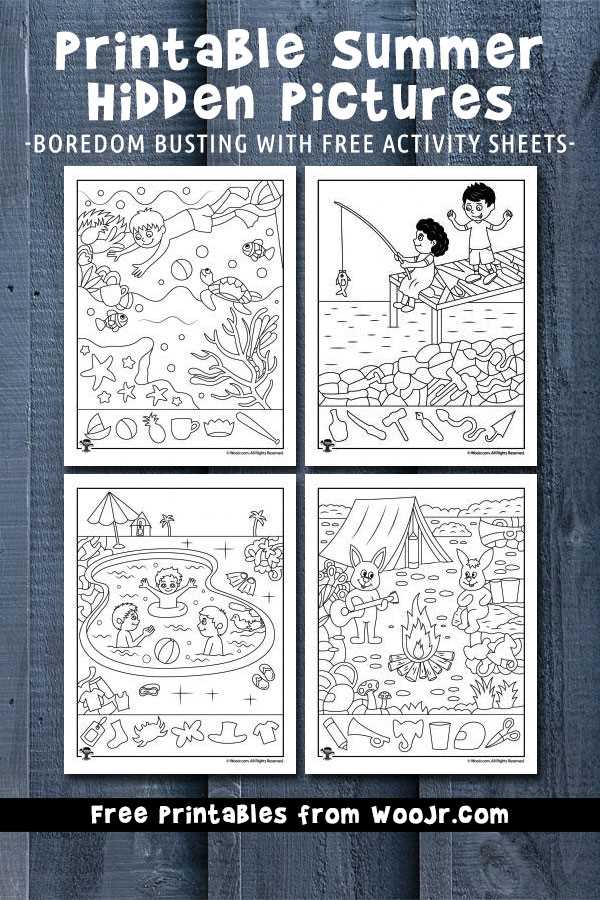
Select worksheets that match a child’s visual scanning ability and attention span. For ages 4–6, choose scenes containing 5–8 small objects placed in clear, uncluttered illustrations. For ages 7–9, increase target items to 10–15 and add overlapping elements to raise difficulty.
Use high-contrast black-and-white drawings for ink-saving home printing, or grayscale shading for more complex search tasks. Line thickness should not drop below 0.5 pt to prevent detail loss on standard A4 or Letter paper.
Control complexity through object size and background density. Tiny targets under 1 cm increase search time significantly, while busy backgrounds filled with repeated shapes improve discrimination skills. Limit total search time to 15 minutes for younger children and 25 minutes for older learners.
Provide a checklist of items below each scene and leave space for marking completed discoveries. A separate answer key helps adults verify accuracy without revealing solutions during independent work.
Find the Hidden Picture Printables
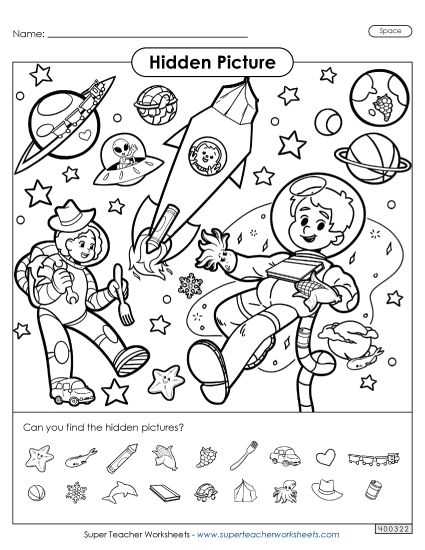
Choose themed search worksheets based on skill level and visual tolerance; younger children perform best using simple scenes containing 6–8 target objects, while older learners handle 15–20 items placed among overlapping shapes and patterned backgrounds.
- Keep target object size above 1 cm for early readers
- Use bold outlines at 0.5–0.7 pt for clear home printing
- Limit total elements on page to under 60 for ages under 7
- Increase distractor similarity to raise challenge
Organize object lists in a single column below illustration rather than scattered across margins; this reduces eye travel distance and improves tracking accuracy during scanning tasks.
- Scan scene from left to right in horizontal bands
- Circle each discovered item immediately
- Cross it off checklist to avoid duplicate counting
- Recheck dense areas after completing first pass
Print on matte paper to prevent glare under classroom lighting; glossy surfaces create reflection that slows visual discrimination. Use 100–120 gsm paper weight to prevent marker bleed-through.
Store completed sheets in labeled folders by difficulty tier so progression can be measured by time to completion and number of missed objects rather than guess-based correction.
How to Select Age Appropriate Hidden Object Worksheets
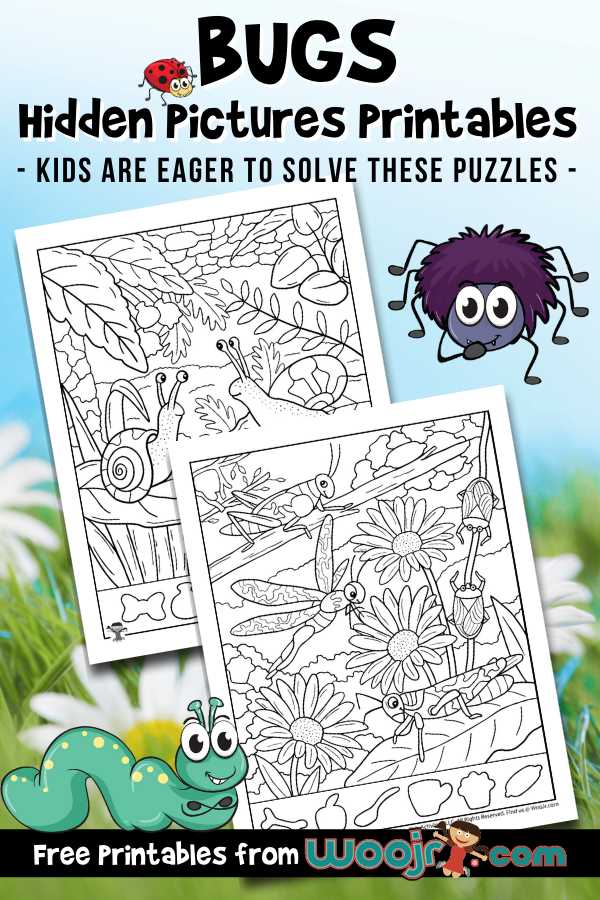
Match object count and visual density to a child’s developmental stage. Ages 4–5 manage 5–7 clearly outlined targets placed in uncluttered scenes, while ages 6–8 can handle 10–14 items blended into moderate background detail. For ages 9 and above, raise complexity by adding partial overlaps and similar shapes that require closer inspection.
Adjust image scale and line clarity. Younger children need larger illustrations occupying at least 70 percent of page space, with thick outlines above 0.6 pt. Older learners benefit from smaller, tightly spaced elements that increase discrimination demands and scanning accuracy.
Evaluate reading load in item lists. Pre-readers should use visual icons instead of text labels, whereas independent readers can work from written checklists containing descriptive phrases. Time each activity; if completion exceeds 20 minutes for early grades or 30 minutes for upper elementary, reduce object density rather than extending session length.