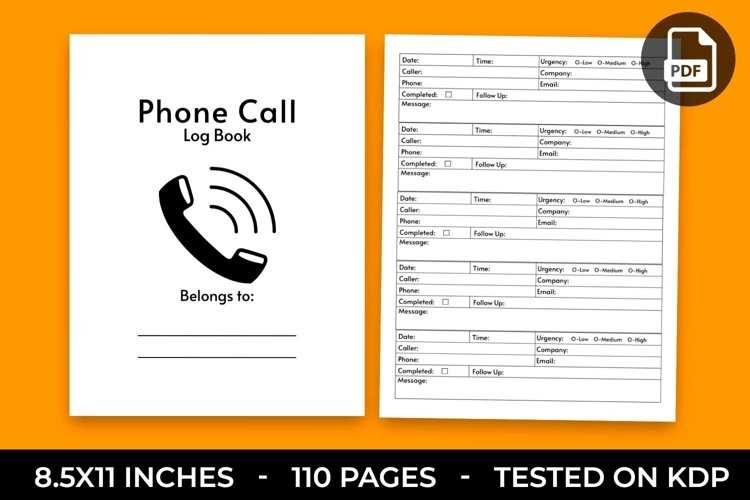
Start by creating a sheet that allows you to record the most crucial information about each phone interaction. Include fields for the date, time, the name of the person or company, and the purpose of the call. This simple structure will help you stay organized and quickly access details when needed. You can even add sections for notes or follow-up actions to ensure no important tasks slip through the cracks.
After creating the structure, print it out for regular use. A printed copy is convenient, especially for those who prefer working offline or need a tangible record for easy reference. Keep the sheets in a binder or folder to organize the calls by date or category, which will help you retrieve information faster.
If you’re using this for work, make sure the document is clear and straightforward to help you focus on the essentials. Consistency in how you fill out each section will make a huge difference in the efficiency of your system. Avoid unnecessary details, focusing on the most important aspects of each conversation.
Regularly review your filled-out sheets to identify patterns, trends, or recurring issues. This method will not only help you stay organized but also improve how you manage phone communication in the long run.
How to Customize a Printable Call Log Template for Personal Use
To tailor your sheet for personal use, first determine what information is most relevant. A basic setup includes the date, contact name, purpose of the call, and key takeaways. Adjust these fields according to your specific needs, such as adding a space for follow-up reminders or a section for call duration if you need that detail.
If you deal with various types of calls, creating categories will make it easier to organize them. For instance, create separate sections for personal calls, work-related interactions, or calls with service providers. This simple adjustment will help you instantly locate specific conversations when needed.
Consider the layout. Some users prefer a vertical format with the date and name listed in rows, while others might find a table-style layout more useful. Decide what fits best with how you manage information and how you access it most frequently. A clean, simple design reduces the chance of missing important details.
If you like to have multiple options on hand, you could create different versions of your document. One version could be minimal, focusing on the most important data, while another could include extra fields like ‘resolved issues’ or ‘next steps.’ This allows you to choose the format that best suits your situation at the time of use.
For a more personalized touch, adjust the font style and size. Choose a clean, readable font and avoid overly decorative types that might clutter the page. Larger fonts for headings and smaller text for details can help make your sheet more visually appealing and easier to scan quickly.
Consider using color to organize or highlight specific areas, such as red for follow-ups, green for completed tasks, or yellow for items that need attention. A bit of color can make it easier to navigate your entries and quickly identify important points.
Finally, always review and update your document regularly. As your needs evolve, the fields or categories you initially set up may need to be adjusted. Customization is an ongoing process, and as long as it helps you track important details efficiently, your document remains a useful tool. Keep it simple but functional.
Step-by-Step Guide to Printing and Organizing Your Call Log
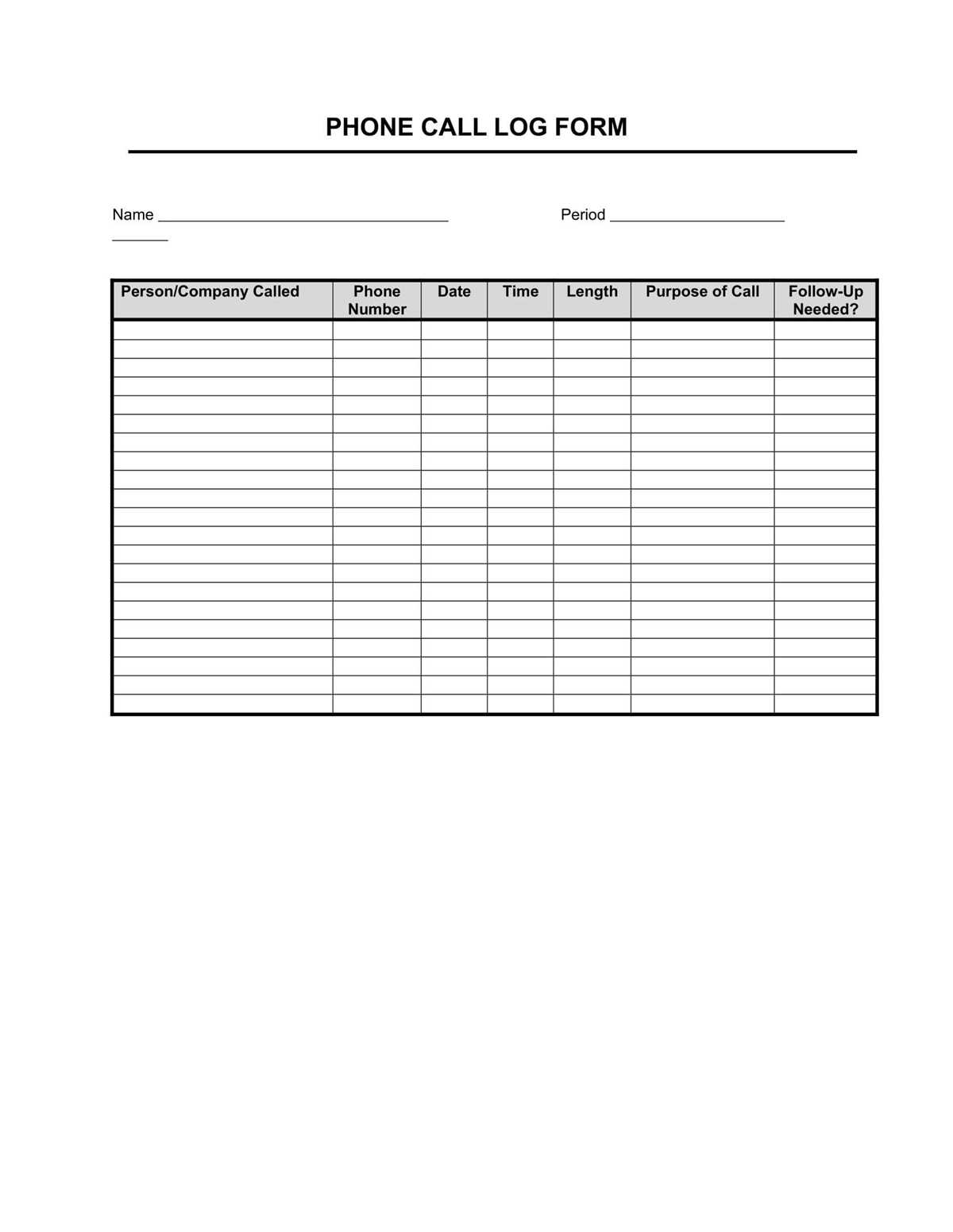
First, select the appropriate sheet format. Ensure your design includes all the necessary fields, such as date, contact name, and purpose of the interaction. Once you have customized it to your needs, it’s time to print. Adjust the margins and orientation based on how much space each entry requires to avoid cramped text.
Before printing, preview the document on your screen. This helps avoid wasting paper or ink. Check the alignment of all text, ensuring consistency throughout the pages. If you need multiple copies, adjust the print settings to scale your document or print several pages per sheet for more compact storage.
When the sheets are printed, organize them by placing them into a binder or folder. Use dividers or sections to separate different categories of interactions, such as personal calls or work-related communications. Color-coded tabs can be helpful for quick identification.
Consider keeping a master index sheet at the beginning of your binder. This will help you locate specific records faster by cross-referencing names, dates, or topics. You can also create an alphabetical or chronological index depending on your preference.
Regularly update your binder by adding new sheets and removing outdated ones. For best results, keep your entries consistent and easy to read. Over time, this method will help you maintain a well-organized record system for any phone conversations you need to track.