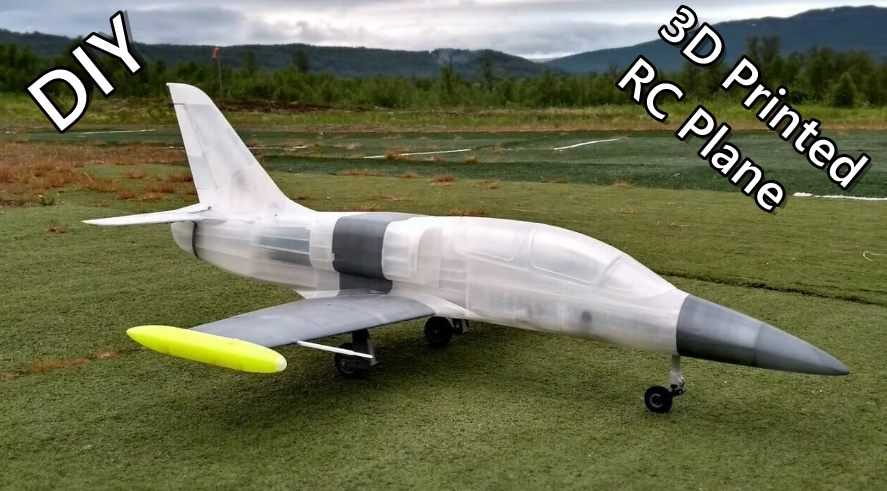
If you want to bring your own aircraft creations to life, a 3D printer is a great tool for the task. You can create highly detailed, scale models with accuracy, and depending on the materials used, even create functional prototypes. Start by selecting the right 3D printer with high precision and the ability to handle complex designs.
Many designers recommend choosing FDM (Fused Deposition Modeling) or SLA (Stereolithography) printers for intricate details. FDM printers are great for beginners and larger parts, while SLA printers excel at fine details and smooth finishes. For best results, always ensure your 3D printer is calibrated to avoid issues with layering and material adhesion.
After selecting a printer, it’s time to choose the right files. Websites like Thingiverse or MyMiniFactory offer free and paid designs. If you plan on creating a custom project, you can use software like Tinkercad or Fusion 360 to design your own parts. These tools allow you to manipulate components and adjust the scale for a more personalized creation.
3D Printed Aircraft Designs
For accurate and functional aircraft replicas, start by choosing the right material. PLA (Polylactic Acid) is the most commonly used due to its ease of printing and environmental friendliness. However, if you’re looking for a more durable structure, ABS (Acrylonitrile Butadiene Styrene) or PETG (Polyethylene Terephthalate Glycol) can offer greater strength and flexibility. These materials are ideal for creating larger parts that need more resilience or fine details that require precision.
In addition to material selection, the design’s complexity plays a significant role in the final result. Basic designs like simple planes with minimal details can be printed without much difficulty. However, intricate parts such as engines, wings, or landing gear require specific attention to detail. Using CAD (Computer-Aided Design) software like Fusion 360 or SolidWorks allows for precise modifications, ensuring that every component fits perfectly for assembly or testing.
Once you have the design ready and the printer set up, test the fit of your parts before finalizing the assembly. It’s crucial to check for any misalignment or warping that could affect the structure’s stability. Using a heated bed and ensuring the printer’s extruder is properly calibrated can minimize printing issues. After the printing is complete, sanding the edges and adding finishing touches can improve the overall look and function of the crafted aircraft.
Choosing the Right 3D Printer for Aircraft Designs
For precise and high-quality results when creating aircraft designs, a 3D printer with a high resolution is a must. Printers that offer a resolution of at least 0.1 mm can ensure that small details like wing curves, fuselage outlines, and engine components are well-defined. A high resolution will help to avoid rough surfaces or jagged edges that can affect the model’s appearance and function.
FDM (Fused Deposition Modeling) printers are a popular choice due to their affordability and ease of use. These machines work by melting filament and layering it to build the design. If you’re working with basic designs or larger parts, an FDM printer will suffice. However, for more complex or detailed parts, such as intricate engine components or smooth surfaces, SLA (Stereolithography) printers are a better option. SLA printers use resin and UV light to cure each layer, producing highly detailed results.
Another factor to consider is the build volume of the printer. If you plan to create large or multi-part aircraft, a printer with a larger build area will allow you to print the sections in fewer parts, reducing the need for post-assembly. A build volume of at least 200x200x200 mm is a good baseline, but if you’re designing larger projects, look for printers with a build volume of 300x300x300 mm or higher.
Material compatibility is another important consideration. Some 3D printers are compatible with a wide range of materials, while others are limited to certain types like PLA, ABS, or PETG. For creating functional aircraft parts that need durability, a printer that can work with stronger materials like Nylon or Carbon Fiber is ideal. These materials can provide the necessary strength for structural components while still maintaining lightweight properties.
Finally, consider the ease of use and support for the printer. Many modern 3D printers come with user-friendly interfaces, touchscreen controls, and easy setup processes. Some printers even come with pre-installed designs and online support, making them a good option for beginners. Make sure the printer you choose has accessible troubleshooting guides and a reliable customer support team in case you encounter any issues during your design process.