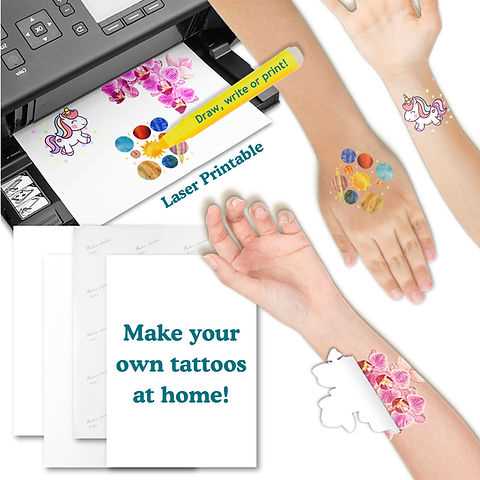
If you’re looking for a fun and quick way to design your own body art, consider using transfer sheets designed for printing custom designs. With the right materials, you can easily create your own designs at home without the need for expensive services or professional equipment.
Choose the right transfer sheets to ensure the designs will stick properly. Look for options that are compatible with your home printer and suitable for the type of design you want to create. Some sheets are better for intricate details, while others may be more suited for bold, simple designs.
Follow the printing instructions carefully. Most transfer sheets come with a guide that explains how to print and cut out your designs. Make sure to use high-quality graphics and settings for the best possible outcome. Once printed, these custom designs can be applied easily to the skin using a damp cloth.
HTML
Choosing the Best Transfer Sheet for Custom Designs
For creating high-quality, easily removable skin transfers, opt for products specifically designed for inkjet or laser printers. These specialized sheets are coated to allow smooth printing of intricate designs while ensuring durability once applied to the skin. Look for options that include a clear adhesive layer, which helps the image adhere firmly without peeling after contact with water or sweat.
Before printing, ensure your design is the correct size for the transfer medium you’re using. Most options allow you to resize images using standard graphic software, making it easy to personalize. It’s recommended to test print on a regular sheet first to check alignment and color output before transferring to the special material.
- Check the sheet’s compatibility with your printer type (inkjet or laser).
- Ensure that the adhesive coating is strong yet gentle enough for the skin.
- Choose sheets that are designed for easy application and removal without leaving residue.
For optimal results, apply the transfer to clean, dry skin. Press firmly for about 30 seconds, ensuring the image is fully transferred. Avoid movement during the transfer process, as shifting can result in smudging or incomplete prints. Once transferred, gently peel off the backing, revealing the image on your skin.
After application, the transfer will remain intact for several hours or up to a few days depending on skin type and exposure to moisture. For those seeking longer wear, consider using a top coat spray that seals the design and protects it from fading due to friction or sweat.
HTML
How to Choose the Right Transfer Medium for Printing
Select the right transfer material based on your printer type. Inkjet and laser printers require specific types of substrates. Inkjet-compatible sheets typically have a coating that ensures vibrant colors and clear details, while laser-compatible sheets offer stronger adhesion, making them ideal for more durable designs.
Choose sheets that are compatible with your design’s complexity. If you’re working with fine details or color gradients, opt for materials that support high-definition printing. A glossy finish on the sheet can enhance the sharpness and vibrancy of the final output, while matte finishes work better for subtle, more delicate designs.
- Consider a clear adhesive layer for easy application and removal.
- Check that the sheets are compatible with your printer’s ink type (dye or pigment-based).
- Look for materials with skin-friendly adhesives to minimize irritation.
Test the sheets by printing smaller designs on regular paper first to ensure the ink holds up and the image quality meets expectations. This step can help prevent wasting special sheets and allow for adjustments to your printer settings before committing to a final print.
For longer-lasting transfers, consider using a sealing spray after applying the image. This layer helps protect the print from smudging, fading, or peeling due to exposure to moisture or friction, allowing the design to last longer.