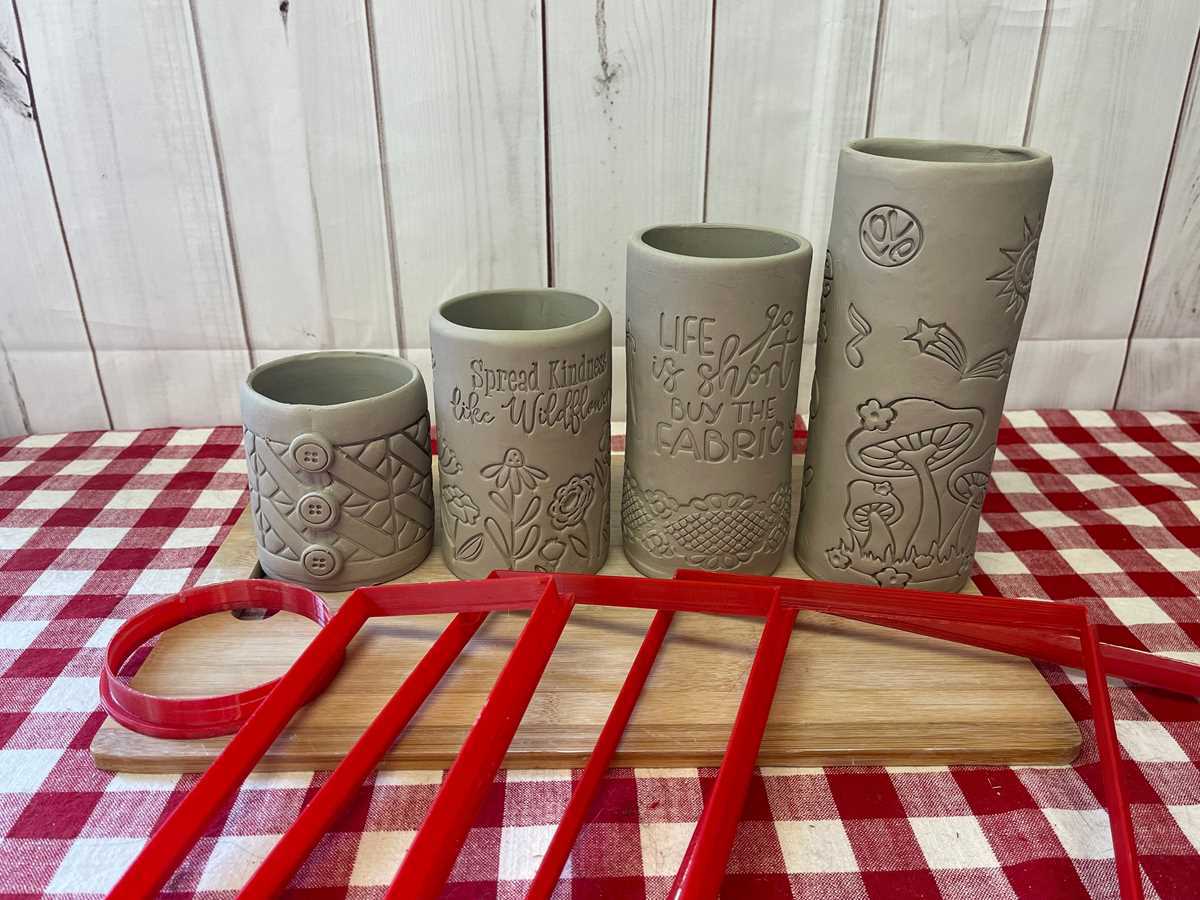
To achieve clean, consistent shapes in your ceramic work, start with a well-designed guide. A template allows you to shape your clay with precision, ensuring that all pieces align perfectly, whether you’re crafting functional items or decorative elements. Begin by selecting guides that match your project’s scale and complexity. For beginners, simple, basic shapes are the best choice, whereas more experienced artists can experiment with intricate designs.
One key consideration is material. Some guides are designed for soft clay, while others work best with firmer clay types. It’s important to choose the right one to avoid any distortion during shaping. Additionally, the thickness of the material used in your project should be taken into account when choosing a guide to ensure the pieces maintain their intended proportions. A well-sized template will prevent the need for frequent adjustments and help you maintain consistent results.
Once you’ve selected your template, it’s time to get hands-on. Carefully press your clay into the form, ensuring that it fills every corner. Avoid overworking the clay, as this can lead to cracks or an uneven finish. Templates not only save time but also bring a professional touch to your pieces. Whether you’re working on creating flat items like tiles or more complex forms, using the right guide will provide a solid foundation for your project.
Detailed Guide for Slab Pottery Templates
Start by selecting the correct pattern to suit your project. Choose one based on the size of your item and the complexity of the design. For beginners, simple geometric shapes or basic forms like rectangles and squares are ideal. Advanced projects, such as intricate vases or complex dishes, require more detailed guides. Consider whether your project requires smooth or textured surfaces to make the right choice.
Next, prepare your material by rolling it out to an even thickness. This ensures that your pieces will have uniform consistency. Use a rolling pin or slab roller to flatten the clay, making sure it’s smooth and free from air bubbles. The thickness should match the specifications of the design, usually between 1/4 to 1/2 inch, depending on the template you’re using.
Once your material is ready, place the template on the clay sheet. Use a sharp blade or utility knife to carefully trace around the edges of the template, cutting along the lines with precision. Be sure to keep the cutting tool steady to avoid jagged edges. If necessary, use a ruler to straighten lines or ensure accuracy in the corners.
After the piece is cut out, remove the template and set the shape aside to dry slightly before forming it. Allowing the clay to firm up a little will help it retain its form as you handle it. If your piece involves curves or shaping, gently bend or mold it while it’s still soft enough to manipulate.
Now, consider adding texture or other decorative features to your piece. Use various tools like stamps, carving tools, or textured rollers to enhance the surface of your item. Keep in mind that the more intricate your design, the longer it will take to dry and harden. Be patient and give the clay ample time to stiffen before moving on to the firing process.
Finally, after drying, inspect the item for any inconsistencies or rough edges. Smooth out imperfections with a sponge or damp cloth before firing. Once it has fully dried, you can proceed with firing it in the kiln. If you’re using underglazes or paints, wait until after the initial firing to add these finishing touches.
How to Select the Right Templates for Your Pottery Project
First, assess the complexity of your design. For simple projects, opt for straightforward shapes such as squares, circles, or triangles. These can easily be customized or modified as needed. On the other hand, if you’re aiming for intricate, multi-piece designs, you’ll want a template that supports those complexities, such as a more detailed form or a layered structure.
Next, consider the size of your piece. Some patterns are more suitable for small, delicate items, while others are designed for larger, bulkier objects. For instance, a flat square design works well for trays or tiles, whereas a larger, rounded template may be better suited for bowls or platters. Make sure the template’s dimensions match your project’s scale.
Evaluate the material you’re working with. Different types of clay or other materials may require specific templates, depending on their pliability and thickness. Softer, more pliable materials are easier to shape using simpler templates, while denser or thicker materials may need more complex guides to ensure even and accurate shaping.
Choose a template that complements your finishing style. If you plan to add textures or patterns, select a design with open space or flat surfaces that allow for carving or stamping. Templates with intricate details can limit your ability to add finishing touches. Also, consider the shape’s edges–rounded shapes will be easier to smooth and shape, while sharper, angular edges may require more attention.
Pay attention to the design’s versatility. A good template should be adaptable to various sizes or customizable to suit different projects. If you’re working on multiple items, like plates or cups, using a versatile template can save time and effort, allowing you to produce a consistent set without having to start from scratch each time.
Think about your project’s aesthetic. Choose a design that aligns with the overall theme or style you want to achieve. For example, modern designs often feature clean lines and geometric shapes, while rustic or traditional pieces may feature more organic, curved forms. The template you select will play a significant role in determining the final look of your creation.
Finally, consider the ease of use. Some patterns require minimal adjustments, while others may need more precision and experience to execute correctly. If you’re a beginner, opt for simpler templates with fewer intricate details. More advanced users may find intricate and multi-layered templates more rewarding, but they will require more patience and skill.