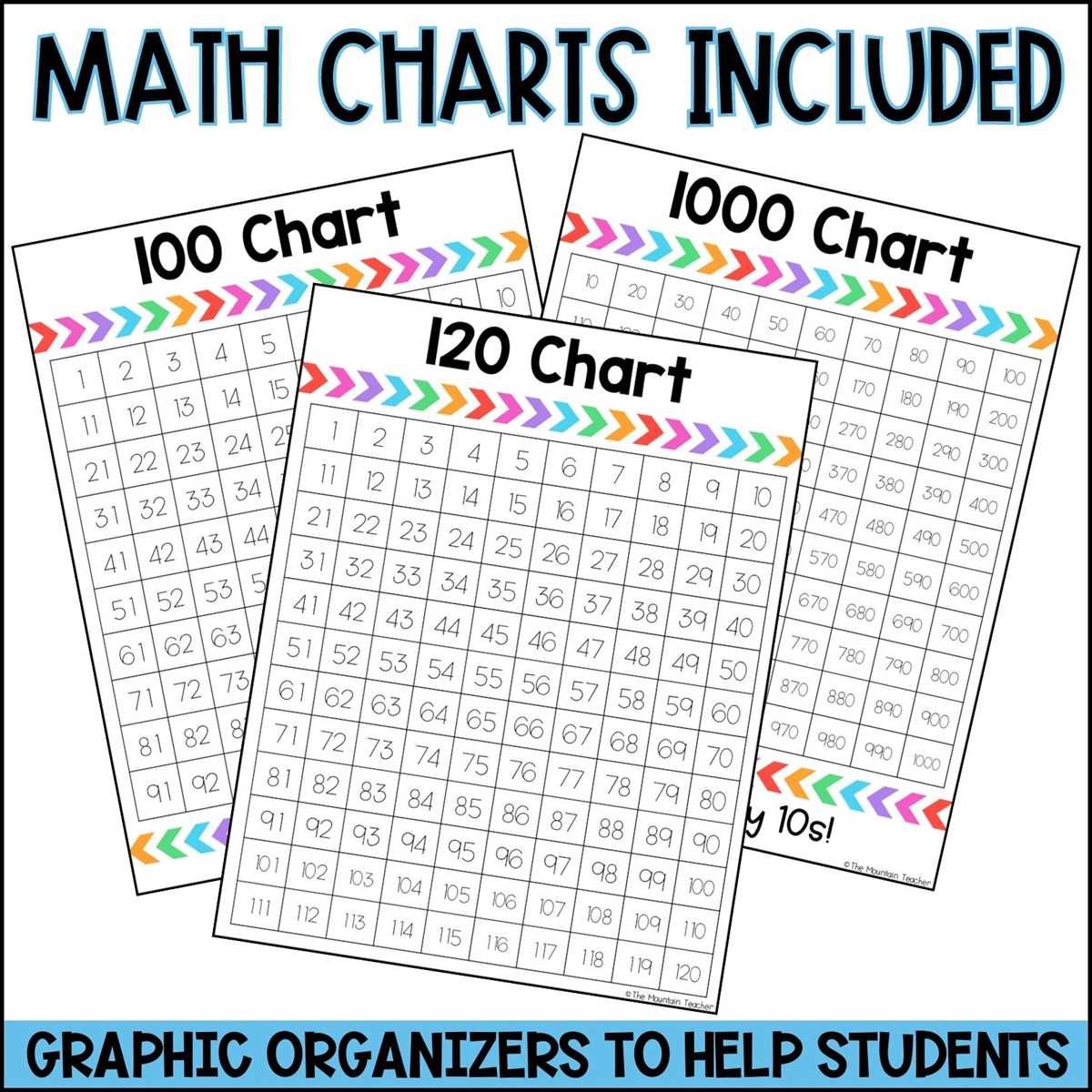
Start by using a number sequence table that helps students understand patterns in numbers, such as counting by twos, fives, or tens. This visual aid is a great tool for reinforcing early math concepts and can be printed and used repeatedly in various settings. It can be adapted to fit different learning levels by adjusting the increments or adding color-coding to group certain sequences together.
For younger learners, focusing on simple number patterns like 2, 4, 6, 8 can build their confidence. As they progress, more complex series can be introduced, such as counting by tens or other larger increments. A well-organized sheet will encourage quick recognition and memorization, allowing children to internalize these patterns effectively.
These tables work well in both the classroom and home environment. Teachers and parents can use them to set specific practice goals, such as having a child complete a section of the table each day. Adding fun activities around these patterns, like games or timed challenges, can further engage students and make math feel less like a task and more like a game.
Using Number Sequence Tables for Better Math Learning
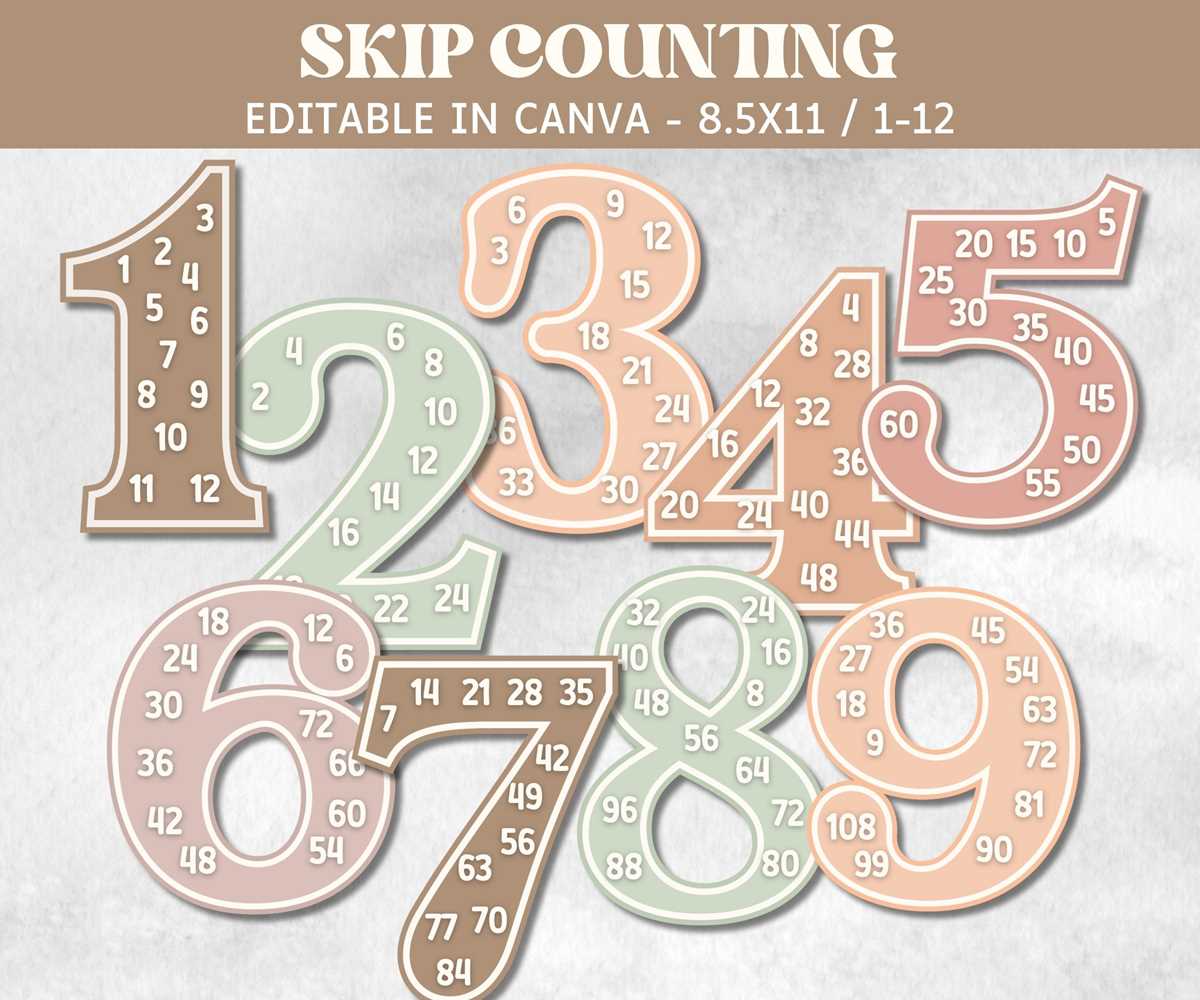
To support early numeracy skills, begin by introducing a table that displays number patterns. This tool helps students visualize how numbers progress, particularly in multiples such as twos, threes, or tens. Set up a printable grid that students can easily follow, allowing them to track numbers across rows and columns, making it easier for them to grasp the concept of regular intervals.
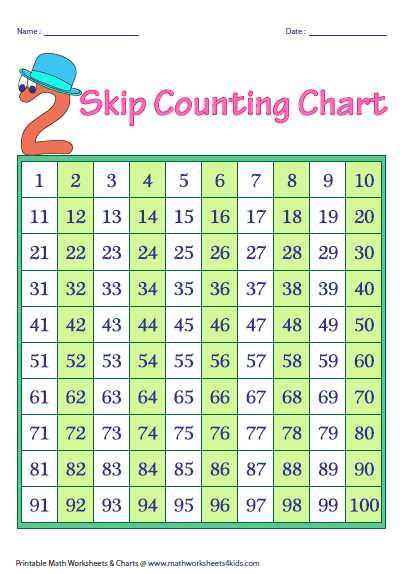
For a more engaging experience, adapt these tables with colors or symbols. For instance, you could highlight every third number in a different color or place stars next to every fifth number. This technique visually reinforces the pattern, enabling learners to quickly identify recurring sequences and enhancing their ability to recall them faster.
Once students become comfortable with basic sequences, challenge them with larger numbers or irregular intervals. You can extend the activity by asking them to fill in missing numbers, encouraging independent thinking and deeper understanding. Whether used at home or in a classroom, these sheets serve as a useful tool for reinforcing multiplication skills and boosting overall math confidence.
How to Create a Printable Skip Counting Chart for Elementary Students
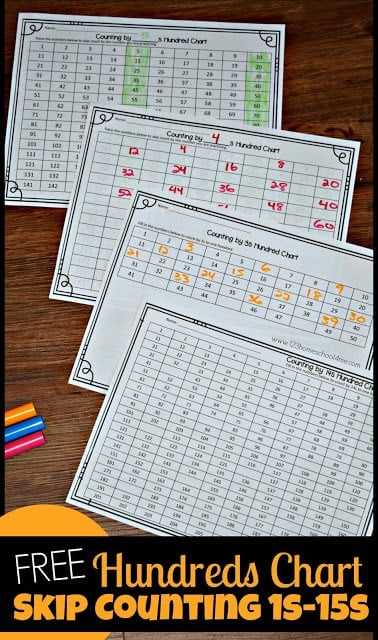
Start by selecting a simple, clean layout for the number sequence. Organize the numbers in rows, with each row representing a different number pattern. For example, the first row could display multiples of 2 (2, 4, 6, 8, etc.), while the next row could show multiples of 5 (5, 10, 15, 20). Make sure the numbers are evenly spaced and easy to read for young students.
Use large, bold fonts for the numbers, making sure they stand out. Consider using contrasting colors to differentiate between different number patterns. This will help students quickly recognize the intervals and make the chart more visually appealing. Avoid cluttering the table with unnecessary information that could distract from the main focus.
Include a section where students can practice by filling in the missing numbers. For instance, you could leave some blanks in the rows for students to complete. This exercise encourages students to actively engage with the number sequence and apply their knowledge of number patterns.
To make the resource versatile, allow for customization based on student level. For beginners, use smaller intervals like 2s, 5s, or 10s. As students progress, offer more challenging sequences with larger intervals, like 3s, 4s, or 7s. This gradual increase in difficulty helps maintain interest and provides a sense of achievement as they master each level.
Print the resource in a size that is convenient for students to work with. A full-page layout works well, but smaller sizes might be suitable for individual practice sheets. You can even create a laminated version for reusable practice, allowing students to use markers or dry erase pens to complete the table multiple times.
Finally, make sure the table is adaptable for both classroom and home use. Whether it’s a single-page handout or part of a larger workbook, ensure that it is accessible for different learning environments. Having a downloadable option will make it easier for parents and teachers to distribute the material as needed.