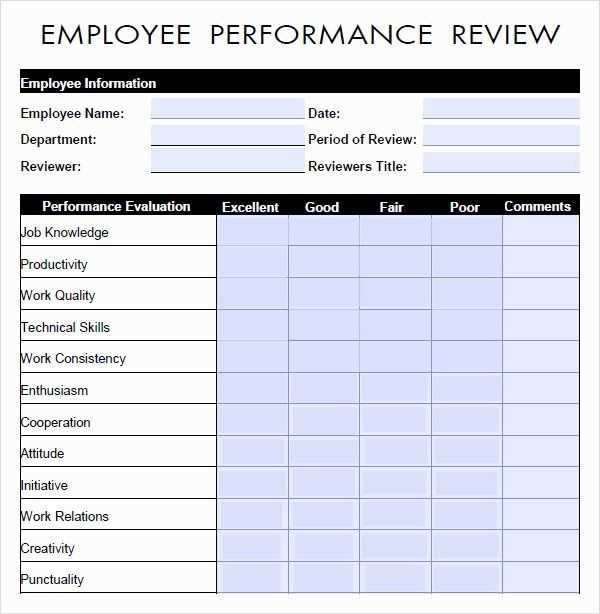
To begin, choose a framework that includes specific areas for feedback, such as job performance, skills, and goals. Tailor these sections to match the role of the employee, ensuring that the review is relevant to their responsibilities. Clear sections for strengths and areas of improvement will provide a balanced view of their contributions.
For a smooth process, ensure that the evaluation document is easy to navigate. Include checklists or rating scales to quickly assess performance, but leave room for written comments. These additional notes will help provide context and examples of achievements or challenges faced during the review period.
Make sure the form is designed to encourage open and constructive communication. This should be a tool for employees to receive feedback and discuss their progress. It’s important that the language used remains neutral and focuses on future growth, rather than merely highlighting past shortcomings.
Creating a Structured Framework for Employee Assessments
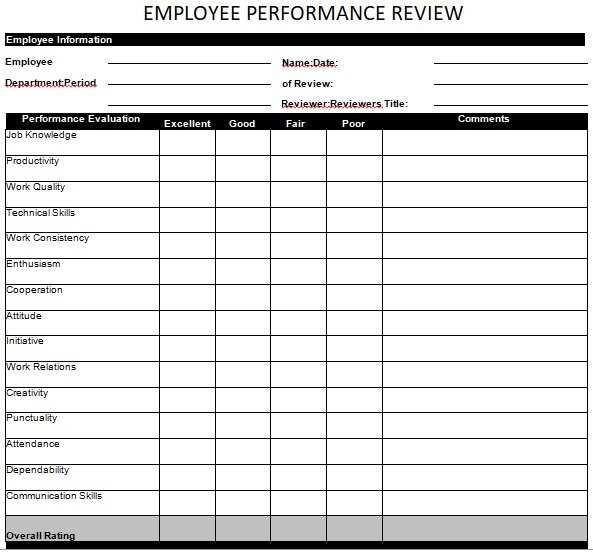
Begin by defining the key areas that need evaluation, such as communication skills, problem-solving ability, and task completion. Use clear criteria for each category, ensuring they align with the employee’s role and responsibilities. This approach helps provide specific and actionable feedback, making it easier to identify strengths and areas for improvement.
Incorporate a rating scale that allows for easy assessment. A simple scale from 1 to 5 can help quantify performance, while also giving space for qualitative comments. This balance ensures that you can provide measurable insights, while also offering context and examples to clarify the ratings.
Ensure that the layout is user-friendly. The document should be easy to navigate and complete, even for managers with limited time. Group similar categories together to streamline the process, and make sure there’s enough space for both ratings and written feedback.
Lastly, remember that evaluations should be a two-way conversation. Create sections where employees can provide self-assessments or express any concerns. This not only helps in giving a balanced view of their work but also encourages engagement in the process and fosters a culture of continuous improvement.
How to Customize a Performance Evaluation Form for Your Team
To tailor the form for your team, first identify the specific goals and responsibilities of each role. Add sections that reflect the unique tasks and skills required for each position. For example, a manager’s evaluation might include leadership and decision-making criteria, while a technical role might focus more on problem-solving and technical expertise.
Adjust the rating scale to match your organization’s needs. If numerical ratings feel too rigid, use descriptive scales such as “Exceeds Expectations,” “Meets Expectations,” and “Needs Improvement.” This allows for more nuanced feedback and encourages a discussion of results, rather than just numerical evaluation.
Lastly, ensure there is room for open-ended feedback. Include spaces for both the reviewer and the employee to write about achievements, challenges, and personal development goals. This creates a more holistic evaluation process and helps both parties identify opportunities for growth.