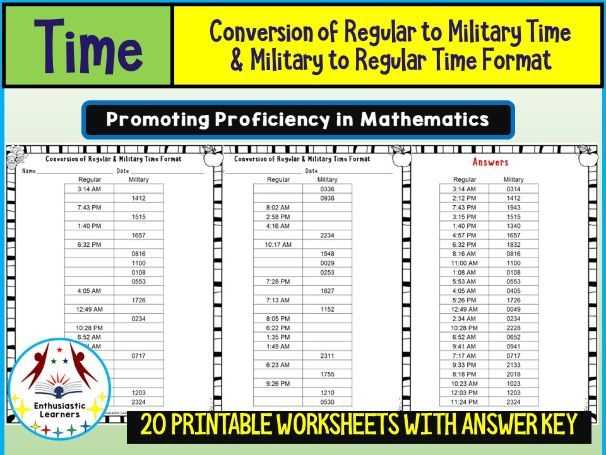
To convert from the standard 12-hour format to a 24-hour system, you need to be familiar with the basic rules. First, note that there is no need for “AM” or “PM” in the 24-hour system. Simply add 12 hours for any time between 1:00 PM and 11:59 PM to convert it into the proper format. For example, 1:00 PM becomes 13:00, 6:30 PM becomes 18:30, and so on.
Once you get comfortable with this conversion, it becomes easy to read and use the 24-hour clock for everyday tasks, especially in industries or professions that require precise timing, such as the military, aviation, and healthcare. A simple guide or chart can help you convert standard times quickly, but mastering this method ensures that you can keep track of events efficiently without confusion.
In addition to helping with time conversions, this system is also widely used in global contexts where precise timing is critical. For instance, scheduling international flights or coordinating across different time zones is much easier with the 24-hour format, eliminating any risk of AM/PM misunderstandings.
How to Use Military-Style Time Conversion Guides
To simplify the process of converting from the standard 12-hour system to a 24-hour system, using a guide can be very helpful. A typical guide will list the equivalent 24-hour time next to the 12-hour format, so you can quickly match any given time. For instance, it will show that 2:00 AM is 02:00 and 2:00 PM is 14:00. Having such a reference on hand can significantly reduce mistakes in time conversions, especially for tasks that require precision, like scheduling or coordinating activities across different time zones.
Another useful approach is to create or use a printable chart with color-coded sections to differentiate between AM and PM times. This allows for faster identification of whether the time falls in the morning or evening and provides an immediate visual aid. This method is ideal for people new to this system or those who need a quick reference at their workstation, ensuring smooth operation without the need for constant mental calculations.
Understanding the Basics of 24-Hour System
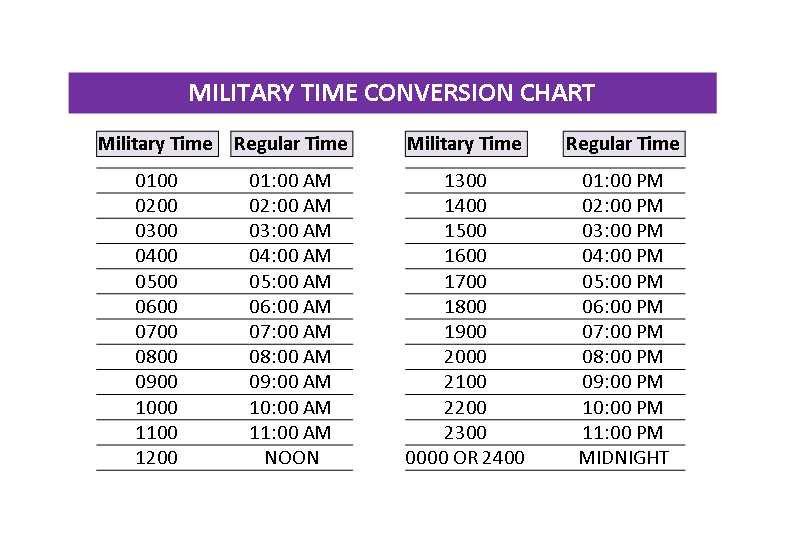
In the 24-hour clock system, each day runs from 00:00 (midnight) to 23:59. Unlike the standard 12-hour system that uses AM and PM, the 24-hour format eliminates confusion by continuously numbering hours from 0 to 23. The system begins at midnight (00:00) and continues throughout the day until 23:59, which represents one minute before the next midnight.
One key aspect of the 24-hour system is how the hours after 12:00 PM are expressed. For instance, 1:00 PM in a 12-hour clock is written as 13:00 in the 24-hour format. The hour increments from 12 and continues through 23. Therefore, 12:00 PM does not need to be distinguished from 12:00 AM, as it falls within the consistent numbering system.
This system is especially useful in fields that require precise scheduling, such as aviation, military, healthcare, and scientific research, where time discrepancies can have serious consequences. The absence of AM and PM makes it easier to quickly calculate time differences, reducing the risk of error. Understanding how to interpret and convert between the two formats can save time in situations that demand clarity and speed.
To help you better grasp the 24-hour format, it’s useful to remember that times between midnight and noon (00:00 to 11:59) remain the same as in the 12-hour system. The only difference is that they are written without the AM suffix. For example, 7:00 AM is simply 07:00. It’s only after noon that you start adding numbers beyond 12, as shown by the transition from 12:00 to 13:00 and so on.
When converting from 24-hour back to the 12-hour format, subtract 12 from any hour greater than 12, and append “PM.” For example, 14:00 would be 2:00 PM. If the hour is less than 12, it remains unchanged, with the addition of “AM.” It’s helpful to have a chart for quick reference when you’re starting to learn the system.
For those looking to streamline their daily activities, consider using visual aids like clocks or charts displaying both formats side by side. This will allow for easier reference when switching between formats during regular activities. Over time, you’ll become accustomed to the 24-hour format, and it will feel just as intuitive as the 12-hour system.
In summary, mastering the 24-hour system involves understanding how to read and convert between the two formats. Once you familiarize yourself with the basic rules, using this system can make scheduling and time management more efficient, especially when it’s crucial to avoid confusion or mistakes in time-sensitive situations.