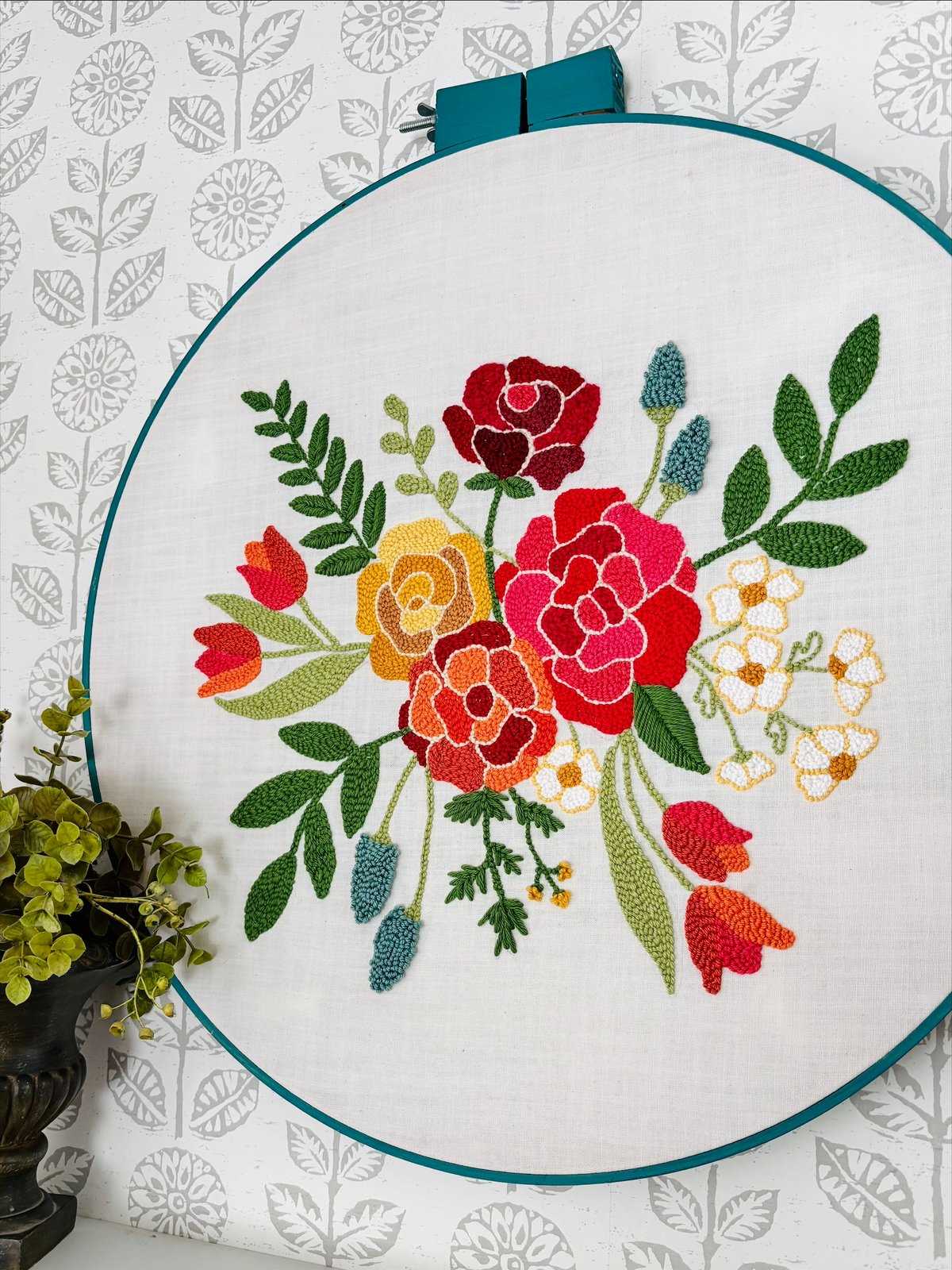
Choose small-format motifs (10–15 cm wide) with bold contours and limited color blocks; such layouts transfer cleanly onto monk’s cloth and reduce thread consumption by up to 30%. Opt for high-contrast line art in black on white at 300 DPI to preserve edge clarity after scaling. Geometric shapes, stylized florals, and block lettering with strokes thicker than 2 mm prevent gaps in loop density and help maintain uniform pile height.
Use vector-based artwork (SVG or high-resolution PDF) so you can resize without pixel distortion. For beginners, limit the palette to 3–5 yarn shades and avoid gradients; flat color zones simplify filling and shorten working time to about 2–4 hours per 12 cm design. Symmetrical motifs minimize counting errors, while repeating elements–such as leaves or dots–allow rhythmic stitching without frequent direction changes.
Transfer the artwork using a lightbox or window tracing method onto tightly stretched fabric in a 20–25 cm embroidery hoop or frame. Keep line thickness consistent at 1–1.5 mm during tracing; heavier outlines can show through lighter yarns. Select cotton or acrylic yarn rated DK to worsted (3–4 weight) for balanced texture and coverage on standard monk’s cloth with 12 holes per inch.
Test stitch density on a 3×3 cm sample square before committing to the full composition. Aim for evenly spaced loops without fabric show-through; adjust tool depth to achieve a loop height of 4–6 mm for decorative wall pieces or 3–4 mm for coasters and patches. After completion, secure the back with diluted PVA glue (1:1 with water) applied thinly to prevent stiffness and cracking.
Store your design files in organized folders labeled by size, color count, and estimated completion time. Keeping versions at 100%, 75%, and 50% scale speeds up future projects and allows quick adaptation for hoop art, tote bag panels, or cushion covers without redrawing the motif.
Favor motifs with closed outlines and avoid intricate micro-details under 1 mm; such elements blur once stitched and waste yarn. Clean, compact compositions deliver sharper results and make the craft accessible for first attempts while still producing textured, gift-ready décor.
Archive finished pieces with notes on yarn type, loop height, and frame tension; tracking these parameters builds a reference base that shortens setup time on subsequent projects and improves consistency across multiple designs.
Printable Easy Punch Needle Patterns for Beginners and Quick Projects
Choose small-format hoop designs (10–15 cm diameter) with thick contour lines and no more than four color areas to complete a textured motif in 1–2 hours. Look for line art saved as high-resolution PDF or SVG files at 300 DPI so outlines remain sharp after scaling. Floral silhouettes, block letters, stars, hearts, and simple geometric shapes transfer cleanly onto monk’s cloth or linen using a lightbox or window tracing method.
For first-time crafters, select templates built around closed shapes rather than intricate linework. Dense fills with clear borders prevent thread gaps and reduce reworking. Good beginner-friendly motifs include:
- Single large daisy with solid petals and circular center
- Minimal rainbow with 4–5 broad arches
- Bold monogram letter inside a round frame
- Cloud, sun, or crescent moon icons with smooth curves
- Checkerboard or striped squares for practicing uniform loops
Keep color planning simple. Limit the palette to three yarn shades plus a neutral background to avoid frequent thread changes. Wool or acrylic yarn in medium weight (#4 worsted) produces consistent loops and covers fabric faster than thin embroidery floss. Mark color zones directly on the transferred outline to prevent confusion during stitching.
Use scaled-down artwork for quick decor projects such as coasters, wall mini-hoops, patches, and zipper pouch panels. A 12 cm circular frame requires approximately 15–20 meters of yarn for full coverage, depending on loop height. Maintain uniform depth by setting the tool to 4–6 mm loop length for defined texture without excessive bulk.
For rapid completion, prioritize symmetrical motifs and mirrored layouts. Balanced designs reduce measuring time and simplify thread transitions. Suitable quick-completion concepts:
- Half-and-half color circle with central word
- Two-tone abstract arch composition
- Simple botanical branch with three leaves
- Minimal house outline filled with one shade
Transfer accuracy affects final texture. Print artwork at actual size, secure it beneath the fabric, and trace using a fine-tip waterproof marker. Avoid thin gray outlines; use solid black strokes at least 1–1.5 pt thickness to remain visible through dense fibers. After stitching, apply diluted craft glue (1:1 with water) on the reverse side to secure loops before trimming excess cloth.
For skill progression, move from flat fill motifs to layered compositions that combine loop height variations and negative space. Introduce raised accents for flower centers, outlined lettering, or contrasting borders once tension control becomes consistent. Structured, compact artwork with defined zones ensures predictable results and makes small handmade gifts achievable within a single evening session.