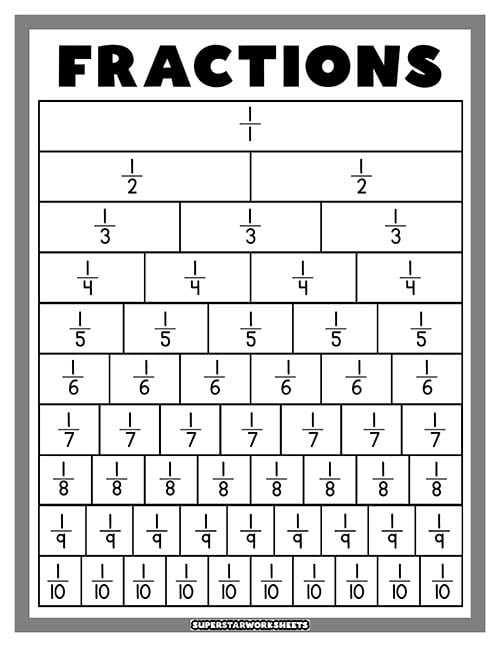
For those who need to quickly convert numbers into their fractional forms, having a reference that is easy to access can be extremely useful. A precise guide that showcases numbers as ratios of whole numbers can save time and ensure accuracy in various tasks, from academic studies to real-world applications like cooking and measurements.
Such a tool provides a clear and systematic breakdown, showing the corresponding numerators and denominators for each value. By using this guide, anyone can avoid tedious calculations and instantly find the proper fraction for any given value. Whether you’re working with simple values or more complex ones, this reference ensures that each conversion is reliable.
This organized system is particularly beneficial for quick comparisons and practical use, where exactness matters. Having these relationships readily available reduces the risk of errors and enhances the efficiency of tasks that require precise measurements or conversions.
HTML
Fraction Conversion Table for Easy Reference
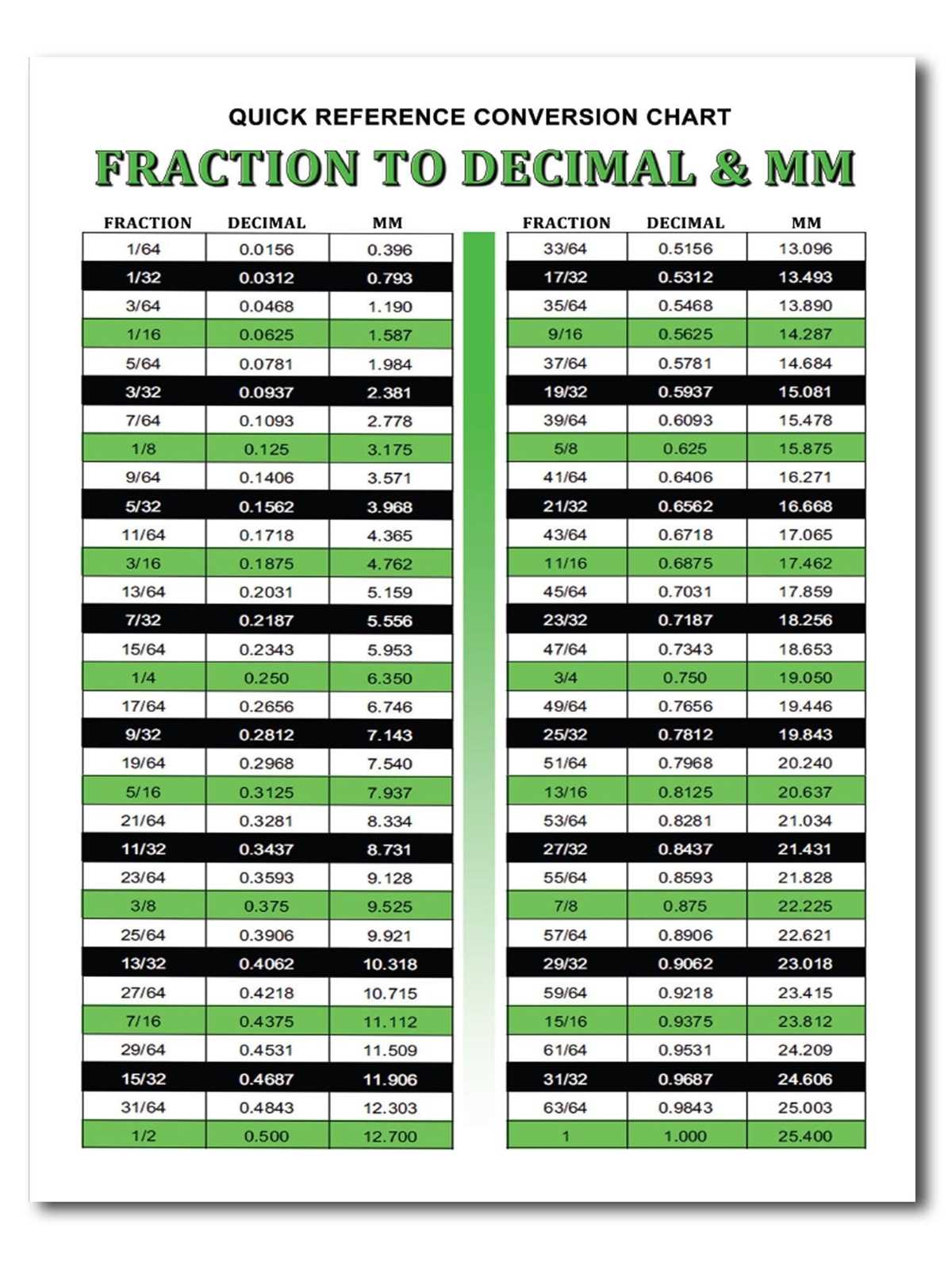
Keep this table nearby for quick reference when working with fractions and their corresponding values. It can save time by helping you convert any number to its simplest ratio form instantly. For example, the value 0.5 translates to 1/2, 0.25 to 1/4, and 0.75 to 3/4. Whether you’re dealing with everyday tasks or more complex calculations, having these conversions at hand is an efficient way to ensure accuracy.
For more precise fractions, you can extend the range to include values like 0.125 (which becomes 1/8) or 0.3333 (represented as 1/3). When dealing with repeating decimals, like 0.6666, it’s convenient to use 2/3 as the corresponding fraction. This table will cover a wide spectrum of values, making conversions faster and easier whenever needed.
How to Create a Decimal to Fraction Conversion Table
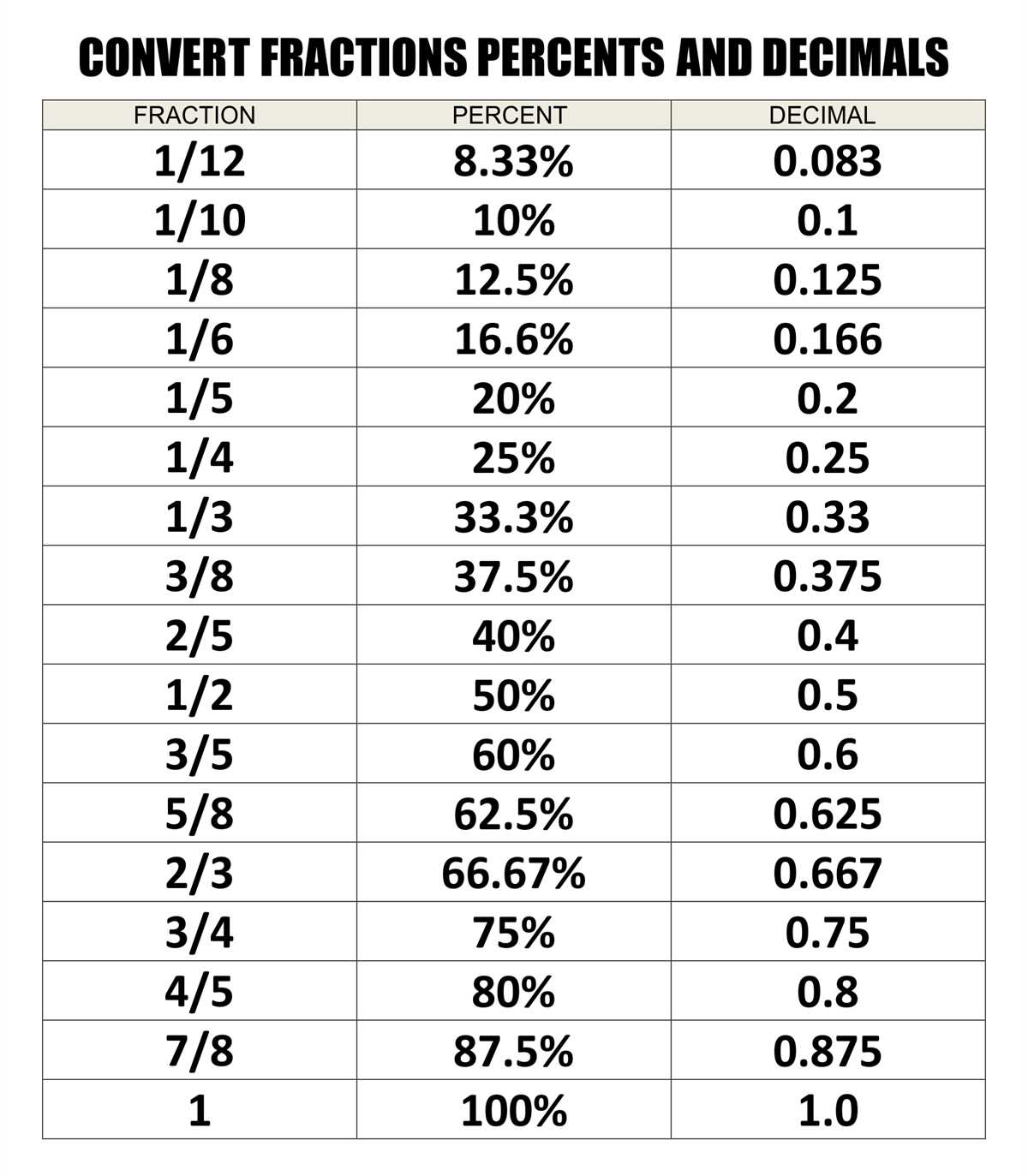
Start by selecting a range of values to convert. Focus on whole numbers and simple tenths, hundredths, and thousandths, as these are most common. For instance, include values like 0.5, 0.25, and 0.75, which are easy to recognize and convert without complicated calculations.
Next, identify the exact ratio of the number. For example, 0.5 is equivalent to 1/2, 0.25 equals 1/4, and 0.75 translates to 3/4. This will give you the simplest form of the number. Make sure the numerator and denominator are reduced to their lowest terms. If the fraction has a greater numerator or denominator, simplify it.
Organize your results in a structured way. Group the values logically: first by tenths, then by hundredths, and so on. This helps users quickly locate the conversion for any given number. A clear and orderly approach reduces confusion and ensures a seamless user experience.
For added clarity, include both the decimal and its corresponding value as fractions. This ensures that anyone reading the table can see both the number’s form and its equivalent ratio in one glance. Pairing values will also serve as a reference for those who need a quick look-up.
- 0.1 = 1/10
- 0.2 = 1/5
- 0.3 = 3/10
- 0.4 = 2/5
- 0.6 = 3/5
Lastly, double-check for accuracy. Ensure that all the numbers in the table are correct and well-formatted. Having clear, precise conversions prevents misunderstandings and makes it easier for others to apply the values directly in calculations or practical tasks.