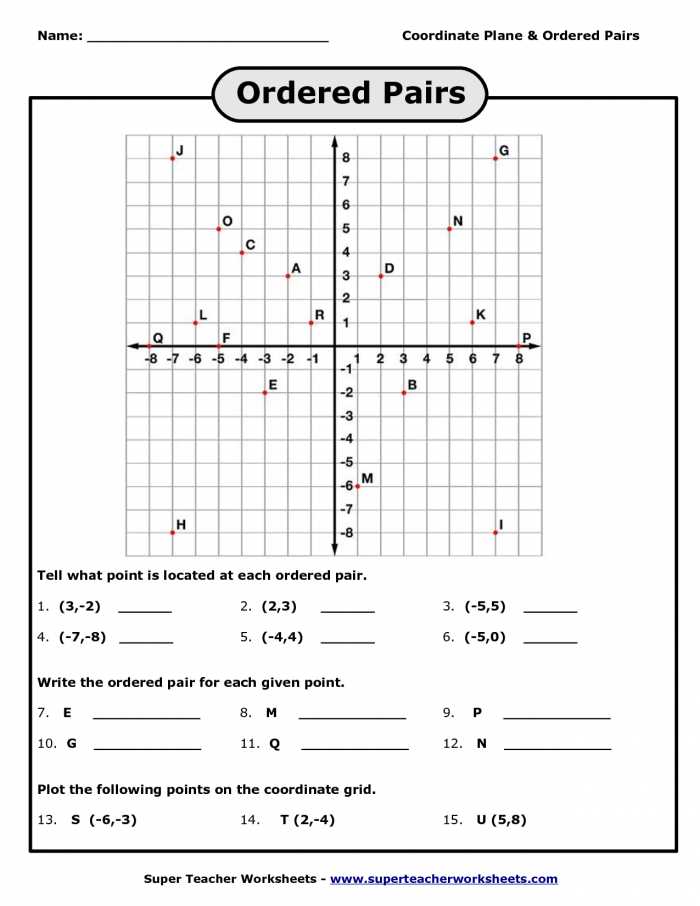
Using grid templates for graphing offers students an organized way to visualize mathematical relationships. These resources provide a structured environment where learners can plot points, connect them to form shapes, and explore basic algebra concepts such as plotting linear equations. To maximize the value of these exercises, students should first familiarize themselves with the grid’s axes and number lines.
For beginners, starting with simple points and gradually progressing to more complex figures, such as triangles or lines, helps build confidence. By practicing with various types of graphing templates, learners can better understand the concepts of slope, distance, and symmetry, making it easier to transition to higher-level geometry and algebra topics.
Teachers and students can find a variety of free resources online, from basic grids to advanced graphing templates that include pre-marked points for guided practice. These downloadable sheets allow flexibility in creating customized exercises to fit individual needs, making them an ideal tool for homeschooling or classroom activities.
Coordinate Graphing Sheets for Practice and Learning
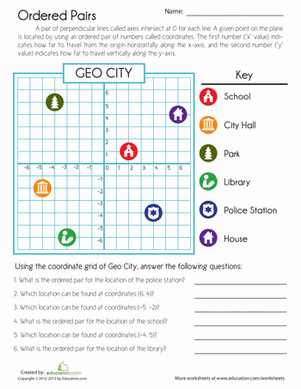
To strengthen graphing skills, students should regularly use worksheets featuring grid templates. These exercises allow for plotting different points and graphing linear equations, helping to develop a deeper understanding of algebraic and geometric concepts. Focus on activities that require marking coordinates accurately and connecting them to form straight lines or curves.
One effective approach is to begin with simple exercises, such as plotting individual points, and gradually move to more complex tasks like graphing equations and identifying slopes. This method helps students build confidence and apply their knowledge of mathematical principles in real-world scenarios, such as distance and motion.
Teachers and learners can find these resources online or in educational books, where a variety of grid types are available, from basic Cartesian grids to more advanced templates for advanced learners. These worksheets can be tailored to specific topics, such as linear inequalities, distance formula, and graphing functions, making them versatile tools for reinforcing key math concepts.
How to Use Coordinate Grids for Graphing Points and Shapes
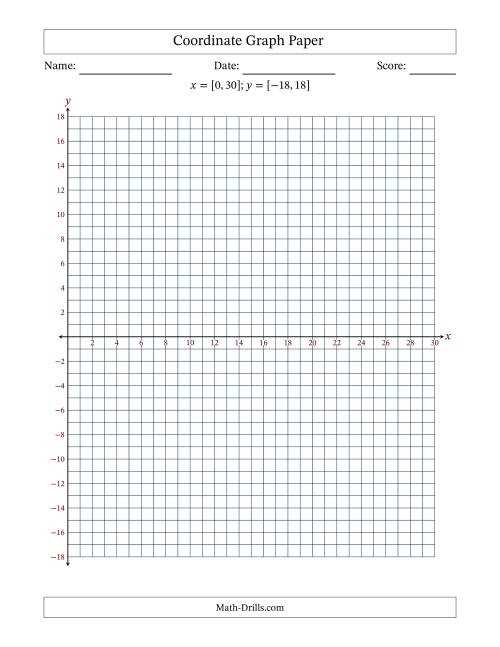
Start by identifying the x- and y-axes on the grid. These axes divide the plane into four quadrants, where points can be plotted based on their numerical values. Begin by graphing simple points like (3, 2), where 3 is the x-coordinate (horizontal) and 2 is the y-coordinate (vertical). Mark the point where the x-value intersects the y-value.
Once individual points are plotted, connect them to form shapes such as lines, triangles, and squares. For example, plot the points (1,1), (4,1), (4,4), and (1,4) to form a square. Afterward, use a ruler or straight edge to draw the connecting lines. This visual approach helps in understanding geometric concepts and the relationship between algebraic expressions and graphing.
To practice more complex shapes and equations, use the grid to plot equations like y = 2x + 1. By substituting different x-values (e.g., x = -2, -1, 0, 1, 2), you can find corresponding y-values and plot those points. Drawing the resulting line allows you to visualize how the equation behaves in terms of slope and intercept.