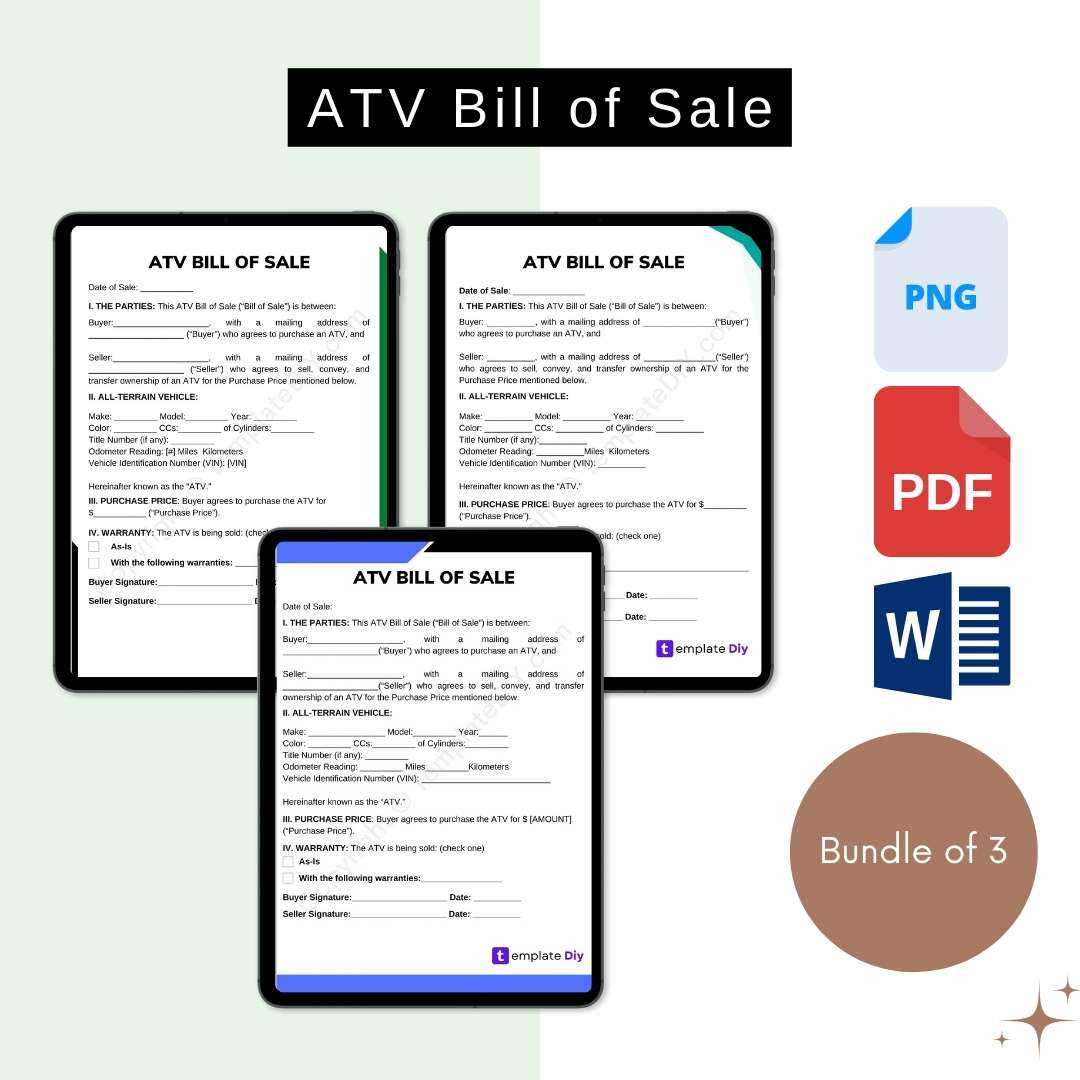
Ensure you include the vehicle identification number (VIN) and the current odometer reading to prevent any future misunderstandings. This information is critical for verifying the ownership and confirming the vehicle’s condition at the time of the transaction.
Make sure to document both the buyer and seller’s full legal names, addresses, and contact details. This not only helps in establishing a clear record but also protects both parties legally. The agreement should also specify the exact amount paid, including any deposits or additional terms agreed upon.
If the vehicle has any known issues or required repairs, list these clearly in the agreement. Being transparent about the vehicle’s condition can avoid disputes later. Including “sold as is” in the document can further protect you from potential claims after the exchange.
How to Complete an ATV Transfer Document
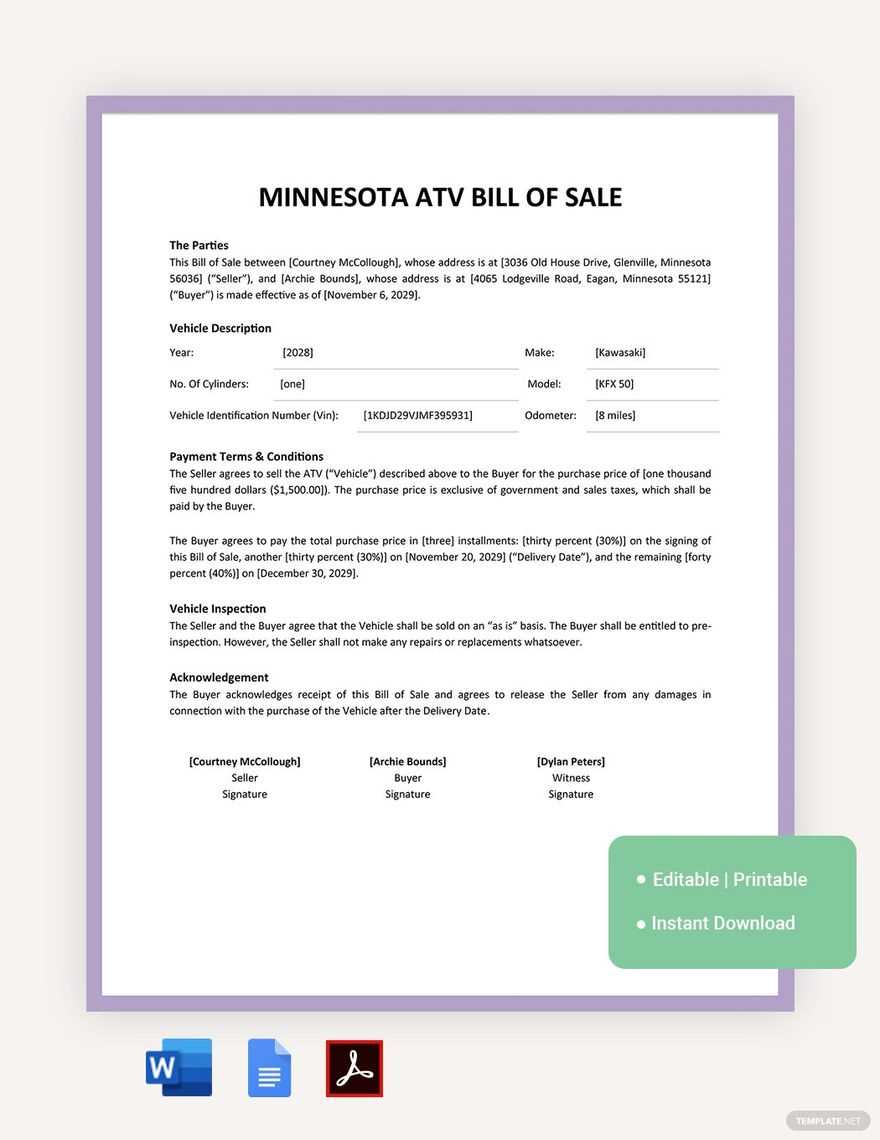
Begin by gathering the key details of the transaction. The agreement should include the full names, addresses, and contact information of both the seller and buyer. These basic details ensure that both parties are properly identified and can be reached if necessary.
Record the vehicle identification number (VIN) and odometer reading at the time of the exchange. This information is critical for verifying the vehicle’s identity and confirming its mileage. Make sure these numbers are accurate to avoid any future disputes.
Clearly state the purchase price and specify the payment method. Whether it’s cash, check, or bank transfer, documenting how the transaction was completed protects both parties. If a deposit was paid, indicate the amount and whether it’s refundable.
If there are any special terms regarding the exchange, such as “as is” or a warranty, note them in the agreement. This can help avoid misunderstandings about the vehicle’s condition and any future claims from the buyer.
Don’t forget to include the date of transfer. This marks the official point at which ownership changes hands and is necessary for both legal and practical reasons. Both parties should sign the document on this date.
After filling out the document, both parties should retain a copy for their records. This provides proof of the transaction and serves as a safeguard in case issues arise later.
Depending on your state or country, you may need to have the document notarized. Check your local regulations to confirm if this is required to make the agreement legally binding.
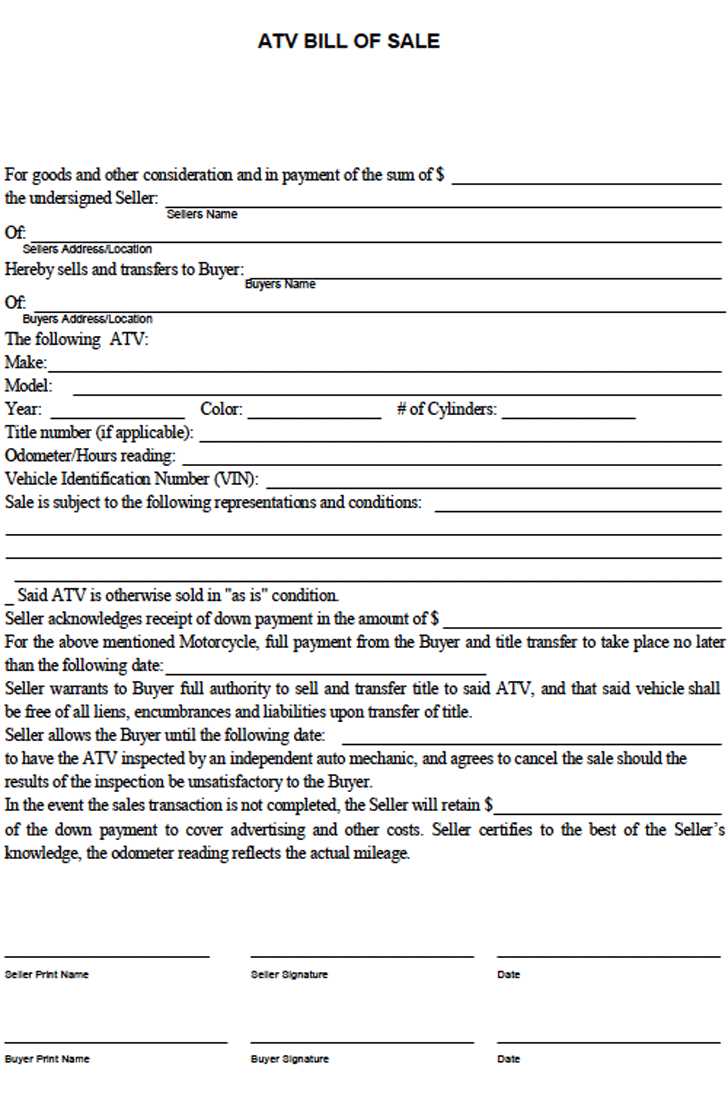
Finally, it’s a good idea to update any relevant vehicle registrations and insurance policies to reflect the change in ownership. This ensures the buyer is legally protected and that the seller is no longer responsible for the vehicle.
How to Fill Out an ATV Transfer Agreement Form
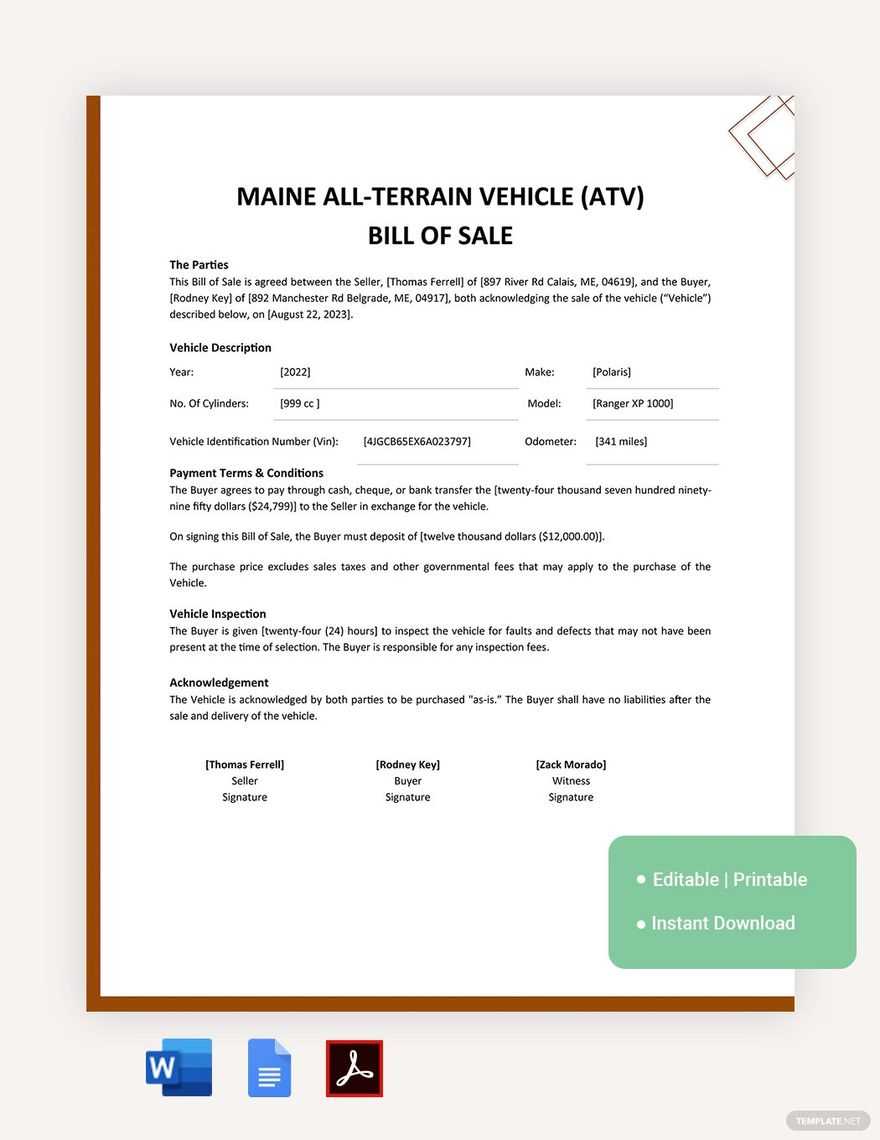
Start by entering the full names and addresses of both the seller and buyer at the top of the document. This information clearly identifies the individuals involved in the transaction.
Next, include the vehicle identification number (VIN), make, model, and year of the vehicle being transferred. These details ensure the vehicle’s identity is correctly recorded and can be cross-checked later if necessary.
Document the current odometer reading, ensuring it reflects the vehicle’s true mileage at the time of the exchange. This protects both parties by providing an accurate record of the vehicle’s usage.
Specify the agreed-upon price for the vehicle and indicate the payment method. Whether it’s cash, check, or another form of payment, this ensures transparency in the transaction.
If applicable, include any deposit amount paid and note whether it is refundable or not. This is important for both the buyer and seller to understand the terms of the financial agreement.
State the date of transfer in the document. This serves as the official date when ownership of the vehicle changes hands, which is important for legal and registration purposes.
Have both the buyer and seller sign the document on the date specified. Their signatures confirm that both parties agree to the terms outlined in the agreement.
Finally, keep a copy of the completed form for your records. Both the buyer and seller should retain a signed copy to serve as proof of the transaction in case of future disputes.