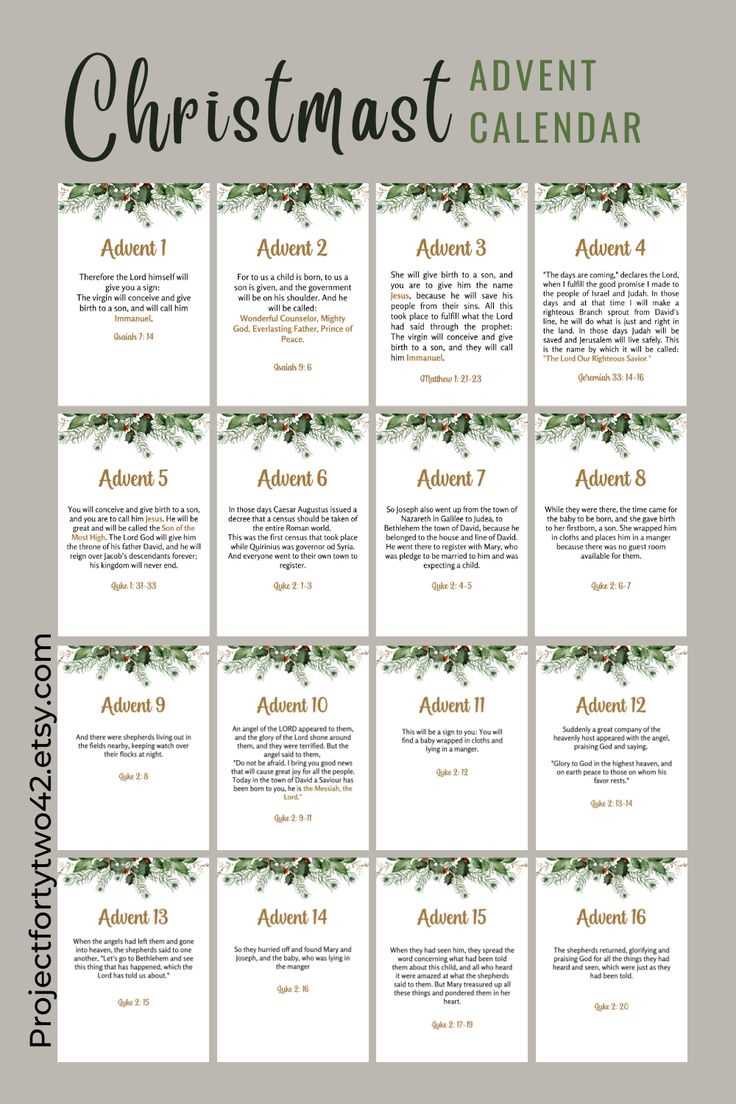
Begin by selecting a series of Bible verses that align with the themes of hope, peace, joy, and love. These are the core principles that many seek to meditate on during the holiday period. Look for passages that are short yet meaningful, allowing for deeper reflection each day.
Print the verses on individual cards or compile them in a booklet format. This makes it easy to read one passage each day, either alone or with family. Consider pairing each verse with a short prayer or thought to guide your meditation.
Organize the verses by dates or themes, creating a sense of anticipation and preparation for the upcoming season. A simple binder or folder can help keep them in order, ensuring that the daily reflections remain a special and structured part of the holiday routine.
How to Choose the Best Scripture Passages for Personal Reflection
Start by focusing on themes that resonate with your heart. For personal reflection, look for verses that speak to your current spiritual needs or areas you wish to grow in. Common themes include hope, faith, love, and peace, which are prominent during the holiday season.
Next, consider the length of each passage. Short, impactful verses work well for daily reading, allowing you time to reflect without feeling overwhelmed. Select verses that can be meditated on throughout the day, offering inspiration for both personal moments and family discussions.
Choose a mix of Old and New Testament verses. Old Testament passages often highlight prophecies and God’s promises, while New Testament verses emphasize fulfillment, grace, and salvation. This balance allows you to reflect on the entirety of God’s plan through scripture.
Reflect on the context of each passage. Ensure that the verses you choose align with the message you want to focus on during this period. For example, passages highlighting the coming of the Messiah are often central themes, but verses on forgiveness or gratitude can also deepen your spiritual practice.
Consider adding personal application to each verse. This could be a reflection question or a prayer prompt that encourages deeper meditation. For example, after reading a verse on peace, ask yourself how you can embody that peace in your daily interactions.
Organize the passages in a way that makes sense to you. Some may prefer a chronological approach, starting with passages about prophecy and moving to fulfillment, while others might prefer to group verses by theme. Keep it simple and accessible, so it doesn’t feel like a burden to read each day.
Finally, select verses that inspire you personally. It’s helpful to include scripture that you’ve always found meaningful, alongside new passages that challenge your understanding. Reflecting on familiar verses can bring comfort, while new ones can lead to fresh insights.
Step-by-Step Guide to Printing and Organizing Scripture Passages
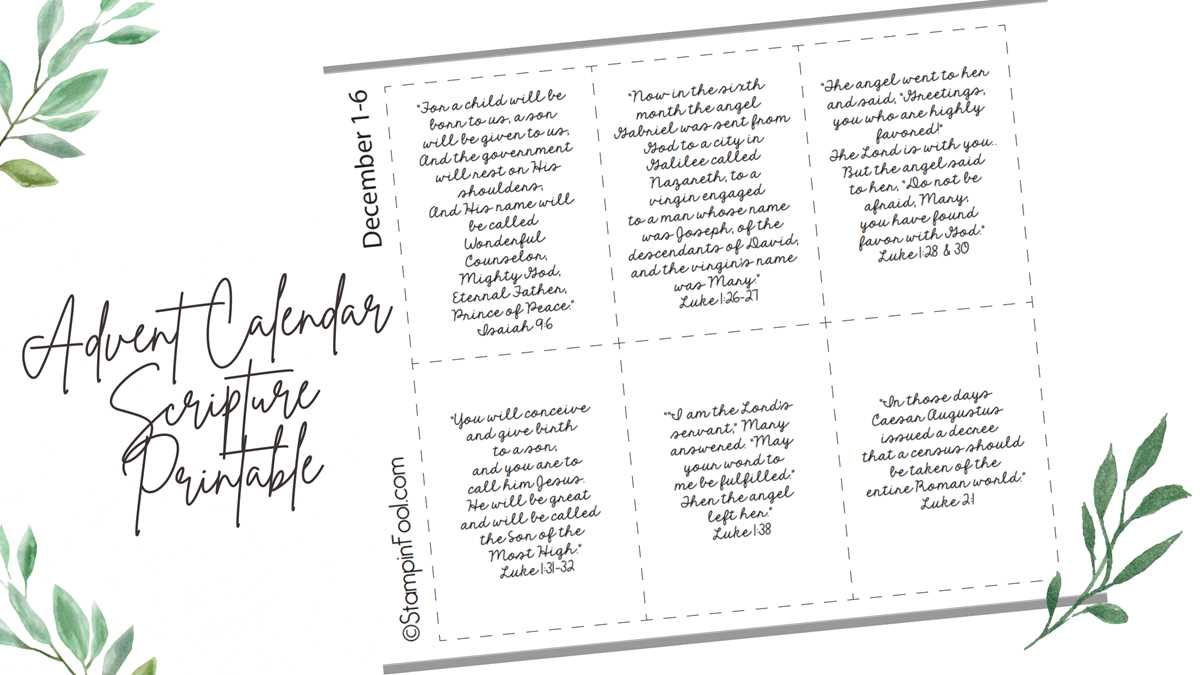
Begin by selecting your desired verses. Choose passages that reflect the themes you want to focus on, such as faith, hope, and peace. You can organize them by date, topic, or biblical order depending on your preference.
Once you have your verses, decide on the format. If you’re using a computer, you can create a document with each passage on a separate page or as a list. If you prefer a more tactile experience, write each verse on individual cards for easy handling.
For printing, choose a clear and readable font. Make sure the font size is large enough for easy reading. You can use a standard size like 12-point for readability, or adjust based on the space and design you prefer.
Next, decide on paper quality. If you plan to keep the printed pages for a long time, choose thicker paper or cardstock. For a temporary setup, regular printer paper is sufficient. Make sure the color contrast is strong enough to make the text easily readable.
After printing, organize the passages into a binder or folder. Use dividers to separate them by theme or date. You could also create a small booklet by stapling or binding the pages together, keeping them compact and easy to access each day.
For added personalization, consider decorating the pages with borders or illustrations. This will enhance the experience and make the verses feel more meaningful. Keep the decorations simple to avoid distracting from the message of the passage.
Creative Ways to Use Scripture Passages for Family Devotions
One way to incorporate Bible verses into family devotions is through daily reflection. Place a verse in a prominent place where all family members can see it throughout the day. This could be on the kitchen table, living room wall, or even a whiteboard. Each morning, take a few moments to reflect together on the message of the passage and discuss how it applies to your lives.
Another fun approach is to turn the verses into a game. Create a Bible scavenger hunt by hiding printed verses around the house. As family members find them, they can read and discuss each one. To make it more engaging, offer small prizes for those who find the most verses or answer questions related to the passage.
You can also use scripture passages in a creative art project. Have each family member illustrate their favorite verse or write it out beautifully with decorative lettering. These can then be displayed around the home as a reminder of the messages shared. This activity also encourages artistic expression while deepening the connection to the word of God.
Incorporate scripture reading into your family mealtime. Dedicate one meal a week to a time of reflection, where each person reads a verse aloud. Afterward, share thoughts and prayers inspired by the passage. This can foster open conversation and a sense of spiritual unity within the family.
For a more structured devotional experience, create a scripture-based journal where family members can record their reflections, prayers, or insights from each verse. This provides a personal way to engage with the text and encourages everyone to participate in daily reflections throughout the week. You can revisit these journals later to reflect on the growth of your spiritual journey together.