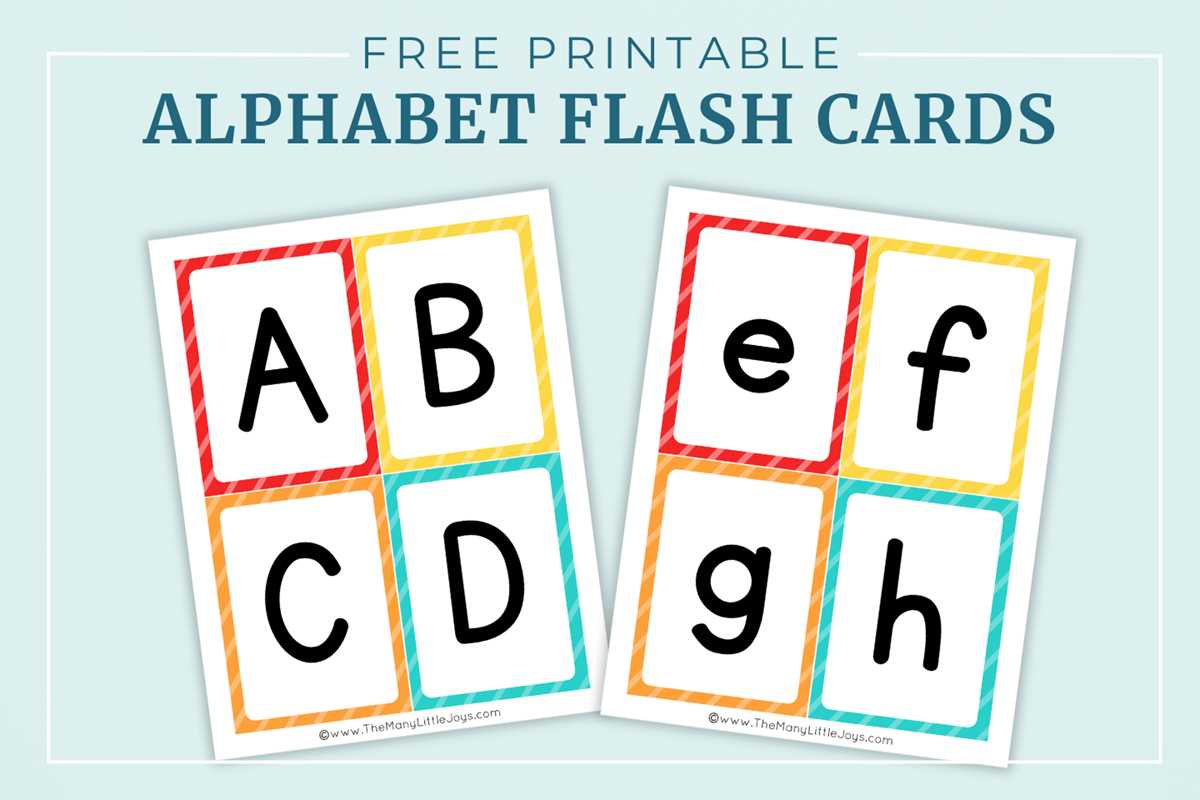
Start by selecting cards that feature clear, bold symbols and letters. Ensure the design of these materials is simple and uncluttered to avoid overwhelming young learners. Large, legible characters paired with corresponding images help reinforce the connection between sounds and symbols.
For best results, use a variety of color schemes and fonts. This adds interest and allows children to associate each symbol with its unique features. Incorporating images alongside the letters provides a visual cue that strengthens memory retention, as visual learning aids have been proven effective for early education.
Arrange the tools into interactive games or daily activities. This makes learning a natural, enjoyable experience. For example, try a matching game where children match the image to the correct symbol, or use flashcards in a memory game to encourage recall. These activities can help with early phonics and alphabet recognition.
How to Use Letter Flashcards for Early Literacy Development
Begin by introducing each symbol individually. Show the character and pronounce the corresponding sound, making it a multisensory experience. This helps children connect the visual representation with the spoken sound, which is crucial in early literacy development.
Next, incorporate simple words that begin with the displayed characters. This reinforces letter recognition while also teaching how symbols come together to form words. For example, when showing “A”, pair it with “apple” and emphasize the sound at the beginning of the word. Repeat this with various symbols and words.
Encourage interactive activities like matching games or sorting tasks, where children can group similar characters or images. This promotes engagement and reinforces both recognition and recall. Create simple puzzles where children have to match characters with corresponding pictures, enhancing their ability to associate sounds with visuals.
Introduce blending and segmenting exercises once children are familiar with individual sounds. Ask them to combine sounds to form simple words, starting with two-letter combinations and progressing to three or more. This gradual progression helps in reinforcing their phonetic skills and understanding of word formation.
Incorporate these exercises into daily routines. Use symbols during reading time, such as pointing out words that feature the target symbols, reinforcing learning in context. The consistency of using these visuals in everyday settings enhances retention and creates a more natural learning process.
Finally, regularly review previously learned characters and words. Repetition strengthens memory and boosts confidence in their ability to recognize and understand written language. Using different variations of the same exercises can keep children engaged while reinforcing their literacy foundation.
Choosing the Best Letter Flashcards for Various Learning Styles
For visual learners, select designs that feature clear, bold images paired with symbols. This approach makes it easier for them to connect the visual representation with the corresponding sound. Flashcards with colorful illustrations can also capture attention and enhance recall. Ensure the characters are prominent and easy to distinguish to avoid visual confusion.
Auditory learners benefit from cards that incorporate sounds or phonetic cues. Opt for cards with a focus on pronunciation or include rhyming words. Pairing the symbols with auditory exercises, such as repeating sounds or saying words aloud, supports these learners in making the sound-symbol connection. For kinesthetic learners, consider cards that are tactile or part of an interactive activity, allowing them to physically manipulate the cards for a hands-on learning experience.
Creative Ways to Incorporate Letter Flashcards into Playtime
Transform learning into an engaging scavenger hunt by hiding the cards around the room and asking children to find them. Once a card is located, encourage them to name the corresponding letter and think of an object that starts with it. This playful activity promotes recognition and helps with word association.
Another fun idea is to turn the cards into a matching game. Lay them face down and take turns flipping them over to find matching pairs of letters. To increase the challenge, add a twist by introducing simple words that start with the same letter, encouraging children to recognize both the symbol and the sound. This fosters memory and concentration in a relaxed, game-like environment.