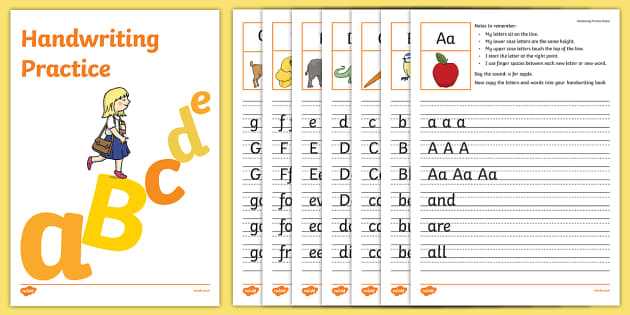
Begin with worksheets that guide children in forming each letter correctly. Focus on providing clear examples for both uppercase and lowercase characters, allowing young learners to trace and repeat each one. This builds muscle memory and accuracy when forming letters on their own.
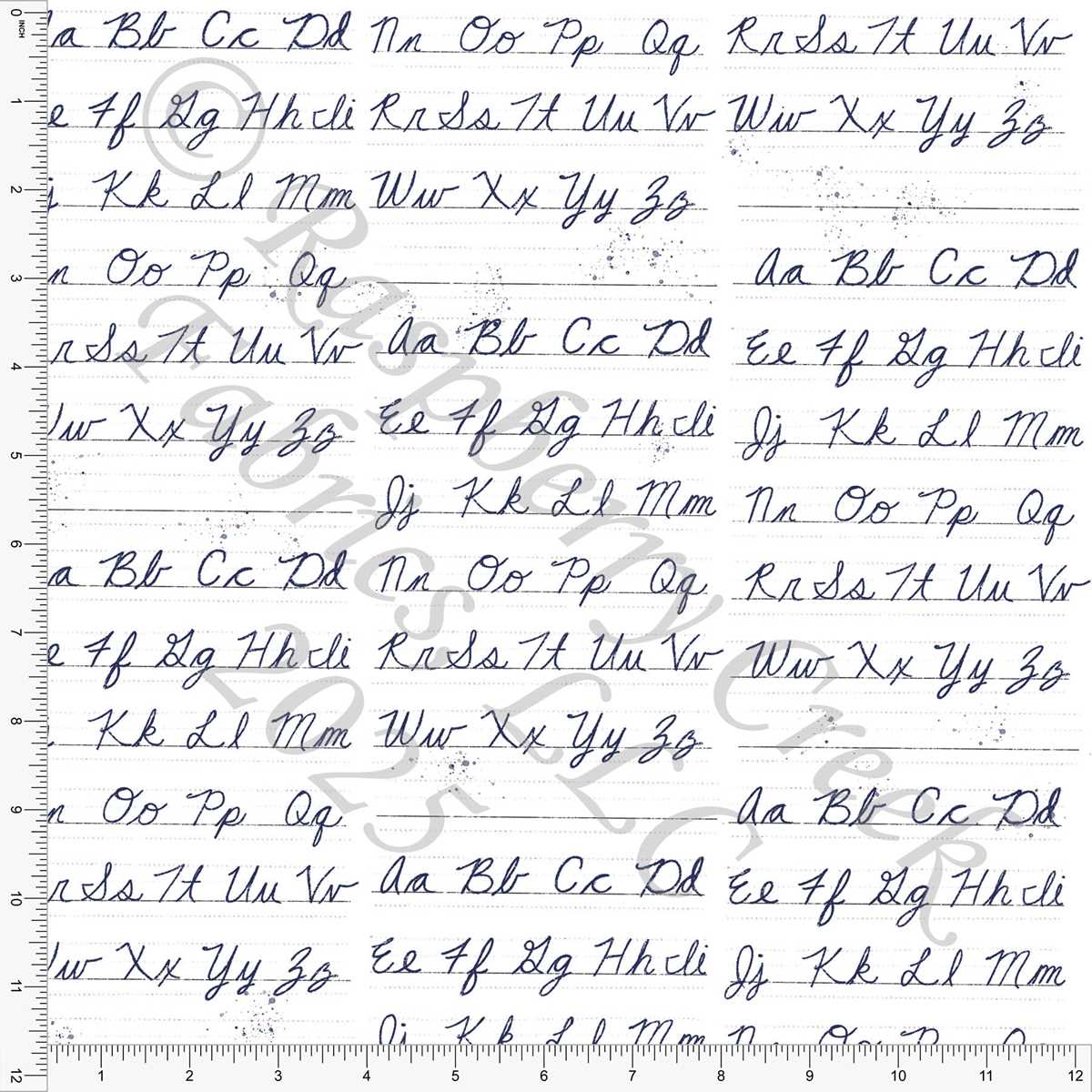
For more effective results, gradually introduce variations in letter style and format. Start with block letters and then transition to cursive or more fluid script as children’s writing improves. This keeps the process engaging and provides a sense of progress as their skills develop.
Incorporating colorful designs and familiar themes like animals, objects, or characters can make writing feel less like a chore. When children are interested in the material, they’re more likely to stay focused and excited to continue practicing, making the activity both educational and fun.
Handwriting Practice Alphabet Printables
Start by offering templates that allow children to trace individual letters. These templates should feature dashed lines to help guide the shape and direction of each character. This gives beginners a clear visual structure for accurate letter formation.
Once children are comfortable with basic letter forms, introduce exercises that require them to write the letters independently. This reinforces memory and builds confidence as they practice without external guidance. Begin with short words or simple sentences to strengthen their ability to form letters fluidly.
Including engaging activities such as coloring the letters or matching them with pictures can make the task more enjoyable. For example, pairing each letter with an animal or object starting with that letter can create a more interactive learning experience, keeping children focused and motivated.
As children advance, provide them with worksheets featuring both uppercase and lowercase letters. This will help them become familiar with the different forms of characters and how they are used in writing. Alternating between uppercase and lowercase writing ensures they develop flexibility and control over all types of characters.
Track progress by encouraging self-assessment. After completing a set of worksheets, ask children to review their work and compare their letters with the provided examples. This promotes a sense of ownership in their learning and helps them recognize areas for improvement.
Lastly, incorporate writing exercises into real-world contexts. For instance, children can practice writing their names, favorite animals, or common objects they encounter. Applying their skills in practical situations boosts retention and makes learning feel relevant to their everyday experiences.
How to Use Letter Tracing Sheets to Improve Writing Skills
Select tracing sheets with dotted lines that outline each character, offering clear guidance for students to follow. Start with simple shapes, allowing learners to repeatedly trace the letters until they feel comfortable with the form and size.
Introduce a variety of letter styles to ensure students understand the different ways characters can be written. By incorporating both uppercase and lowercase examples, you provide a more comprehensive learning experience that prepares students for real-world writing tasks.
To further develop writing accuracy, encourage learners to trace each letter multiple times. This repetitive action helps to build muscle memory, improving both speed and consistency in their writing skills.
Once students are confident with tracing, move on to activities where they write letters on blank paper without guidance. To keep the practice engaging, incorporate themes like animals or objects that start with each letter, making learning both fun and memorable.