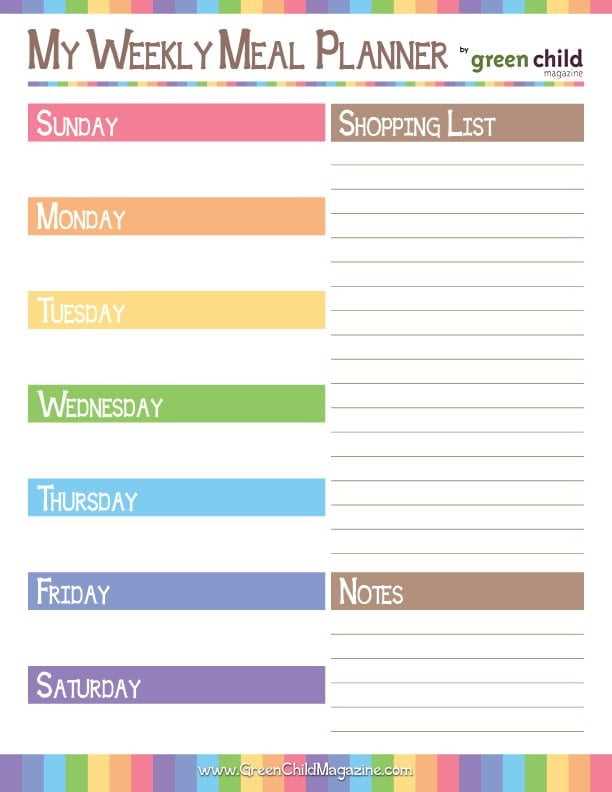
Start by choosing a template that fits your style and needs. Look for one with enough space to write each meal for every day of the week. This layout allows you to plan breakfast, lunch, dinner, and even snacks without feeling cramped for space. The more organized the design, the easier it will be to stick to your goals.
Once you have your template, decide whether you want to plan based on what ingredients you already have or what you want to try. Take advantage of seasonal items or recipes you’ve been meaning to experiment with. This keeps the planning process fun and dynamic, while also ensuring variety in your meals.
After filling out the planner, use it as a guide for grocery shopping. With a clear list of what you need, you’ll avoid impulse buys and save time at the store. A well-organized shopping list helps you stick to your weekly meals and minimize waste, which is both budget-friendly and efficient.
Organizing Your Meals with a Simple Template
Begin by choosing a format that suits your weekly needs. Look for one that allows you to divide the week into clear segments, with sufficient space for meals, grocery lists, and notes. This kind of layout makes it easy to plan all meals and snacks, ensuring you’re not missing any important details.
Start with the basics. Write down the meals you already know you’ll enjoy or those you’ve been planning to make for a while. Organize the meals in order of difficulty or time commitment, so that the more complicated ones fall on days when you have more time to cook. This reduces stress and maximizes efficiency.
Once you have your meals planned out, make a shopping list based on the ingredients you need. Group items by category, such as dairy, produce, or canned goods, so that you’re organized when you go to the store. This saves time, especially during busy shopping hours, and ensures you don’t forget anything important.
If you prefer variety, swap out meals or ingredients weekly. This keeps your meal plan fresh and prevents monotony. For instance, one week you could incorporate Mediterranean dishes, and the next week, focus on Asian-inspired meals. Adjust based on what’s in season or what’s on sale at your local store.
Another way to maximize your meal plan is by including make-ahead meals. These can be prepared in batches and frozen for later use, saving you time during the week. Dishes like soups, stews, and casseroles can easily be made in large quantities and reheated when needed.
After you’ve filled out your template, stick it somewhere visible in the kitchen. This serves as a daily reminder of what’s planned, helping you stay on track. You’ll also find it easier to stay motivated when you have a clear plan and don’t have to think about what to cook each day.
At the end of the week, take some time to review your plan. Evaluate which meals were a hit, which ones need improvement, and whether you had enough variety. This feedback helps you make more informed decisions when planning the next week’s meals, ensuring continuous improvement in your planning process.
How to Use a Weekly Menu Planner to Organize Your Meals
Start by filling out each day of the week with your planned meals. This can include breakfast, lunch, dinner, and any snacks. It’s helpful to categorize the meals by their preparation time, so you can plan easy dishes for busier days and more elaborate ones when you have extra time. By planning ahead, you can avoid last-minute decisions and unnecessary takeout.
Once your meals are planned, create a detailed shopping list based on the ingredients you’ll need. Group the items by sections such as dairy, meats, or pantry staples. This will save time at the store and help prevent impulse purchases. Make sure to include any extra items, like drinks or condiments, to ensure you have everything needed to stick to your plan throughout the week.