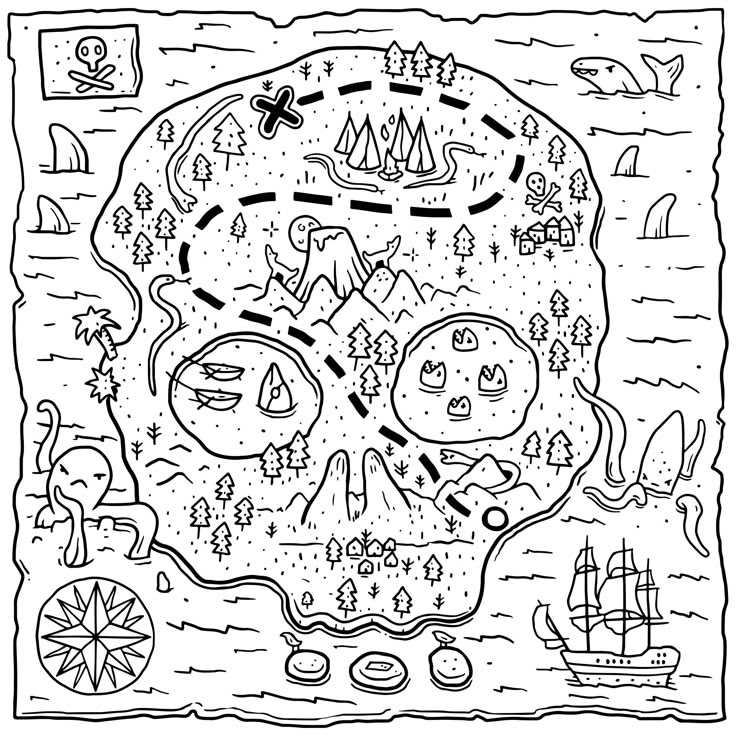
For a fun and interactive activity, create your own treasure hunt by using these detailed, hand-drawn route guides. Whether you’re planning a themed party or just want to entertain kids, these visuals provide the perfect backdrop for an exciting scavenger hunt.
To get started, simply download one of the available templates, print it out, and use it to mark key locations or clues. You can adjust the design to fit any space or story, adding more complexity with hidden symbols or landmarks to make the hunt more challenging.
Keep in mind that these designs can also be customized digitally before printing. Tools like image editors allow you to add personalized touches, such as names of places or specific routes. Once printed, you’ll have a map that brings your adventure to life in vivid detail.
How to Use Treasure Hunt Route Guides for Adventure
Start by selecting a suitable template that fits your desired adventure theme. You can choose from simple maps or more intricate designs with various landmarks. These visuals can be used for everything from small scavenger hunts to elaborate themed events.
Once you have your map, the next step is to determine the starting and ending points. This will guide participants on their quest, ensuring the experience is both challenging and fun. Clearly mark each checkpoint to help players know where to go next, without making it too obvious.
For added excitement, include hidden clues or symbols that need to be decoded. This adds an extra layer of mystery to the game, encouraging players to think critically and work together. You can use riddles, puzzles, or even pictures that represent the next location on the journey.
It’s also possible to make the experience more immersive by adding thematic details, like aged parchment textures or pirate-themed icons. This not only enhances the atmosphere but also makes the activity visually appealing and engaging for all ages.
Once the design is ready, print it out on sturdy paper. Consider using thicker cardstock for durability, especially if the adventure will take place outdoors or in environments where the map might get wet or torn. Laminating the map is another option to extend its lifespan.
After printing, cut the map into sections if you’re planning to hide different parts of the route in various locations. This strategy works well for larger spaces or outdoor treasure hunts, allowing participants to gradually uncover their next clue as they explore.
Lastly, make sure the map is age-appropriate. Younger participants might need simpler designs with larger, more obvious clues, while older kids or adults can handle more complex challenges. Tailoring the map to the group’s experience level will ensure everyone enjoys the hunt to its fullest.
How to Download and Print Treasure Hunt Route Guides
Start by searching for an online source that offers downloadable designs. There are numerous websites that host a variety of templates, including vintage-themed routes and ones featuring intricate details. Ensure the website you choose provides files that are compatible with your printer’s format (such as PDF or JPEG).
Once you’ve found the perfect guide, click on the download link. If the site asks for your email or subscription, decide if you’re comfortable with it before proceeding. Always check for any potential pop-ups or unwanted software during the download process.
After downloading, locate the file in your computer’s designated folder for downloaded items. Open the file to preview it. This allows you to make sure the design fits your needs before printing and ensures the quality is high enough for a clear, crisp result.
Before printing, adjust the settings on your printer. Choose the best quality print option to ensure fine details show up clearly. If you want to print multiple copies or a larger size, ensure your printer can handle this format and make the necessary adjustments in the settings.
Next, load your printer with the appropriate paper. For outdoor or adventure-themed activities, use thicker paper or cardstock. If the map is for indoor use, regular paper may suffice. Paper quality will affect the overall durability and feel of the final product.
Print a test page first to make sure everything is aligned and in proper proportions. This test helps avoid wasting paper or ink. Check that the design doesn’t get cut off or misaligned, especially when printing larger images or on different page sizes.
If you need to print on multiple pages, use your printer’s options to split the design across several sheets. This will allow you to piece the design together seamlessly once printed. Be sure to carefully follow the instructions to ensure everything matches up correctly.
Once printed, cut out any unnecessary edges and trim the design to fit your desired size. If the design will be handled often, consider laminating the sheets for extra durability, or use a protective sleeve to ensure the guide lasts throughout the activity.