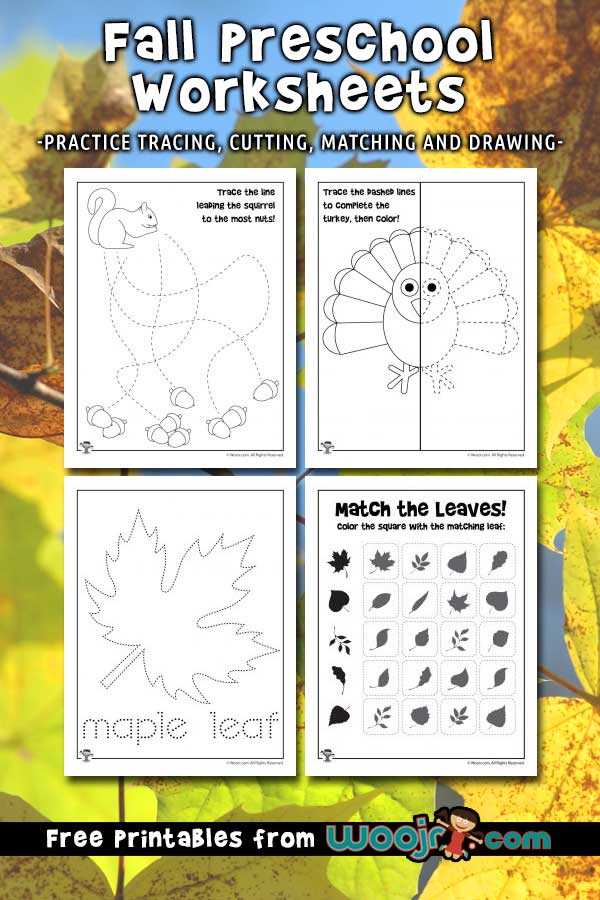
Incorporating themed worksheets into early childhood education helps engage little learners and enhance their cognitive development. Using templates with pictures of pumpkins, leaves, and animals creates a fun way to practice important skills like counting, matching, and handwriting. These activities not only introduce new concepts but also allow kids to explore their creativity while working with shapes and colors.
Sorting and Matching Games are a great way to boost visual recognition and categorization. For example, you can provide images of various autumn-related items, such as acorns, apples, and leaves, and ask the child to sort them into groups. This kind of task develops both organizational skills and understanding of categorization principles.
Tracing and Drawing Exercises can improve fine motor skills and encourage early writing. Simple tracing tasks with seasonal illustrations help children learn the shapes of letters and numbers, while drawing prompts related to the season inspire creativity. These activities make it easier for kids to practice new skills in a fun, hands-on way.
Engaging Autumn-Themed Worksheets for Young Learners
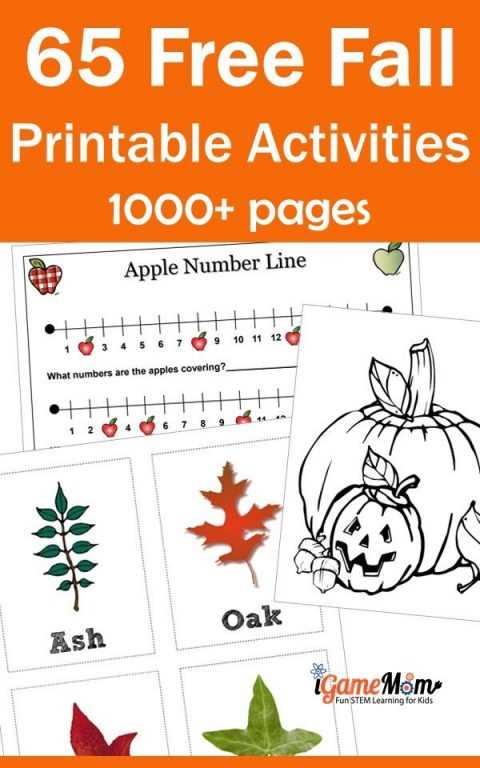
One of the best ways to introduce seasonal activities to kids is through interactive worksheets. Use templates with illustrations of autumn elements, like pumpkins, acorns, and falling leaves. These worksheets help children practice counting, color recognition, and matching skills. A simple activity like coloring a pumpkin and counting the seeds can improve number recognition and fine motor skills. It’s a fun way to combine learning with creativity.
Cut-and-Paste Activities are great for improving hand-eye coordination. Provide simple autumn-themed images that children can cut out and glue onto corresponding backgrounds. This activity helps them develop dexterity and spatial awareness. Plus, kids enjoy the process of creating something tangible from the pieces they’ve assembled.
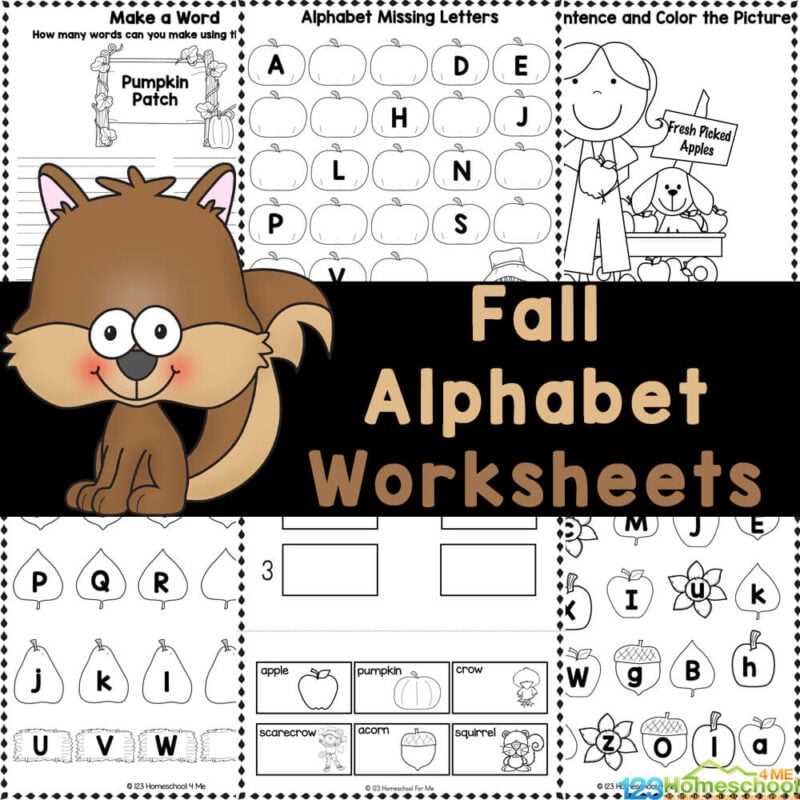
Letter and Number Tracing is another key activity. Kids can practice writing by tracing letters or numbers inside autumn-themed shapes. This builds handwriting skills while keeping the subject matter exciting. For example, tracing the letter “A” inside an apple shape or “T” within a tree helps link letters with real-world objects, making the learning process more engaging.
How to Create Autumn-Themed Worksheets for Young Learners
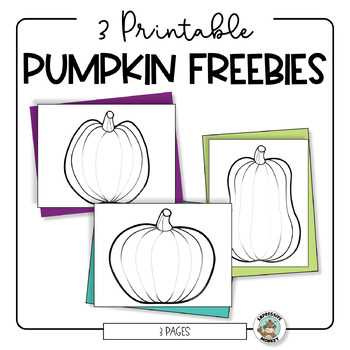
Begin with selecting simple and clear illustrations. Choose recognizable symbols like pumpkins, apples, or acorns to make the worksheet visually appealing and relatable. These objects are not only associated with the season but also familiar to young children, which helps them engage with the material.
Incorporate Counting Tasks. For example, create a worksheet where children count the number of leaves on a tree or apples in a basket. This builds early math skills and helps kids connect numbers with real objects. Use clear, large fonts and simple shapes for easy comprehension.
Use Matching Exercises. Pair autumn-themed images like squirrels with acorns or trees with fallen leaves. Ask kids to draw lines connecting the corresponding items. This reinforces pattern recognition and memory, skills that are foundational in early learning.
Add Color by Number Activities. Kids love coloring, so combining it with learning adds value. Create simple color-by-number exercises where children fill in shapes based on a key, reinforcing their knowledge of colors and numbers. For example, using “red” for apples or “yellow” for leaves can teach them to associate colors with everyday items.
Include Tracing Exercises. Let children practice tracing lines, numbers, or even simple shapes that reflect the season. Tracing around pumpkins, trees, or falling leaves can help improve fine motor skills, which are crucial for writing later on.
Design Shape Recognition Tasks. Create activities where children identify or draw different shapes within autumn illustrations. For example, a pumpkin is often a round shape, and leaves can be triangle or oval-shaped. This helps kids understand basic geometry concepts in a fun context.
Introduce Simple Word Recognition. Include easy words related to autumn in the worksheet, such as “leaf,” “apple,” or “tree.” You can even include a matching task where children match the word to the image, building early literacy skills in a natural, interactive way.
Encourage Creative Thinking. Leave room for free drawing or imaginative activities. After completing a few structured tasks, invite children to draw their own autumn scene, such as a tree with falling leaves or a pumpkin patch. This allows children to express themselves while reinforcing what they’ve learned.