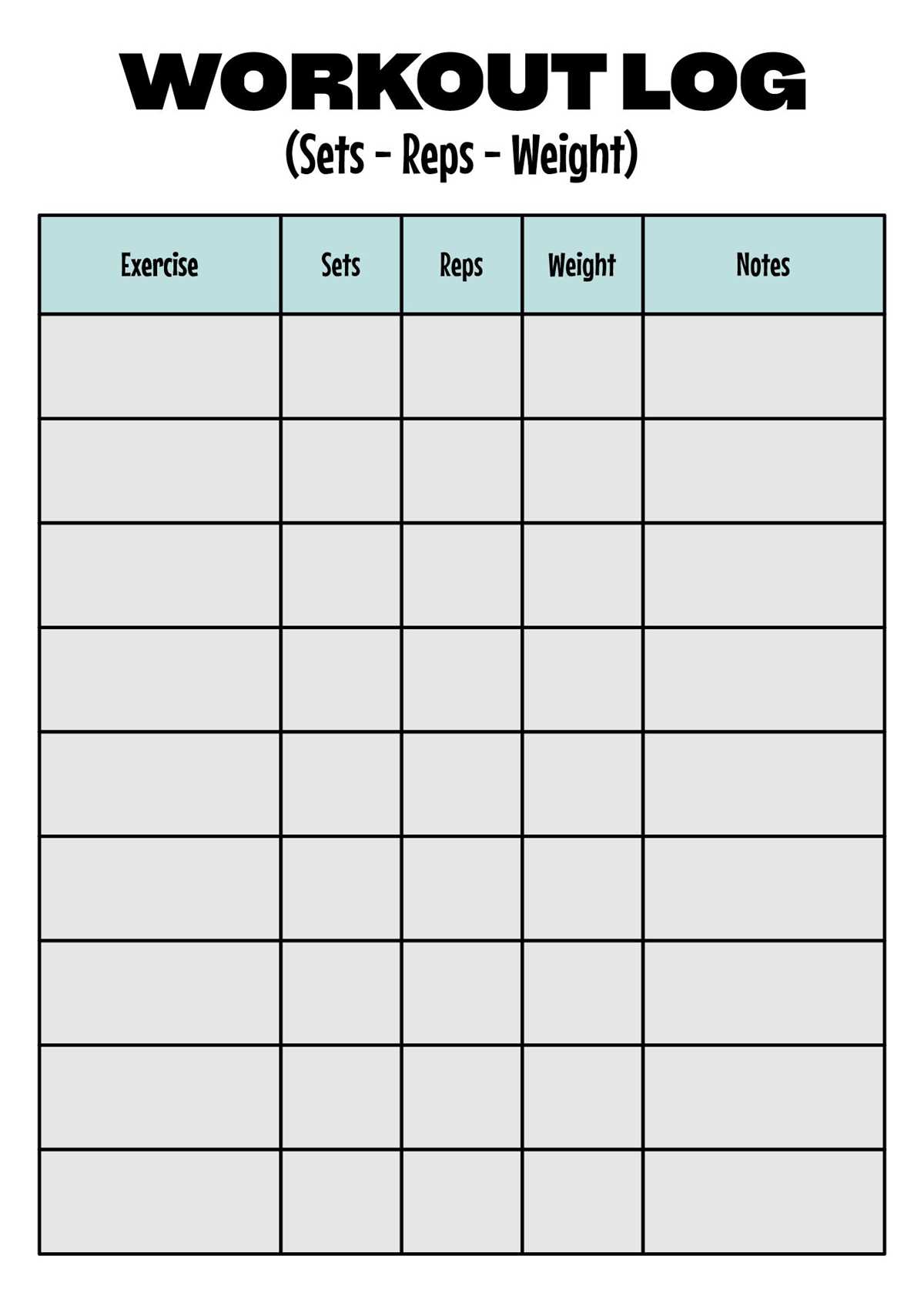
To monitor your physical activities and track improvements, a well-structured chart can be an invaluable tool. It allows you to record workout sessions, set clear goals, and evaluate progress over time. Instead of relying on vague recollections, writing down each session provides a concrete record you can review anytime.
Choose a format that suits your routine, whether it’s a basic grid for jotting down sets, reps, and weights or a more detailed entry with notes on your performance, energy levels, and recovery. Customizing it to your needs is key. You can print it out for daily use or keep a digital copy for easy editing.
Having a physical copy ensures that you are less likely to forget important details, such as the weights used, the duration of each workout, or any personal notes that will help you improve. It becomes a personal reflection of your fitness habits and an effective way to stay accountable to your routine.
Creating a Customized Tracking Sheet for Your Fitness Routine
To get the most out of your fitness tracking, ensure that your sheet is tailored to your specific goals. Begin by defining what you want to track: repetitions, sets, weight, distance, or time. Customize the columns to reflect these categories and any additional details that might be useful, like rest periods or feelings after each session.
For those who prefer a simple approach, a basic table might be enough. A column for each workout day, followed by rows for sets, reps, and the type of activity can give you a clear overview of your progress. However, if you’re focused on increasing endurance, adding columns for heart rate or calories burned can be beneficial.
- Activity type (running, weightlifting, etc.)
- Sets and reps or duration
- Rest intervals
- Notes (energy level, soreness, mood)
Adding a comments section helps you track more subjective details like how you felt during or after a workout. These insights allow you to spot patterns–perhaps certain exercises leave you fatigued or you feel stronger with specific routines. This information is valuable for adjusting your workouts and preventing overtraining.
Don’t forget to update your tracking sheet regularly. After each session, write down the most important data points. This habit ensures you don’t forget crucial details and gives you real-time feedback. By maintaining consistency, you’ll notice trends and can plan your future sessions more strategically.
For better clarity, color-coding can help differentiate between types of activities or intensity levels. For instance, you could highlight higher-intensity workouts in bold or with a specific color, making it easy to spot them at a glance. This visual approach makes it simpler to analyze your fitness routine over time and see areas for improvement.
How to Customize Your Printable Exercise Log for Personal Use
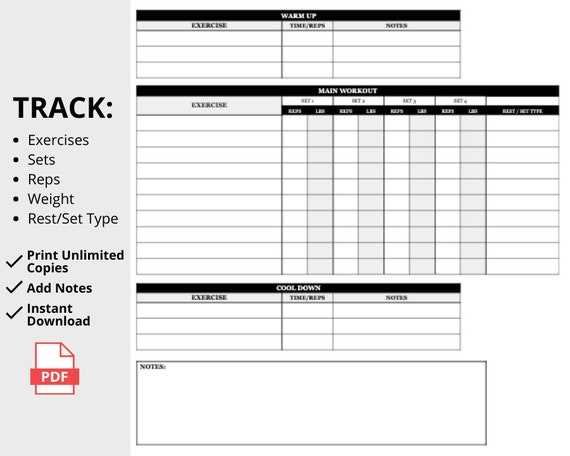
Start by determining which categories are most relevant to your fitness routine. For strength training, focus on recording sets, repetitions, and weight. If you’re running, note down the distance, time, and pace. Tailor the headings to reflect your primary goals–whether it’s tracking performance, progress, or both.
Consider adding a section for your personal notes. This can be used to record how you felt during the workout, any adjustments you made, or how much rest you took. These subjective insights will help you better understand your physical and mental state, aiding in future training adjustments.
If you want to keep track of recovery, integrate fields for your sleep and nutrition. Write down the hours you slept and meals consumed before or after your workout. This will allow you to analyze the impact of your rest and diet on your performance and recovery.
- Workout duration
- Intensity level (light, medium, heavy)
- Rest between sets or exercises
- Pre- or post-workout meals
For more detailed tracking, add a column for personal goals. If you’re working towards increasing your endurance or lifting heavier weights, setting targets and tracking progress toward them can be motivating. You can update these goals every few weeks to keep yourself challenged.
Adjust the format to your preferred method of tracking. If you prefer simplicity, a simple table with columns for each workout type may be all you need. On the other hand, if you like more complex data, consider including multiple sections for warm-up, cool-down, and specific muscle groups worked.
Incorporate visual elements like graphs or charts if you’re tech-savvy. Tracking improvement with visual representations can provide instant feedback. You can easily compare your progress over time, which helps you stay motivated and organized.
Lastly, print a few copies of your customized sheet and keep them in a folder. This way, you’ll always have a fresh one ready for your next workout. A physical copy will help keep you accountable and organized as you track your progress over time.