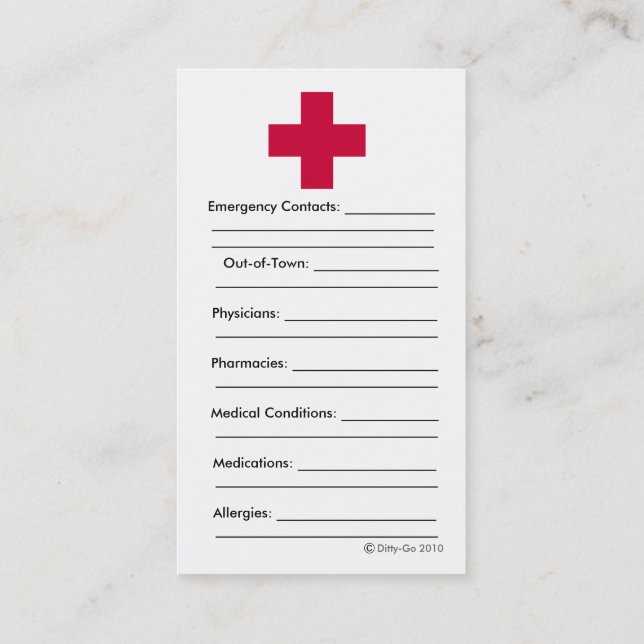
Keep a small document with your vital information handy at all times. Include your full name, contact details, and any health conditions that require immediate attention. This will help first responders or bystanders act quickly if you’re unable to communicate.
List important contacts, including family or close friends, along with the best time to reach them. Ensure you provide clear instructions for medical needs or allergies, especially if you have conditions like diabetes, asthma, or heart problems. This document should be easy to read and stored in a format that can fit into a pocket or small compartment.
Use bold text for the most crucial details, like your blood type or emergency contacts, so they stand out. Keep the overall layout clean, with no unnecessary information, so that others can quickly find what they need when time is of the essence.
How to Create a Compact Information Sheet for Your Pocket
Design a small document that holds only the most critical details. This should fit easily inside your pocket or bag. The document must include your full name, date of birth, medical conditions, and emergency contacts. These are the most crucial elements for anyone who needs to help you in a sudden situation.
The most important information should be at the top of the document. Start with personal identifiers: your name and date of birth. This helps responders quickly confirm your identity if needed. Below that, list any health conditions that need immediate attention, such as heart problems, allergies, or ongoing treatments.
Next, include contact details for individuals who can be reached in case of a situation. This should include family members, close friends, or anyone familiar with your health needs. List their phone numbers and the best times to reach them. If possible, include a secondary contact in case the primary is unavailable.
A good format to follow is a table or bullet points. This ensures the information is easy to read and accessible at a glance. Use bold or larger fonts for crucial details, such as medical conditions and emergency contacts. This will help others locate the most important information quickly.
It’s also important to keep the design minimalistic. Avoid unnecessary details that may clutter the sheet. The goal is to make sure anyone can use the document without hesitation, even if they have limited time to do so. Focus on what can help save time and deliver key information efficiently.
Choose a durable material for printing. Laminating the document will make it last longer, especially if you carry it daily. If lamination is not an option, ensure the paper is of good quality, resistant to tearing and water damage. This will help the sheet remain legible even in less-than-ideal conditions.
When printing, select a size that fits comfortably inside your clothing or bag but isn’t too large. A standard 3” x 5” card works well, but you can adjust the size depending on your needs. Make sure the print is legible without being too small or cramped.
Review the document regularly. Make updates to contacts or medical conditions as your circumstances change. Keeping it current is key to ensuring the information remains relevant and useful in any situation that arises.
How to Design a Compact Information Sheet for Your Pocket
Focus on clarity and simplicity when creating your small document. Include only the most vital details like your full name, medical conditions, allergies, and contact numbers. Prioritize legibility by choosing a simple, clean font. Organize the information in sections, with headings in bold to make it easy to find key data quickly. Keep the layout compact to ensure it fits in your bag or pocket without taking up too much space.
Consider using a durable material like laminated paper to protect the document from wear and tear. This will ensure it remains legible even in harsh conditions. A size of 3” x 5” works well for fitting into most bags, but you can adjust it depending on your preferences. Regularly update the information to reflect any changes in your health status or emergency contacts to ensure its continued usefulness in urgent situations.