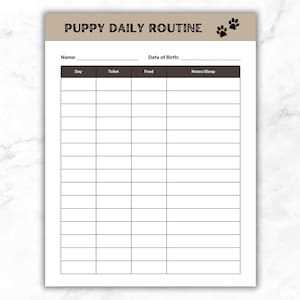
Start by organizing your new dog’s day with a simple template to track feeding times, walks, and play sessions. This helps ensure your pet gets the right amount of exercise and nutrition at the proper times.
Use a layout that suits your needs, such as hourly slots or blocks for specific activities. This will help you stay consistent with your dog’s needs, especially in the first few months as they adjust to their new home.
Choose a schedule that can easily be adapted as your dog’s needs change. Younger dogs often require more frequent playtimes and potty breaks, while adult dogs may need fewer sessions but more time for walks and training.
Creating a Custom Schedule for Your Dog’s Day
For an effective approach to managing your dog’s activities, break the day into clear segments. Start with meal times, ensuring they are consistent every day. Follow up with bathroom breaks and exercise sessions, making sure there’s enough time for both active play and rest. A well-structured day promotes good behavior and helps your dog adapt to their new environment.
Include time for training and mental stimulation. Short training sessions throughout the day, especially during calm moments, will keep your dog engaged and help with bonding. As your dog becomes accustomed to the structure, you can adjust the intervals for walks, naps, and other activities based on their needs and energy levels.
How to Create a Personalized Daily Routine for Your Dog
Start by determining your dog’s basic needs: feeding, exercise, bathroom breaks, and sleep. For example, if your dog is still young, they may need more frequent meals and bathroom breaks. Schedule their feeding times around the same hours each day to establish consistency, which will help with training and digestion.
Next, plan time for walks and play. Puppies generally have a lot of energy and need several play sessions throughout the day. A good starting point is to schedule a morning and evening walk, with short play breaks in between. Adjust these based on your dog’s energy levels and breed-specific needs.
Incorporate training sessions into the day. Even short, 5-10 minute training sessions will help with discipline and bonding. Keep training times consistent and part of the daily structure, ideally right after a walk or before meals when your dog is calm and focused.
- Feeding: Set meal times that suit your dog’s age and breed.
- Exercise: Include at least two daily walks and short play sessions.
- Training: Dedicate time to teach new commands or reinforce basic skills.
Don’t forget to allow time for rest. Puppies need more sleep than adult dogs, so provide them with a quiet space where they can nap throughout the day. This will help them recharge and avoid overstimulation.
As your dog grows, adapt the structure of their day. Older dogs may not need as many bathroom breaks or as much playtime. Adjust meal portions, play sessions, and exercise times to fit their evolving needs.
Lastly, track your dog’s progress. Keep notes on their behavior, how they respond to the schedule, and any changes that might need to be made. This way, you’ll be able to fine-tune their daily structure for maximum well-being.