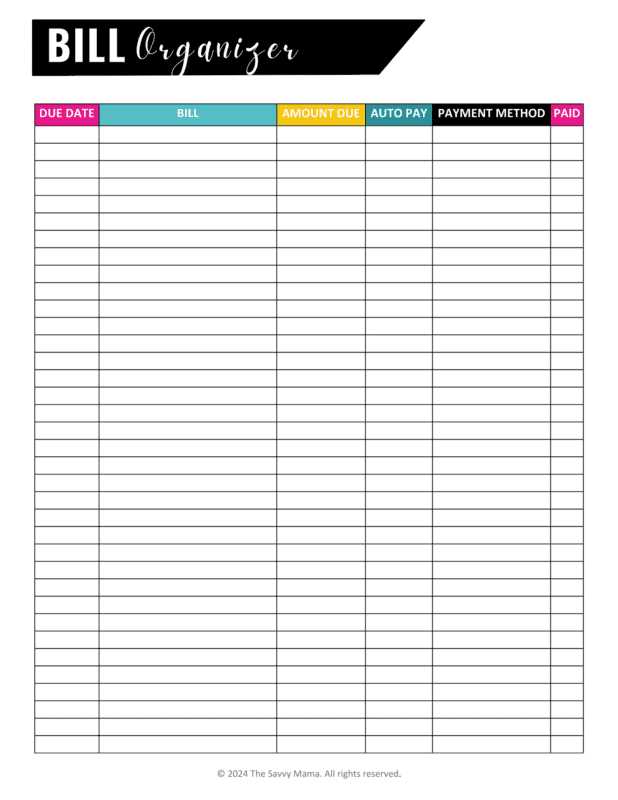
To stay on top of your finances, start by creating a clear, organized system for tracking your payments. A well-structured document that allows you to record all due dates, amounts, and payment methods will keep you on track throughout the month.
When choosing a system, focus on simplicity and clarity. A spreadsheet or table with sections for each expense category and a place to mark off payments is often the most practical. You should be able to add new entries easily while also reviewing upcoming obligations at a glance.
If you prefer a more hands-on approach, print out a sheet that fits your needs. This can be a simple table or a more detailed format with dedicated areas for notes, reminders, or even priority levels. Customization is key to making the tool truly useful for your specific financial habits.
Tracking payments regularly is the key to avoiding late fees and staying within budget. Update your document after each payment and review it weekly to ensure nothing is overlooked. This habit will give you a clear picture of where your money is going and help you adjust if necessary.
How to Use a Printable Bill Planner for Budgeting
First, gather all your recurring monthly payments and write them down in your sheet. Include bills like rent, utilities, subscriptions, and loan payments. Having a dedicated section for these fixed costs will give you a clear view of what must be paid every month.
Next, allocate a specific space for one-time payments, such as annual subscriptions or unexpected expenses. These can be tricky to track, but by setting aside a separate section, you can keep an eye on them without letting them slip through the cracks.
Assign payment dates to each expense. This will help you track when bills are due and avoid any missed payments. Add reminders for a week before the due date so that you have time to make arrangements if needed.
To make it easier, color-code your sections. For example, mark fixed costs in blue and one-time payments in green. This quick visual cue will help you prioritize payments based on their importance and urgency.
Review your income and expenses at the beginning of each month. By comparing the total amount of income with your fixed and variable costs, you’ll have a clear picture of where your money goes. This helps with making adjustments if needed to ensure your spending aligns with your financial goals.
Use the notes section of your sheet for any reminders or notes on irregular expenses, such as car maintenance or gifts. By jotting down anything out of the ordinary, you can avoid surprises and plan better for upcoming expenses.
Check your progress weekly by reviewing the sheet and ticking off completed payments. Keeping your records up-to-date will prevent confusion later in the month and make it easier to see any potential areas where you’re overspending.
Finally, at the end of the month, assess your budget. Look for areas where you can cut back or adjust your spending. By evaluating your financial plan each month, you can keep improving your budgeting skills and staying on track.
Top Features to Look for in a Bill Planner Printable
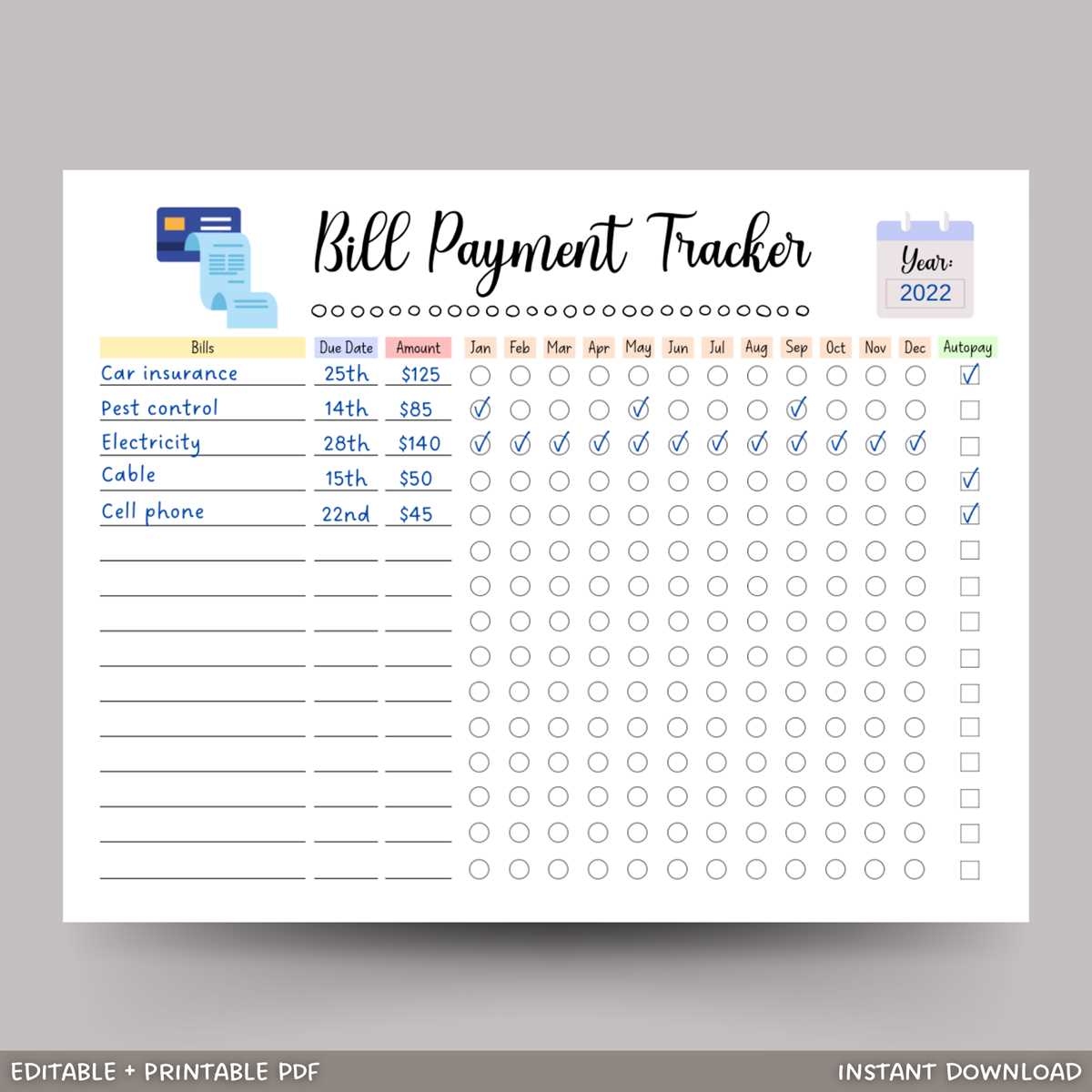
Look for a document with clear sections for fixed and variable costs. This separation helps you quickly identify and track recurring expenses versus one-time payments.
Space for due dates is another important feature. Including a dedicated area to record payment deadlines will help you avoid missing any payments and give you a clear view of when each payment is due.
Opt for a design that includes checklist boxes. Having boxes to mark off each completed payment can keep you organized and ensure you stay on top of your expenses as you go through the month.
A monthly summary section is helpful for reviewing your budget. Include a place to record your income, total expenses, and any adjustments made during the month. This will give you a quick overview of your financial status.
Consider a space for irregular payments or notes. Life is unpredictable, and adding a section for unexpected costs will help you stay prepared and keep your budget flexible for any sudden expenses.
Lastly, ensure the design is easy to customize. Whether you prefer a minimalist layout or a detailed structure, being able to adjust the template according to your needs will make it more effective in the long run.
Where to Find Free Bill Planner Printables Online
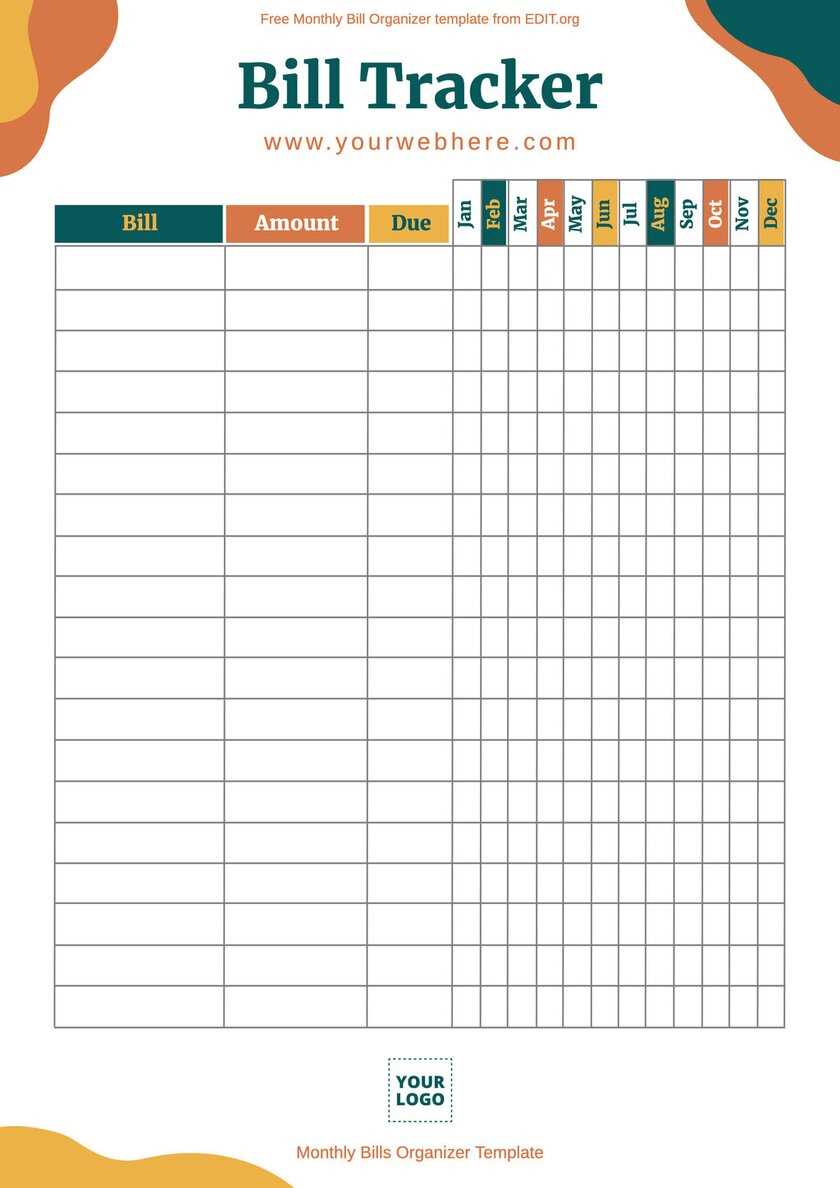
Search websites that specialize in budgeting tools, such as BudgetTemplate.com, which offers a variety of free templates for organizing monthly payments and expenses. These templates are simple, easy to use, and customizable for your needs.
Another good resource is Template.net. Here you can find both free and premium options for financial management documents. Their free templates cover various formats, from minimalistic designs to more detailed layouts with categories and reminders.
Check out Canva for a range of customizable budgeting tools. While primarily known for design, Canva offers several free budgeting templates that can be personalized and downloaded in multiple formats.
| Website | Features | Customization |
|---|---|---|
| BudgetTemplate.com | Various free expense tracking templates | Basic customization options |
| Template.net | Free and premium budgeting templates | Full customization for premium templates |
| Canva | Customizable designs for financial tools | High level of customization |
Additionally, Vertex42 offers free Excel-based templates that are highly functional for tracking expenses and due dates. The templates are perfect for those who prefer spreadsheet-based solutions.
Lastly, try browsing through Pinterest for free downloadable financial tools. Many users share their own designs, which are available for instant download and can be printed or edited to suit your specific needs.