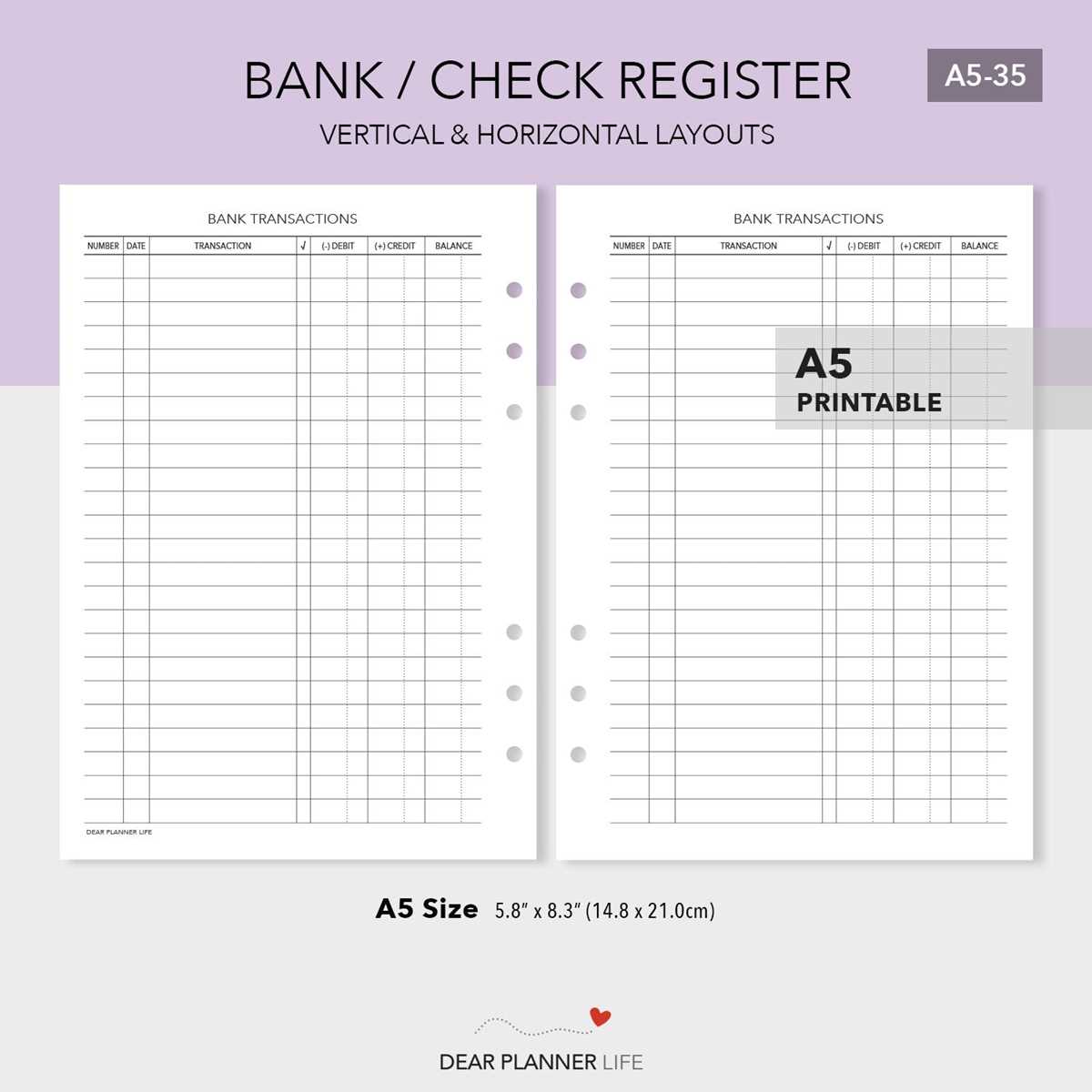
To stay on top of your financial activity, start using a simple template that helps you record every transaction. This tool is designed to help you log deposits, withdrawals, and other adjustments, making it easier to manage your funds without needing specialized software. By consistently updating this form, you can spot any discrepancies early and maintain an accurate overview of your financial situation.
Whether you prefer to print out a blank version or use a digital copy, this method provides flexibility. It’s particularly useful for people who like to keep detailed records without relying on online banking platforms. The format allows you to track the balance after each entry, preventing errors and ensuring you’re always up to date.
Regular use of this tool can also help you budget more effectively by highlighting where money is being spent. By having a clear view of your daily, weekly, and monthly transactions, you’ll be able to make adjustments where necessary and avoid overspending.
Printable Bank Account Register Guide
To create a financial log that fits your needs, begin with a layout that includes columns for the date, description of the transaction, amount, and running balance. This format keeps everything organized, making it easy to monitor your finances day-to-day. Make sure there is enough space for notes and additional details like transaction categories or merchant names.
When using a printed copy, keep it in a safe location and update it after each deposit or withdrawal. Be consistent with your entries to avoid confusion and ensure accuracy. For each transaction, record the exact date and any identifying details, such as check numbers or reference codes. This step will help if you ever need to reconcile any discrepancies.
It’s beneficial to use a new sheet at the beginning of each month or financial period. This will allow you to track monthly spending more easily and assess if you’re staying within your budget. At the end of each period, review the log to ensure all entries match your bank statements, making adjustments if needed.
If you want a more advanced version, consider adding a column for budgeted vs. actual amounts. This will give you a clearer picture of where your money is going and help identify areas where you can save. You can also include a running total of your expenses to keep your overall financial picture in check.
For maximum effectiveness, it’s a good idea to use this form regularly. The more frequently you update it, the more insight you’ll gain into your financial habits. By maintaining this discipline, you’ll have a solid record for managing your money and avoiding unnecessary fees or errors.
How to Create a Printable Bank Account Register
Start by creating a table with columns for key details like the date of the transaction, the description (such as the merchant or reason for the entry), the amount, and the balance after the transaction. This structure will allow for easy tracking of your financial activities and help you stay organized. Use a simple design to ensure clarity and ease of use.
For the balance column, leave space for the updated total after each transaction. This helps maintain an accurate and ongoing record of your funds without needing to refer to external sources. When filling out your form, calculate the balance immediately after each entry to keep everything current.
Consider adding a column for check or transaction numbers, especially if you’re writing checks or processing electronic payments. This can help you quickly match entries with your bank statement or receipts. It also provides an extra layer of verification if discrepancies arise.
For the date, use a consistent format like MM/DD/YYYY or a simple numeric format (e.g., 10/03). Consistency will make it easier to cross-reference your entries with other records, such as bank statements or online transaction histories.
Incorporate a section at the bottom for monthly or periodic summaries. This can include the total deposits, total withdrawals, and a closing balance for the period. It’s a helpful way to review your finances at a glance without having to check every single entry individually.
Keep a separate column for notes or categories, where you can identify the type of expense (e.g., groceries, utilities, etc.) or any other relevant details. This is particularly useful if you want to track specific spending patterns or prepare for taxes.
If you want a more detailed version, include additional columns for recurring transactions. For example, you could create a section for automatic payments, subscriptions, or savings transfers. This ensures you don’t overlook any automatic deductions that may affect your balance.
Finally, once your design is complete, print a few copies to use throughout the month. You can adjust the template as needed, adding or removing fields based on your financial goals. Having physical copies at hand will encourage you to stay on top of your finances and keep detailed records.