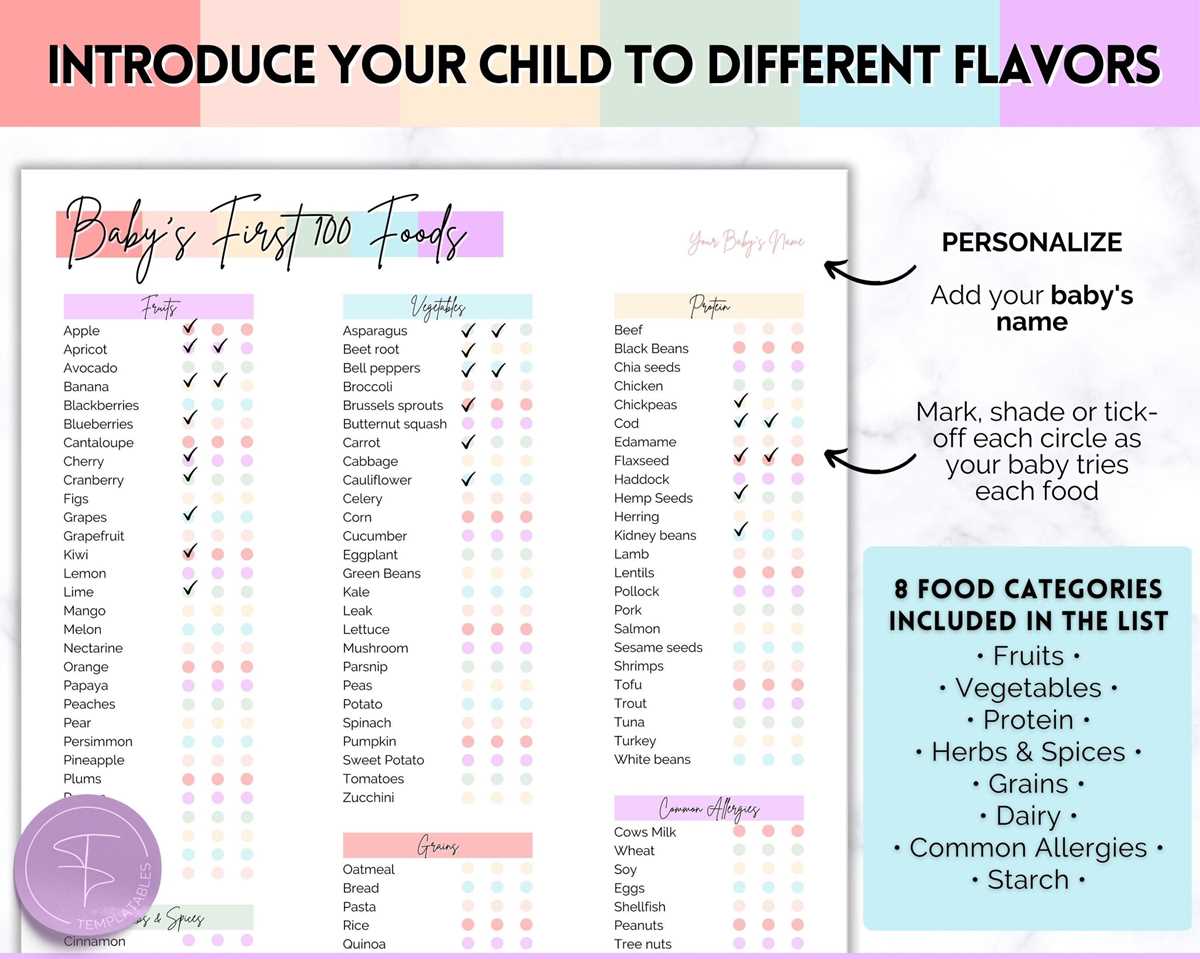
Introduce your baby to a wide variety of tastes and textures during their first year. This period is crucial for developing their preferences and ensuring they get the necessary nutrients for growth. Start with simple ingredients and gradually introduce more complex combinations to provide essential vitamins, minerals, and proteins.
Track the meals and new items you introduce to avoid missing out on important nutrients. Begin with single-ingredient items to gauge any possible reactions, then combine different flavors as your baby’s palate adjusts. This step-by-step approach will give your baby the foundation for a balanced diet.
Consider using visual tools to keep track of each item you’ve included in your baby’s meals. This can help organize the process, ensuring that a variety of ingredients are offered over time. Be sure to consult your pediatrician if you have any concerns about allergies or reactions as you expand their diet.
100 Foods to Introduce Before Baby Turns One
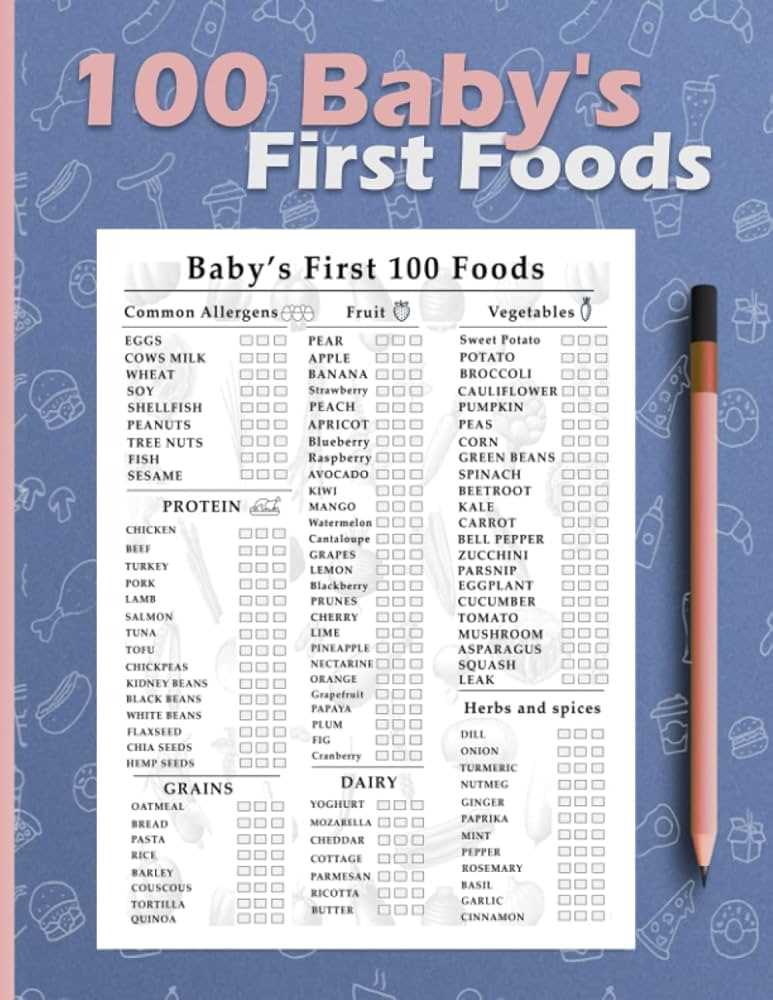
Introducing a variety of ingredients to your baby’s diet is crucial for their growth and development. Offering different types of flavors and textures will help expand their palate and encourage them to enjoy a wide range of foods as they grow. Start with simple purees and progress to more complex textures as they become more comfortable eating solids.
Begin with vegetables such as sweet potatoes, peas, and carrots. These foods are nutrient-dense and easy to prepare. Ensure they are cooked thoroughly and pureed to the right consistency. As your baby adapts, you can gradually introduce fruits like apples, pears, and bananas, all of which are mild and easy to digest.
Once your baby has become accustomed to fruits and vegetables, it’s time to incorporate proteins like chicken, turkey, and lentils. These offer important nutrients for growth, especially iron, which is essential for development. Serve them finely pureed or in soft chunks to ensure they’re easy to swallow.
Grains like rice, oats, and quinoa are excellent sources of carbohydrates and fiber, which help with energy and digestion. You can offer these as cereals or blend them into purees with fruits or vegetables to create new flavors. Be sure to monitor for any allergies as you introduce these foods.
Introducing dairy products such as yogurt and cheese can be a fun way to vary textures and flavors. Full-fat yogurt is a good source of healthy fats and probiotics, which support gut health. Cheese, on the other hand, provides calcium and protein for growing bones and muscles.
Avoid nuts and honey until after one year due to allergy risks and the potential for botulism. Instead, introduce nut butters like almond or peanut butter after 6 months, spreading them thinly on toast or mixing them into other foods. Remember to always watch for any signs of allergic reactions.
As your baby reaches 9 months, you can begin introducing finger foods like soft-cooked vegetables, pieces of fruit, and whole-grain crackers. This encourages independence and helps your baby develop fine motor skills. Offer small, bite-sized pieces to prevent choking hazards.
Here’s a table summarizing some of the key ingredients to try during your baby’s first year:
| Food Group | Examples | Age to Introduce |
|---|---|---|
| Vegetables | Sweet potatoes, carrots, peas | 6-8 months |
| Fruits | Apples, pears, bananas | 6-8 months |
| Proteins | Chicken, turkey, lentils | 7-9 months |
| Grains | Rice, oats, quinoa | 6-9 months |
| Dairy | Yogurt, cheese | 8-10 months |
| Finger Foods | Soft-cooked veggies, fruit pieces, crackers | 9-12 months |
How to Create a Balanced Meal Plan for Your Baby’s First Year
To create a balanced meal plan for your baby, focus on offering a variety of flavors, textures, and nutrients. Start with single-ingredient purees, such as mashed sweet potatoes or carrots, and gradually introduce more complex combinations as your baby adapts. It’s important to ensure that the meals are nutrient-dense to support healthy growth and development.
Include fruits and vegetables in your baby’s meals to provide vitamins, minerals, and fiber. Offer a variety of colors and types to ensure a broad spectrum of nutrients. For example, introduce green vegetables like peas and spinach, and sweet fruits like apples and bananas. Each new food should be introduced one at a time to monitor for potential allergies.
Incorporate proteins such as chicken, turkey, and lentils into your baby’s meals to support muscle development. Puree or mash these proteins to an appropriate consistency, and slowly introduce them as your baby becomes more comfortable with solid foods. Be sure to offer different protein sources to keep their meals interesting and nutritionally balanced.
Grains, such as oats, rice, and quinoa, are important to include in your baby’s diet. They provide necessary carbohydrates and fiber. Offer these as cereals or mix them with fruits and vegetables for added variety. Make sure to cook grains thoroughly to ensure they’re easy for your baby to digest.
Dairy products like full-fat yogurt and cheese are great for providing calcium and healthy fats. Begin by offering plain, unsweetened yogurt, which can be mixed with fruits for flavor. Cheese can be introduced in small, soft pieces. However, avoid honey until after the first year to prevent the risk of botulism.
As your baby approaches their first birthday, consider offering more diverse meals, including soft finger foods and small, manageable pieces of fruits, vegetables, and grains. This promotes independence and helps develop fine motor skills. At this stage, your baby should be ready for a variety of textures and flavors, making the meal plan even more exciting and fulfilling.