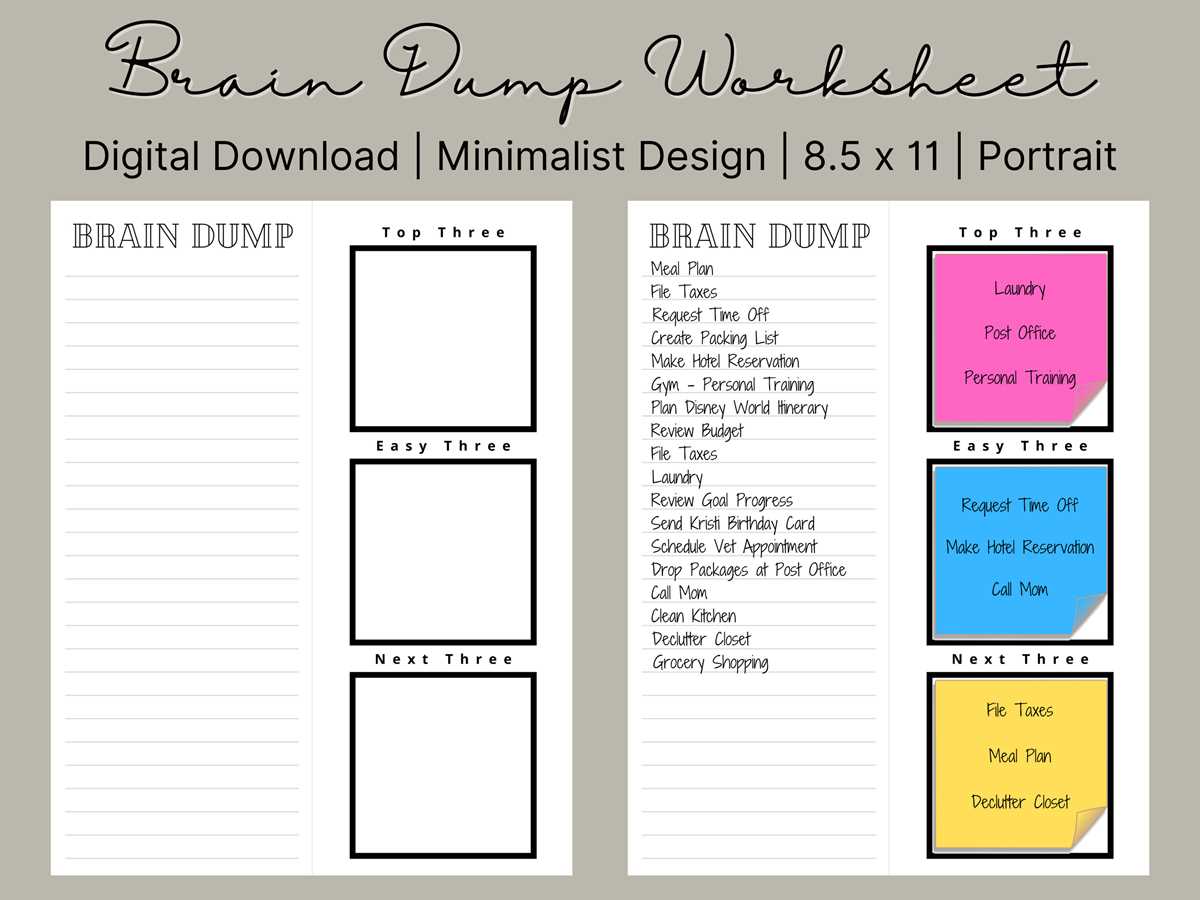
Having a method to jot down scattered ideas can significantly clear your mental space. This quick approach enables you to focus on what truly matters, without the distraction of overthinking. Using specific layouts to capture thoughts, tasks, or goals allows you to sort through them systematically, making it easier to prioritize and act.
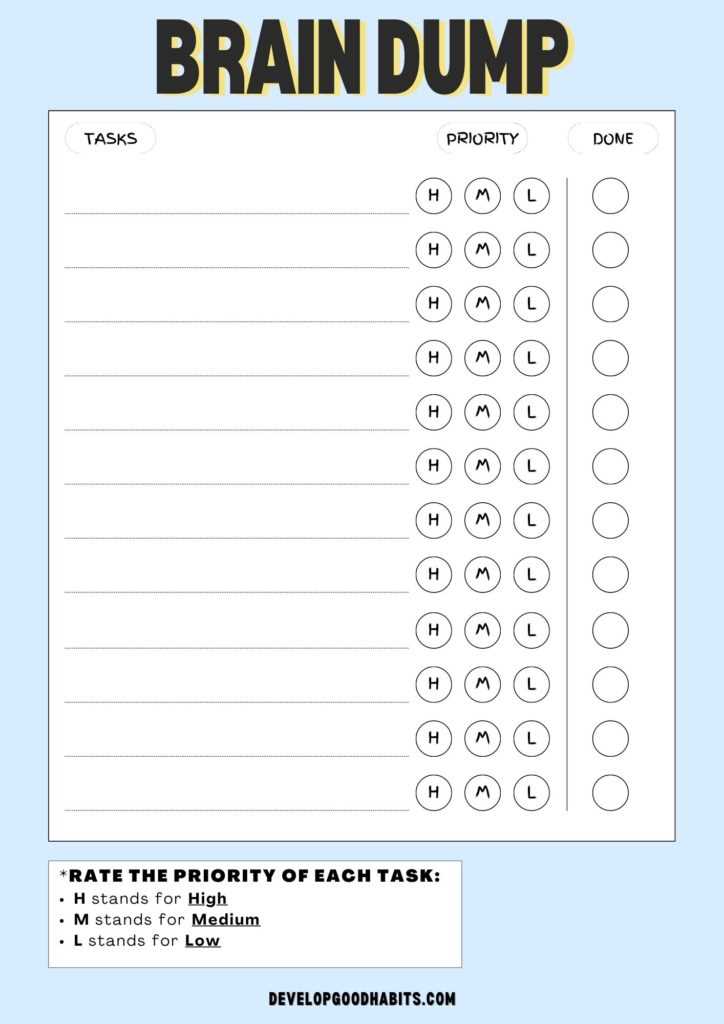
Whether you’re planning a project, organizing your daily routine, or simply getting your ideas on paper, structured sheets provide a framework that makes the process more straightforward. These templates guide you through various sections–like goals, to-dos, and reflections–that keep your attention on the most pressing items, without losing track of the bigger picture.
Choose from a variety of designs based on your needs. For instance, some layouts are perfect for clearing your mind before starting the day, while others may focus on breaking down complex projects into manageable tasks. Whatever your focus is, having a pre-defined structure accelerates the decision-making process and minimizes wasted time.
Practical Guide for Organizing Thoughts and Tasks
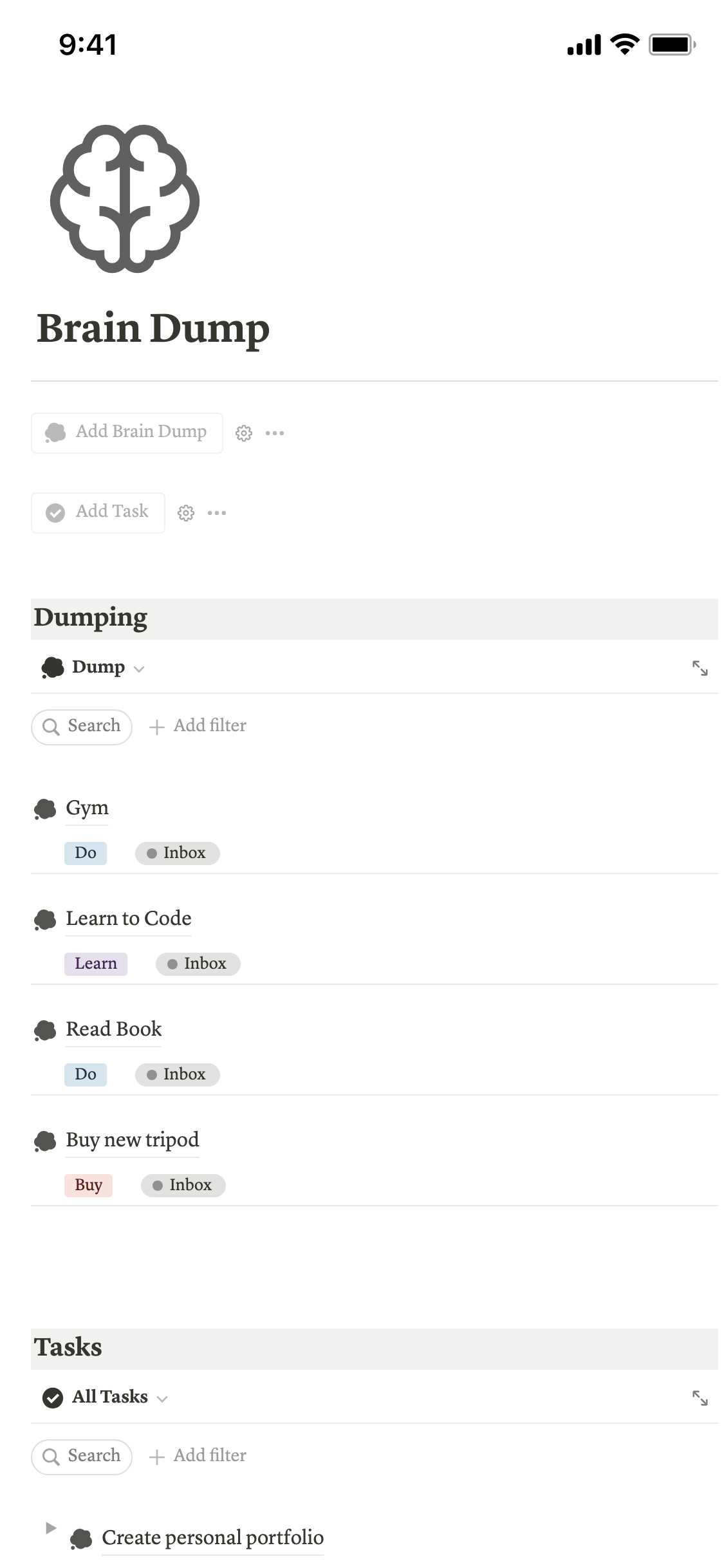
Start with a blank sheet designed to catch everything weighing on your mind. Use simple categories like “Ideas,” “Tasks,” and “Questions” to ensure clarity. This helps you focus on organizing information, instead of overwhelming yourself with endless points. Once your mind is clear, move on to narrowing down the most important items to address immediately.
Instead of letting your thoughts roam endlessly, categorize them by urgency and relevance. List out tasks with deadlines first, followed by ongoing projects or things to revisit later. If necessary, break them into smaller chunks for easier handling. This method prevents feeling stuck and ensures you’re moving in a structured direction.
For complex thoughts, write them out in full sentences. This process allows you to better analyze each piece and provides insight into what requires immediate action. Simplified bullet points can work for quick notes, but longer entries are beneficial for reflection and planning.
Incorporate sections like “Brainstorm” or “Future Ideas” to jot down unrefined concepts. This area is not for immediate action but serves as a repository for later use. The key is to separate urgent tasks from long-term goals to avoid distractions.
If you find yourself overwhelmed with thoughts of work, personal life, or external events, label them based on their impact. Immediate concerns like emails or meetings go under “Urgent,” while long-term reflections about career or personal development belong to “Long-Term Planning.” This system prevents mental clutter and increases task clarity.
Use checkboxes for tasks to create a sense of progress. As you cross off completed items, you gain momentum. Don’t be discouraged by unfinished tasks. Revisit them later with a fresh mindset, adjusting your priorities if necessary.
Lastly, review the list regularly to track your progress. Each time you go through it, ask yourself if the priorities still align with your current situation. Update and revise as needed, ensuring that you’re staying on track with your goals.
HTML
How to Create a Daily Organizing Template for Quick Task Management
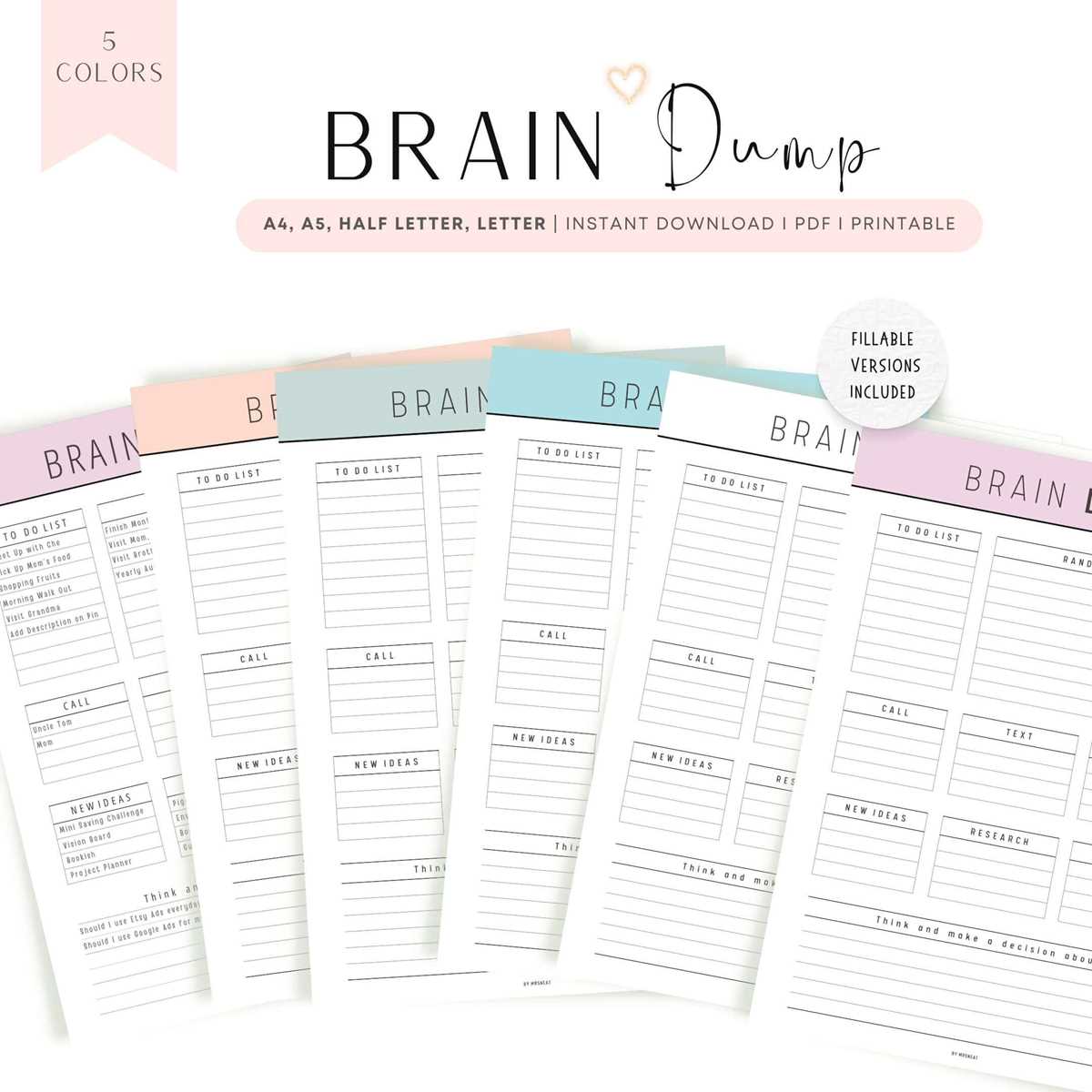
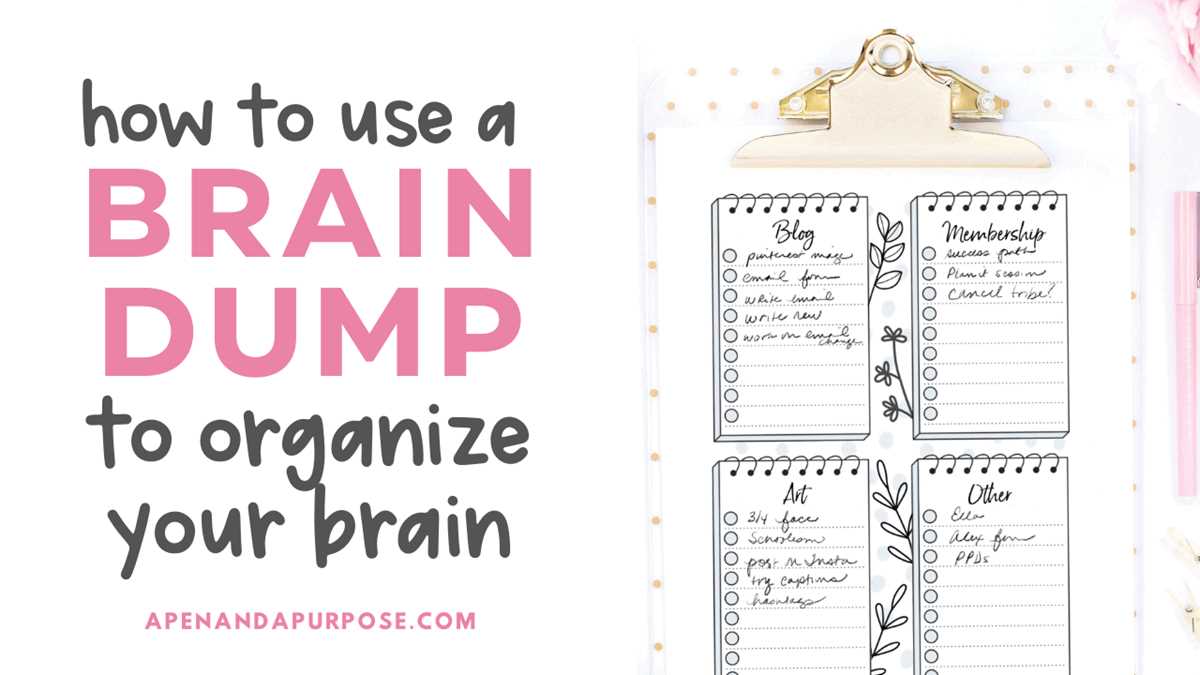
Begin by deciding on the specific categories that suit your daily needs. Consider sections like “Tasks,” “Notes,” “Ideas,” and “Appointments.” This will help separate the different areas of focus for the day and ensure a smoother workflow. Keep these categories flexible, adjusting them as necessary to match your routine or the nature of the day.
Design the layout with enough space for each section, but avoid overcrowding. Aim for simplicity. Allocate a small area at the top for urgent tasks, followed by larger sections for planning. Use checkboxes or bullet points in the task section to easily track completion, ensuring you stay on top of your goals without feeling overwhelmed.
For maximum usability, ensure that the document is printed on a single page, but can be resized to accommodate specific formats. This allows flexibility to use it with different printing setups while maintaining legibility. A good template offers both space for tasks and room for brief notes or quick reminders as they arise throughout the day.
Finally, incorporate a space for reflection at the bottom. A simple prompt like “What went well today?” or “What needs improvement?” provides a moment for assessment. This helps in improving future planning and better aligning with long-term goals. The reflection prompt adds a layer of clarity to the daily routine without overwhelming the process.