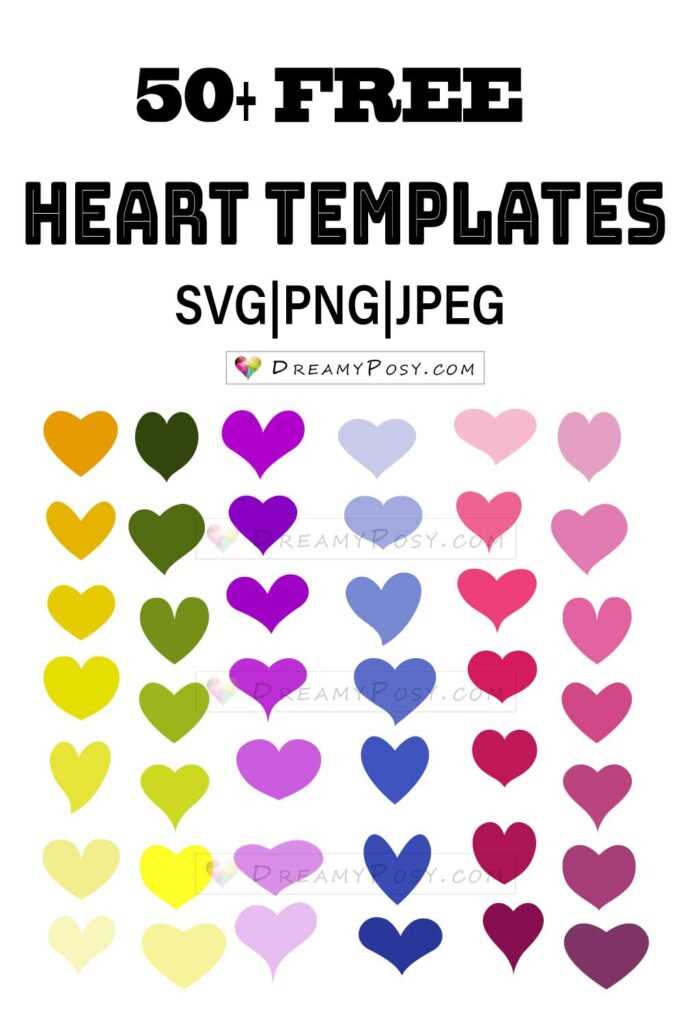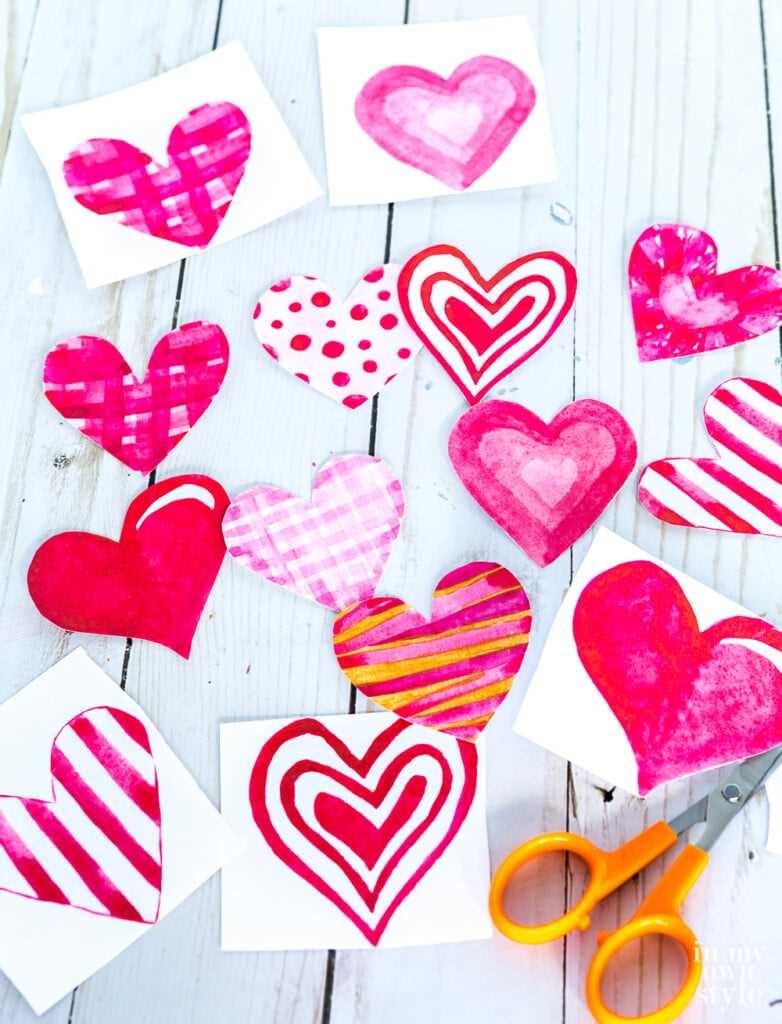
Choose a PDF file with vector-based shapes at 300 DPI to ensure smooth edges and solid fill tones after home printing. Raster images below this resolution often produce jagged outlines and uneven saturation, especially on larger sizes above 5 inches wide.
Select at least three size variations, such as 2 inch, 4 inch, and full-page designs, to cover classroom tasks, greeting cards, and wall decor. Keep a consistent outline thickness of 2–3 pt so cut edges remain clearly defined after trimming.
Use 120–160 gsm matte paper for clean color reproduction without glare. Gloss stock may reflect light under indoor lamps, reducing visual clarity on bulletin boards or craft displays.
Organize shade variations by tone families such as red, pink, pastel, and rainbow sets. Save files with clear naming conventions like “4in_red_set” or “A4_pastel_mix” to speed up reprints and avoid confusion during preparation.
Colored Heart Printables
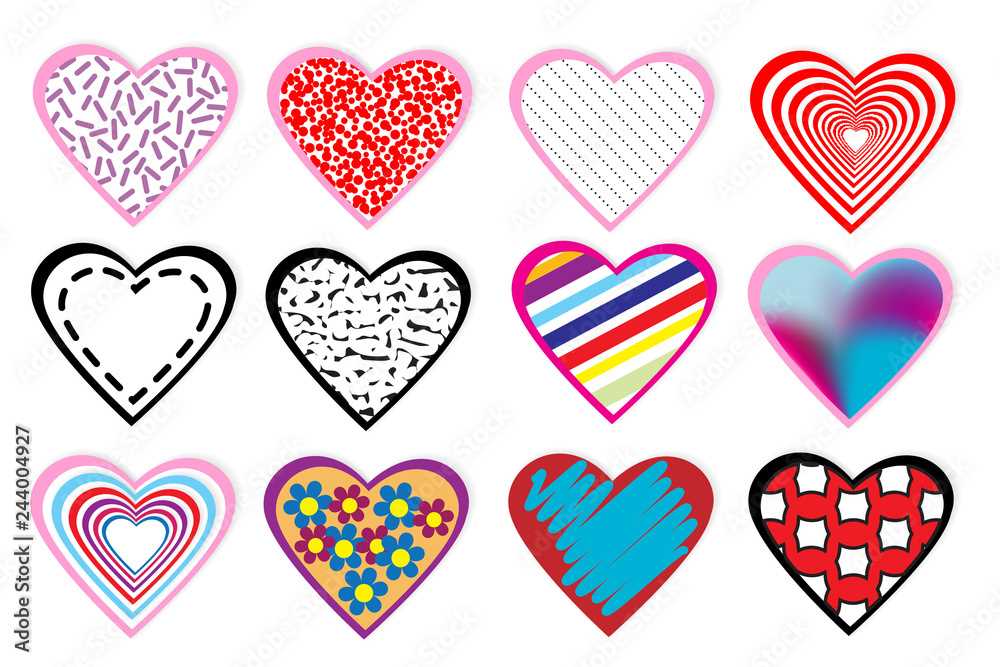
Select vector-based love-shaped graphics in PDF format at 300 DPI to maintain smooth curves and consistent fill tones after home printing. Choose files that include multiple size options such as 2 inch, 4 inch, and full-page layouts so you can adapt them for cards, garlands, or classroom boards without resizing artifacts.
Use matte paper between 120 and 160 gsm for balanced color output and easier cutting. Thinner 80 gsm paper may wrinkle when glued, while heavier stock above 200 gsm can be difficult to fold for layered crafts. Set your printer to high quality mode and disable automatic scaling to preserve the original proportions of each love symbol.
Organize shade variations into coordinated sets such as red gradients, pastel mixes, or rainbow assortments, and store files with descriptive names for quick access. Keep a small margin around each shape to allow clean trimming with scissors or a craft knife, especially for intricate outlines intended for decorative displays.
Choosing the Right Heart Sizes and Color Variations for Specific Craft Projects
Select shape dimensions based on viewing distance and project purpose. Use 1.5–2 inch symbols for greeting cards and gift tags, 3–4 inch versions for scrapbooking and classroom worksheets, and full-page designs for wall decor or bulletin boards viewed from several feet away.
Match tone intensity to the theme of the project. Soft pastel shades such as blush and light peach work well for baby showers and spring decorations, while deep red or burgundy fits romantic cards and Valentine displays. For children’s activities, choose bright rainbow assortments to create visual contrast and keep attention focused.
Limit each craft layout to three or four coordinated hues to avoid visual clutter. Combining too many shades on a single poster can reduce readability of attached text elements or handwritten notes placed on top of the love-shaped graphics.
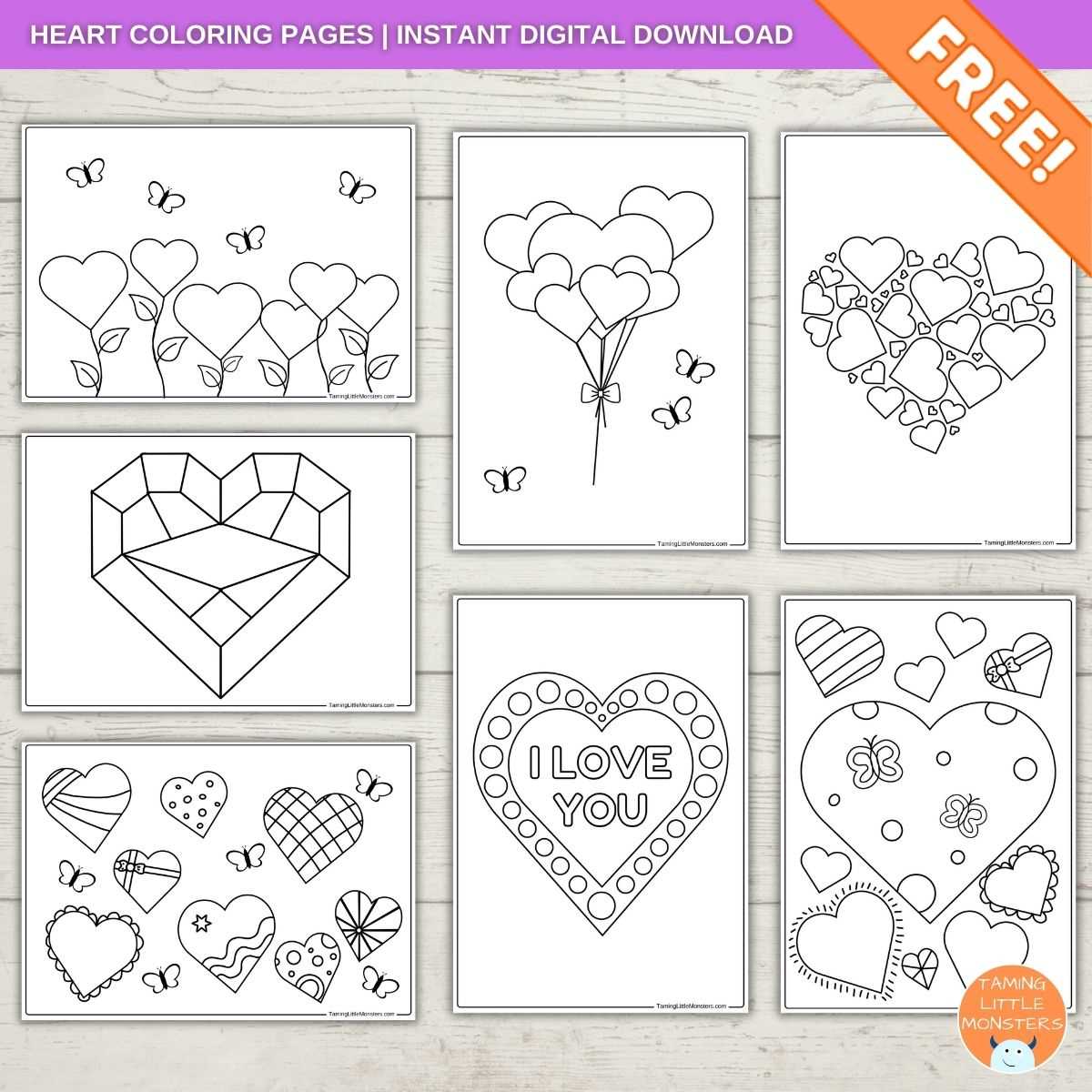
Print a small test page containing all selected sizes and tones before producing the final batch. Place the cut pieces on the intended surface to confirm scale balance and color harmony under actual room lighting conditions.