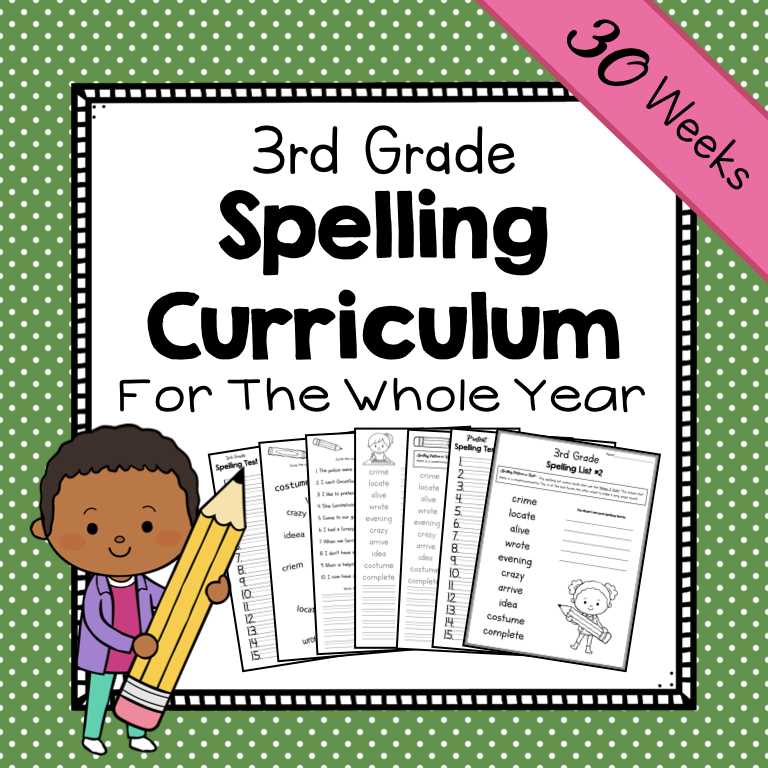
To enhance writing skills and vocabulary, it’s important to focus on increasing the recognition and proper usage of common terms. Organizing lists of frequently used terms can help kids strengthen their literacy skills and gain confidence in their ability to write and spell correctly. Establish a weekly practice schedule for regular review and test exercises.
Incorporate activities such as memory games, quizzes, and matching exercises to keep learning engaging and varied. For example, by using different learning formats, students can encounter the same set of terms in diverse contexts, which helps them retain the information. Additionally, track progress over time to measure improvements and identify areas that may need more attention.
Using resources such as organized charts or flashcards is also an effective method for tracking words. By printing easy-to-follow resources that include helpful instructions and clear structure, learners will have a tangible reference that can be used both in the classroom and at home for continued practice.
3rd Grade Spelling Words Practice Plan
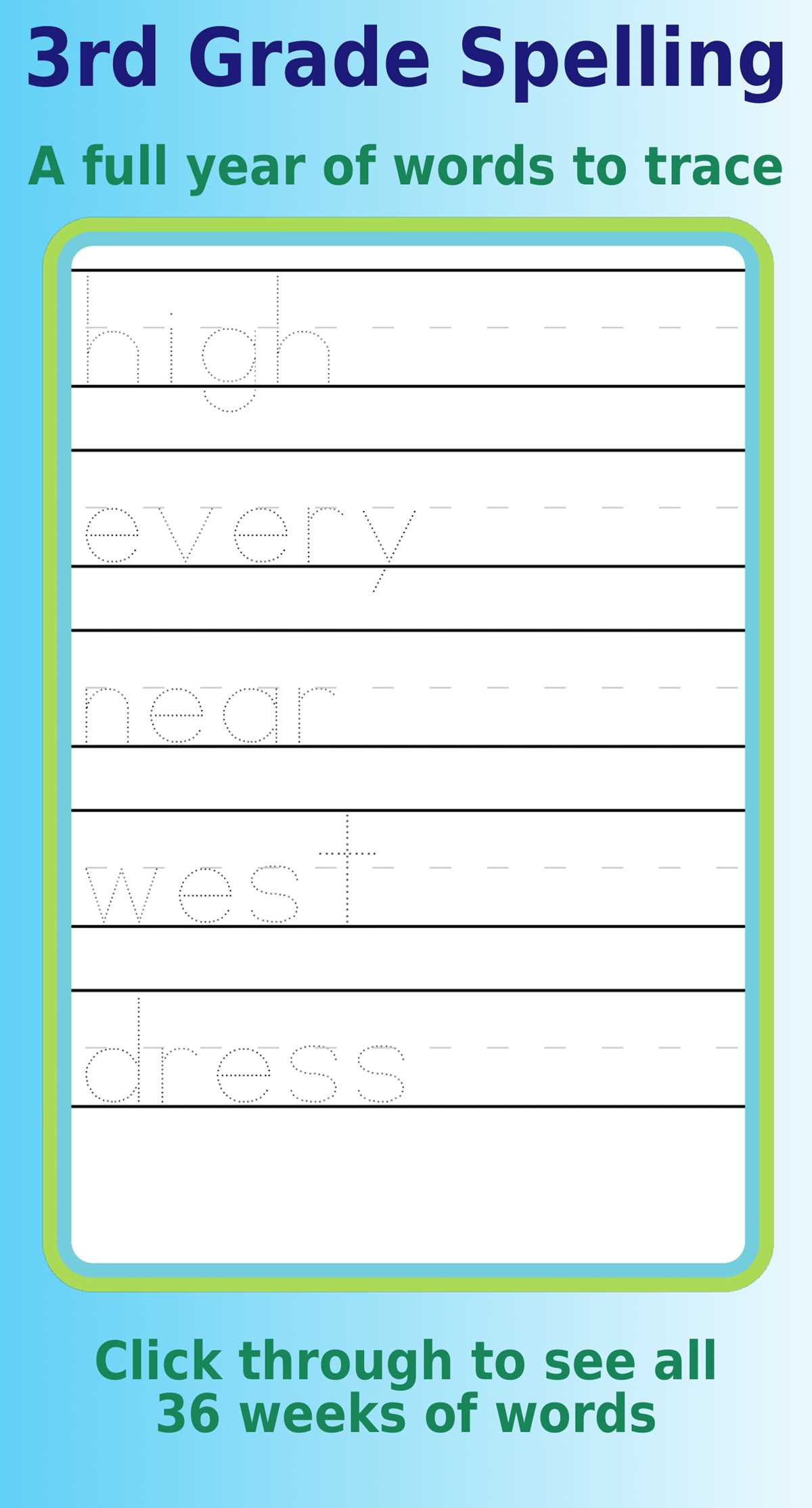
Begin each week by introducing a set of 10-15 new terms for students to master. Write them on a board or provide a list they can refer to daily. Ensure the terms are age-appropriate and relevant to their vocabulary development. Break down each term into syllables, focusing on common phonetic patterns.
Incorporate writing exercises where learners write each word multiple times. This repetition helps strengthen memory retention and allows students to become more familiar with the correct spellings. Encourage them to use each word in a sentence to understand its context.
To keep the practice dynamic, use various activities such as word searches, crossword puzzles, and flashcards. These methods engage students in different ways, providing variety to the routine and making the process enjoyable.
On the second day, administer a short dictation session. Read the words aloud and have the students write them down. This practice not only reinforces their spelling but also checks their listening skills.
Mid-week, review the terms by playing a spelling bee or matching game, where students match the word with its meaning or picture. This encourages active participation and helps reinforce learning through competition and fun.
End the week with a final assessment where students write a short paragraph using as many of the terms as possible. This will test their ability to apply what they’ve learned and provide insight into how well they understand each word’s meaning.
How to Organize Weekly Spelling Word Lists for 3rd Graders
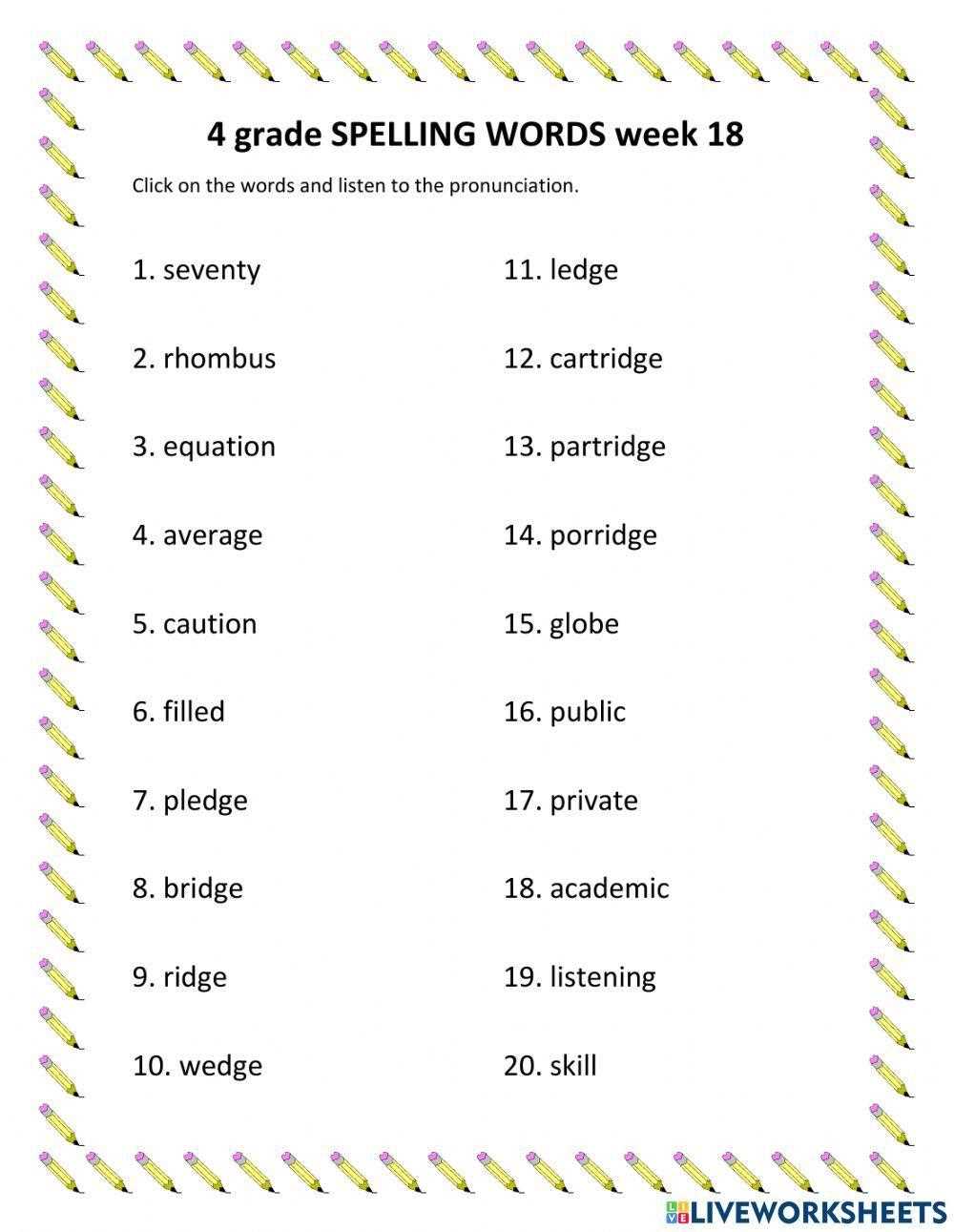
Start by selecting a theme for the week. Themes could be based on word patterns, such as words with certain suffixes or prefixes, or focus on high-frequency vocabulary for students. This helps students make connections between words and learn common patterns.
Once a theme is chosen, choose 12-15 terms that are appropriate for their current level. Ensure there is a balance between easier words they can easily spell and a few challenging words that will push their skills further. Group similar words together to encourage pattern recognition.
Distribute the list to students at the beginning of the week, and provide them with a list of practice activities. These could include writing the words five times each, using them in sentences, or identifying parts of speech in each word. This gives students varied approaches to reinforce spelling.
To make the learning more engaging, incorporate games and activities such as word scrambles or word-building exercises. Interactive exercises keep students interested and help them remember the words in a fun way.
Mid-week, assess progress by having students complete a short quiz or dictation session. This helps reinforce the words they’ve been learning and identifies areas where they might need more practice before the final test.
End the week with a spelling test that focuses on the list of words they’ve studied. To make the process more comprehensive, include bonus questions where students have to use the words in a short story or identify synonyms and antonyms for each term. This will test both their spelling and vocabulary comprehension.