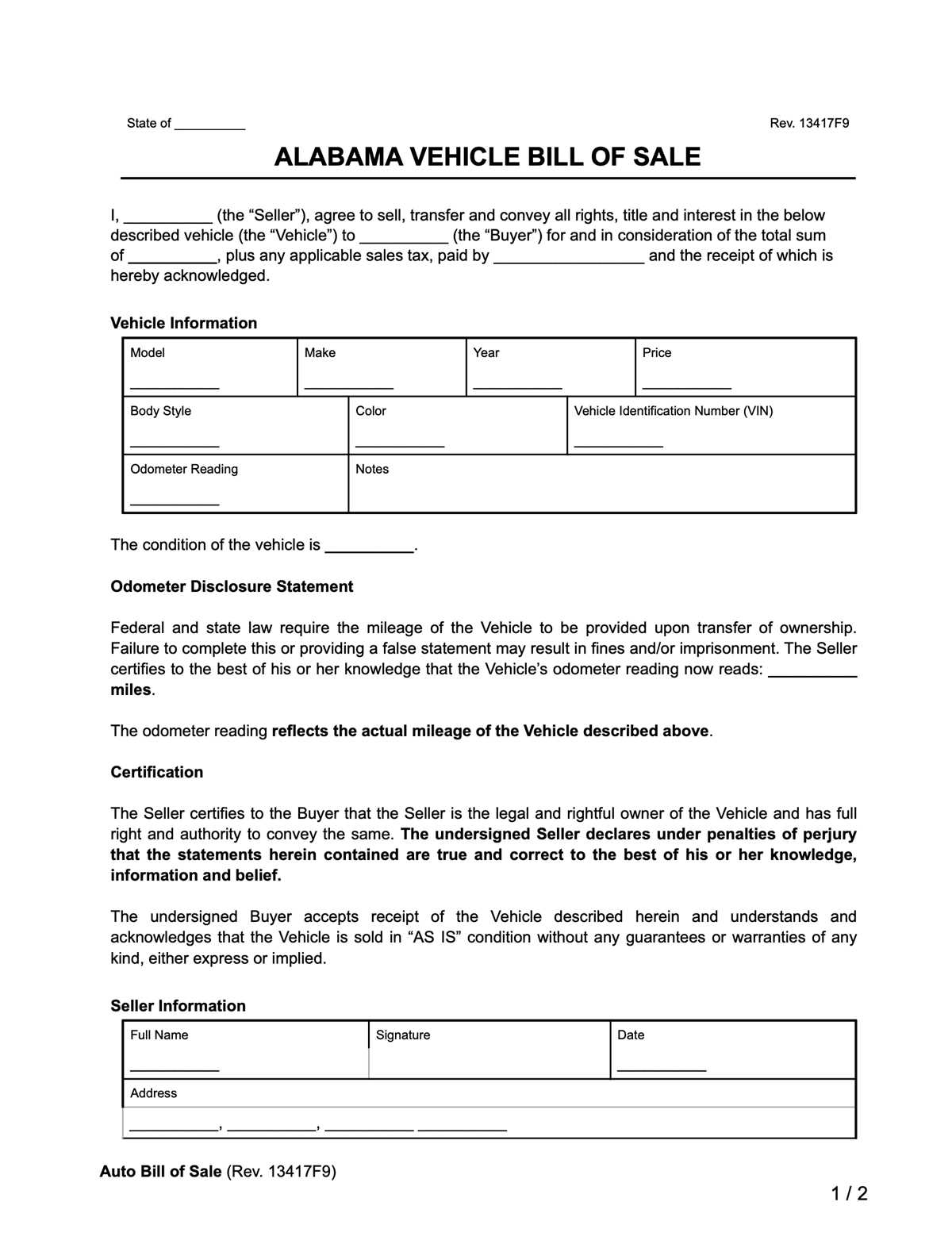
For a smooth and legitimate transaction of goods or property, it is crucial to use a proper written agreement. A formal document can help both parties by clearly stating the terms and protecting their interests. In particular, for transferring ownership of vehicles, electronics, or personal property, completing a formal contract is a must.
Begin by gathering all relevant details, such as the buyer’s and seller’s full names, addresses, and the description of the item being transferred. Ensure you include serial numbers, model details, and any special conditions related to the item. These specifics will serve as proof of the transaction and prevent any potential misunderstandings later.
Once you have the necessary information, you can either create a document from scratch or use a pre-made template to save time. Many online resources provide free, editable templates. However, it is important to review the template and customize it to reflect your transaction accurately.
For convenience, printable options allow you to keep a hard copy, which can be signed and retained by both parties. The signed document serves as proof of the agreement, which may be required in case of disputes or for legal purposes. Always ensure that both parties understand the terms and conditions before finalizing the document.
Creating a Formal Document for Property Transfer
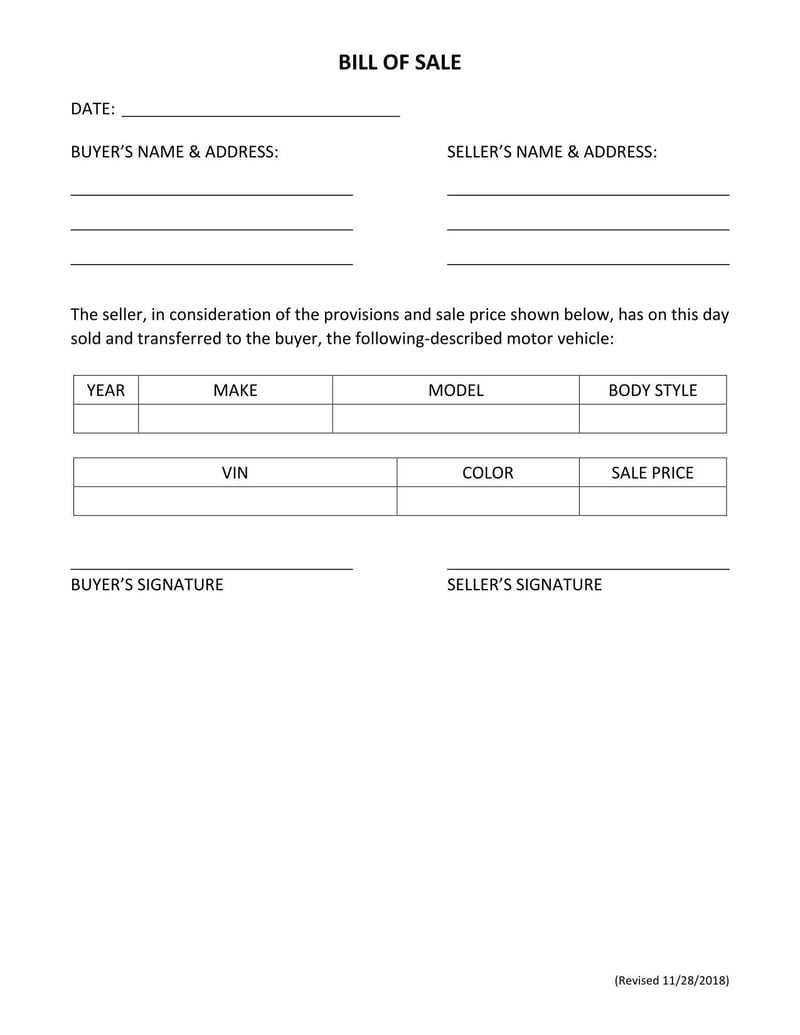
To ensure a secure and official transaction, it’s important to prepare a formal document for transferring ownership. Whether you’re selling or buying an item, a written contract guarantees that both parties understand their rights and responsibilities. Having a legal document can prevent future conflicts by clearly outlining the terms of the transfer.
Start by including the full names, addresses, and contact information of both the buyer and seller. A detailed description of the item being transferred is necessary to avoid ambiguity. Include key details such as serial numbers, model information, and any distinguishing features of the item.
Next, specify the agreed-upon price and any payment terms, such as deposits or installment payments. Clearly outline the date of the transaction and the condition of the item being transferred. If the item is being sold “as is,” make sure that is explicitly mentioned in the contract.
Once all the details are included, both parties should sign and date the document. This signature serves as proof that both buyer and seller have agreed to the terms. It’s advisable for each party to keep a copy for their records, which can serve as evidence if any disputes arise in the future.
Finally, while some choose to use online templates, it’s important to ensure the document is legally binding and meets any local requirements. Double-check for any state-specific guidelines or consult a professional if you’re unsure about the terms or language used in the agreement.
How to Complete an Alabama Vehicle Transfer Document
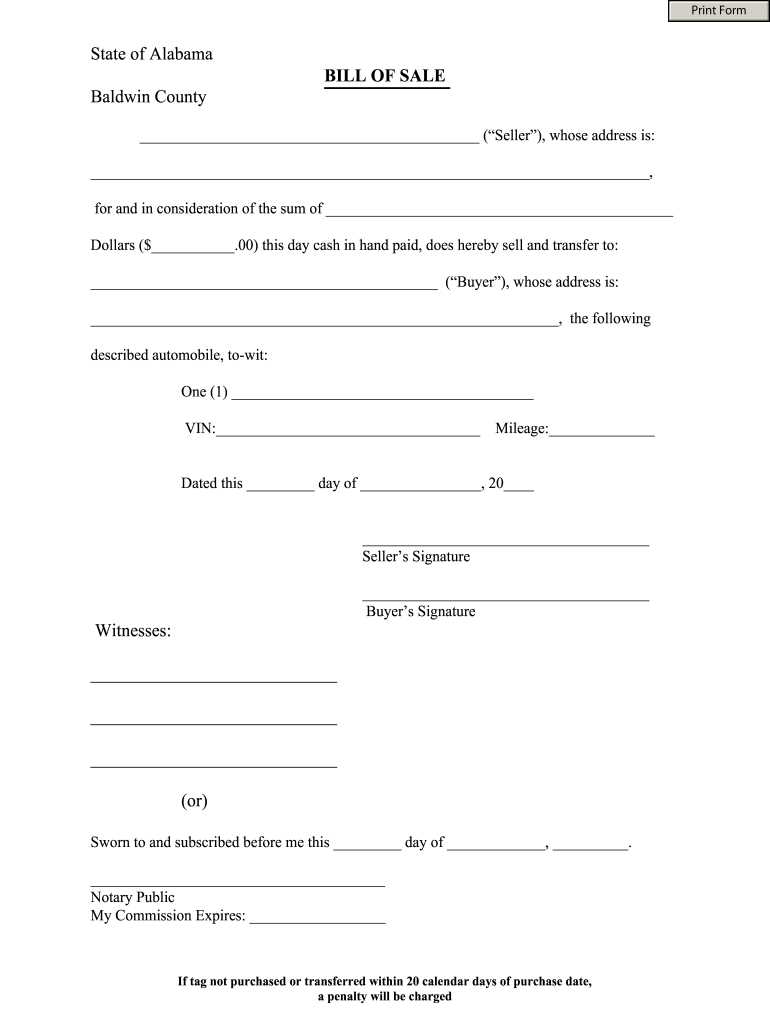
When transferring ownership of a vehicle in this state, it’s important to complete the correct paperwork accurately. The document you need includes key information that protects both the buyer and seller. The form should be filled out completely and signed by both parties to ensure the transaction is legal and recognized.
Start by entering the seller’s and buyer’s full names and addresses. This is critical as it establishes who is involved in the transaction. Make sure the addresses are up-to-date and correspond to the individuals listed on the document.
Next, accurately describe the vehicle. Include the make, model, year, color, and Vehicle Identification Number (VIN). The VIN is crucial as it uniquely identifies the vehicle and helps verify that the right car is being transferred.
Clearly list the agreed-upon price for the vehicle. This helps establish the financial terms of the transfer. If there are any additional costs, such as taxes or fees, they should also be noted. Make sure both parties are aware of all financial obligations before finalizing the document.
Next, the document should specify the condition of the vehicle at the time of sale. Whether the car is being sold “as is” or with a warranty should be clearly stated. If the seller is offering any guarantees, those details need to be outlined as well.
After filling out the main sections, both the buyer and seller need to sign the document. Each party should sign and date in the designated spots to validate the agreement. This step makes the document legally binding and ensures that both parties have consented to the transaction terms.
If necessary, both parties should make copies of the signed document for their records. It’s a good practice to keep a copy in case any questions or disputes arise later. In some cases, the document may need to be notarized to increase its legal standing.
Finally, verify that all required details are included, and ensure the document meets any state-specific requirements. While many forms are available online, double-checking them for accuracy and compliance is vital for a smooth and legal vehicle transfer.