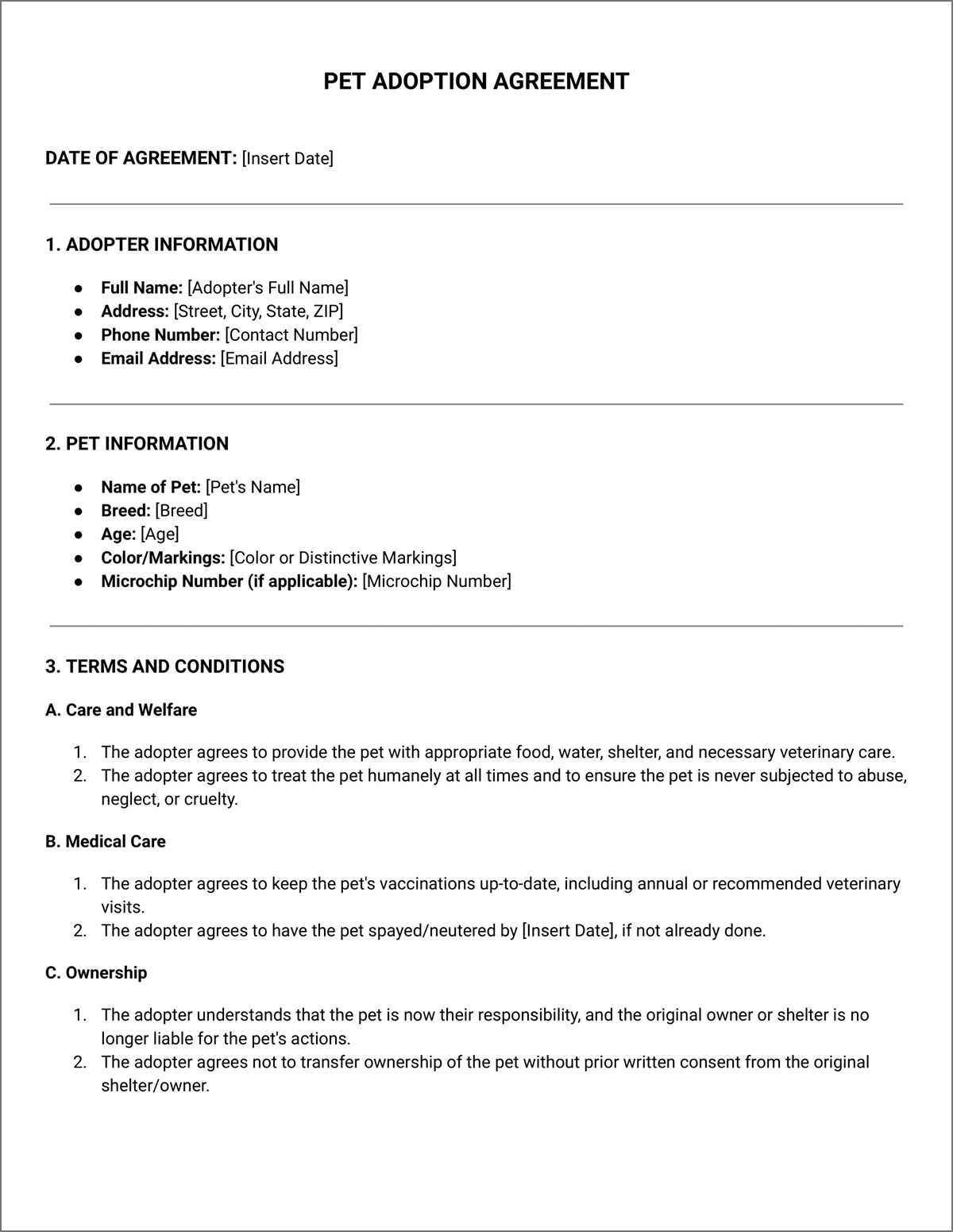
Begin by customizing the document to fit the unique needs of your organization. Include fields for basic details like the adopter’s name, address, contact information, and the animal’s specific breed, age, and medical history. Clearly state the terms and conditions that the adopter must follow to ensure the well-being of the animal.
Ensure the agreement covers both the responsibilities of the adopter and the shelter’s obligations. This can include provisions for routine veterinary care, emergency procedures, and how to handle potential returns or re-homing of the animal. It’s also crucial to have space for signatures from both parties, confirming that both understand and agree to the terms laid out.
Don’t forget to include legal disclaimers that address potential liability. By having this information clearly outlined, you help protect both the shelter and the adopter from legal issues. An organized and clear document makes the entire process smoother and builds trust between the adopter and your organization.
Creating a Detailed Adoption Agreement for Animal Shelters
Customize the adoption document to match your organization’s needs. Include key sections for both the adopter and the animal being placed, such as the adopter’s full contact information, the animal’s name, breed, age, and any specific medical history that should be disclosed. Clearly state the conditions that the adopter must meet to ensure the animal’s well-being post-adoption.
Specify the adopter’s responsibilities, including regular veterinary visits, feeding schedules, and maintaining a safe living environment. Define the shelter’s responsibilities as well, such as offering support if the adopter encounters issues or facilitating re-homing if necessary.
Don’t forget to include a section addressing the possibility of an animal’s return. This should outline the procedure for returning an animal if the adoption doesn’t work out, and under what conditions the shelter will accept the animal back. This ensures that both parties understand the process and expectations.
Make room for a clear agreement about microchip registration and vaccinations. It is important to track that these are up to date, and the adopter should confirm their commitment to keeping these records updated. This minimizes risks of lost animals and promotes responsible care.
Legal disclaimers should be included to protect both the shelter and the adopter. If any issues arise, this section clarifies the legalities of the adoption process and outlines any liabilities or claims. For example, if an animal causes damage or injury, this section defines responsibility.
After the adoption is completed, ask the adopter to confirm that they understand the rules outlined in the agreement. This confirmation should be provided in the form of signatures, and a copy of the document should be given to both the shelter and the adopter for reference.
Provide a space for any additional comments or special instructions that may not have been covered in the standard sections. This allows flexibility for unique situations, such as specific behavioral issues or accommodations for elderly or special-needs animals.
Finally, set up a tracking system for all adoption agreements. This can be done manually or digitally, ensuring that you can easily access records of past adoptions. A tracking system will help maintain an organized database of adopters and animals, streamlining the process for future adoptions and follow-ups.
How to Customize Pet Adoption Forms for Different Shelters
To tailor your document to the specific needs of your shelter, start by incorporating details about the local regulations that may affect the process. For example, some areas have specific requirements regarding vaccinations, microchipping, or spaying/neutering that must be addressed in the agreement.
Next, modify the document to include sections relevant to the type of animals your shelter handles. A rescue that focuses on dogs may need additional clauses about training or behavior assessments, while a cat rescue might focus more on indoor/outdoor living conditions. Adjust the language and categories based on the species and individual care requirements.
- Include breed-specific needs or behavioral issues.
- Provide space for medical histories and treatment plans.
- Clarify the shelter’s return policy for animals with special needs.
Consider the size of your organization when customizing the document. A large shelter with multiple branches might need a more detailed tracking system, including spaces for branch location, staff signatures, and additional notes for each department. Smaller shelters may need simpler templates, focusing more on the immediate care and adoption process.
Another consideration is the level of follow-up required by your organization. For shelters that have a more hands-on approach, include sections for regular check-ins or home visits. If follow-up is minimal, focus more on educating the adopter about proper care before the animal leaves your shelter.
Finally, always ensure that your template allows for updates as your policies change. Keep a digital copy to easily make modifications, and periodically review the document to incorporate new guidelines, regulations, or feedback from previous adoptions.