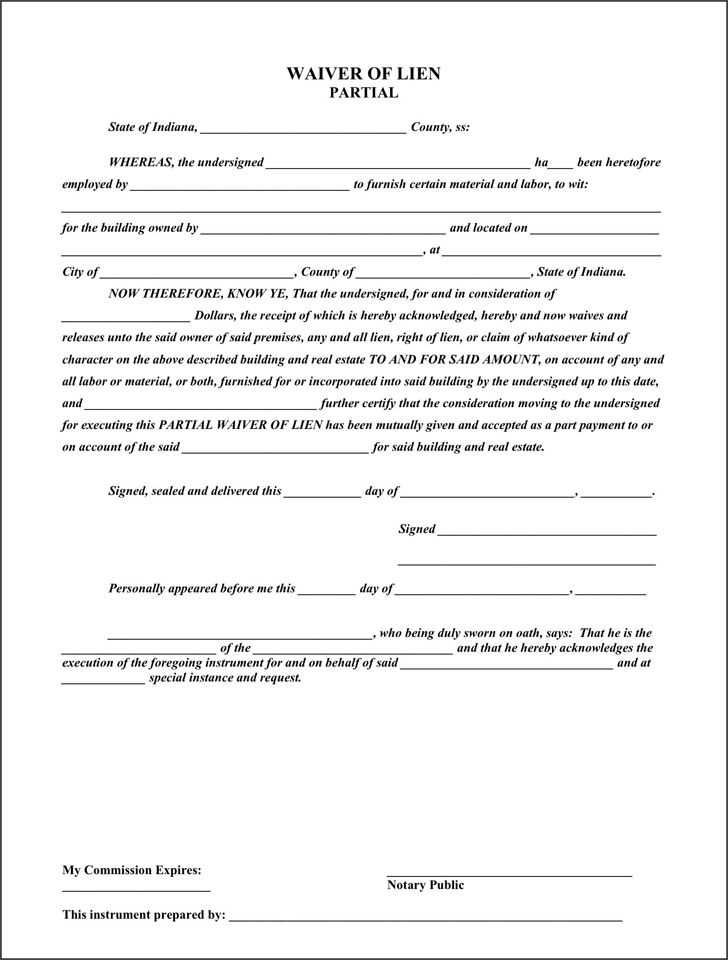
Start by downloading a well-designed release document for your construction work. This document serves to protect both contractors and property owners by ensuring that any claims for unpaid work are cleared. Once completed, it will confirm that all payments or agreements have been settled up to a specific point.
Look for editable templates available in common formats such as Word or PDF. These are easy to modify for the details specific to your project, such as the amount paid, the parties involved, and the work completed. It’s crucial to use a reliable template that accurately reflects the legal requirements of your state or country.
Before signing, review the document carefully. Ensure that all dates, amounts, and project details are accurate. If you’re unsure about any part of the document, consult a legal professional who can confirm that it’s properly filled out and protects your interests.
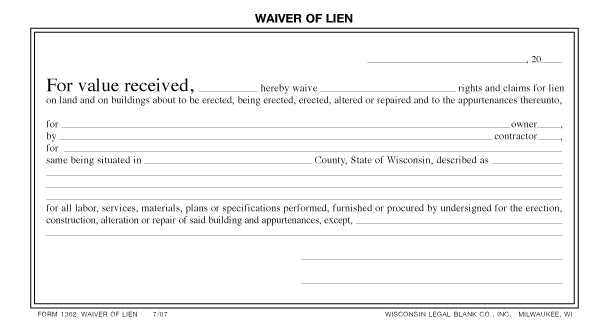
How to Use a Legal Release for Construction Payments
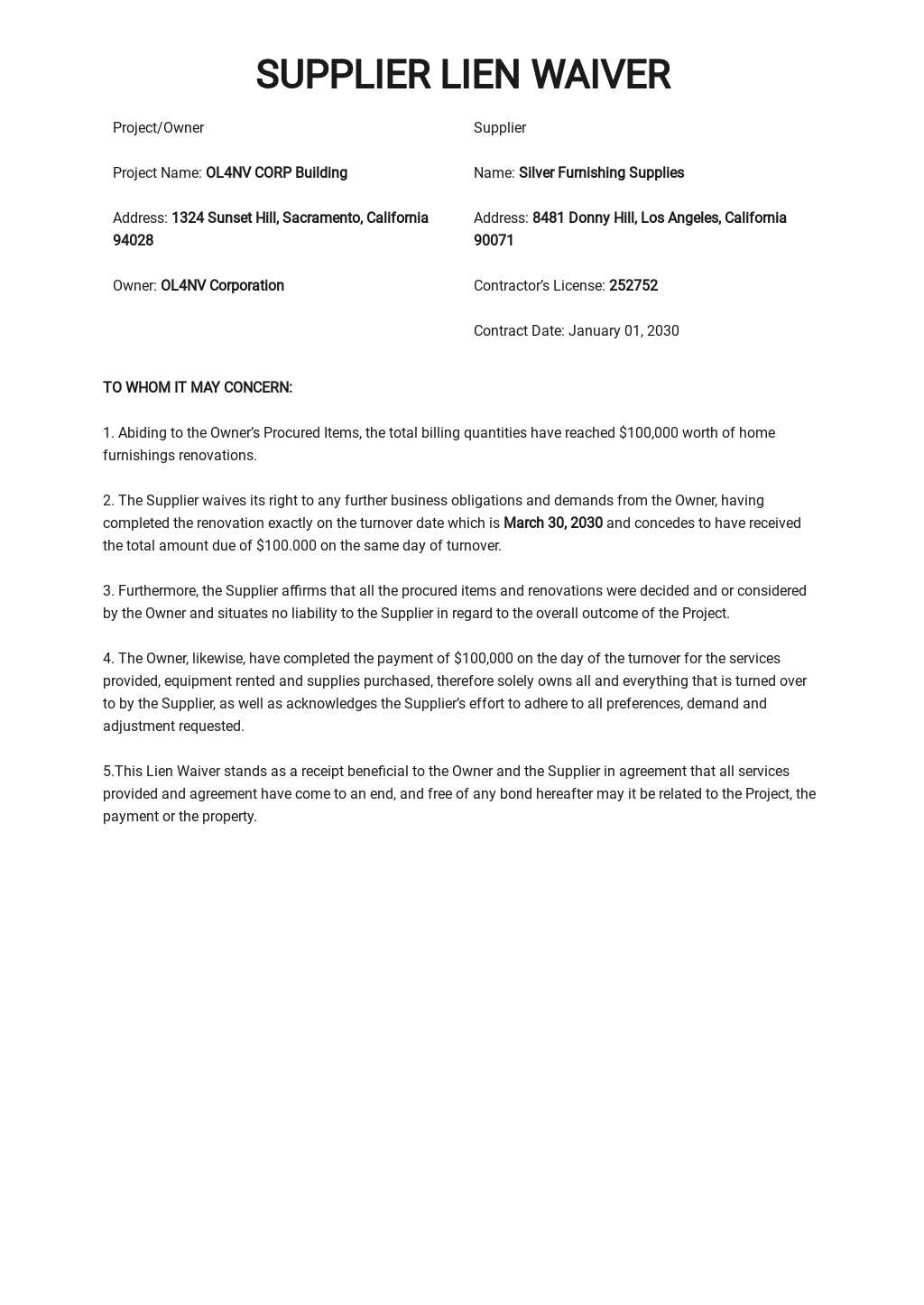
Start by choosing a template that fits your specific project requirements. Many templates are available online, offering a range of styles and formats. Ensure that the template you select is suitable for the amount and scope of work completed. Pay close attention to the language used to ensure it clearly specifies the payment details and the obligations of both parties.
Once you’ve selected the right document, fill in all required fields. This includes the names of all parties involved, the amount paid, and the specific work that has been completed. Be precise with dates and contract details. These are crucial for ensuring that all aspects of the transaction are legally clear and binding.
Check for any clauses that might limit future claims or require certain conditions to be met. Some documents contain specific stipulations that can impact future claims related to unpaid work or materials. Review these carefully to avoid misunderstandings later on.
If the document requires signatures from multiple parties, ensure that each party signs the release in the correct place. It’s common for both the property owner and the contractor to sign. If your project involves subcontractors or suppliers, they may also need to provide their signatures or separate releases.
Once the document is signed, keep a copy for your records. It’s a good idea to file the signed document with other project-related paperwork, such as contracts, invoices, and receipts. This will provide a clear record of the transaction and help prevent future disputes.
If you’re using a digital template, ensure that it’s formatted to maintain a high quality during printing. Some documents may lose clarity when resized or printed in a low-quality format. Always choose a format that ensures legibility and professionalism.
If you’re unfamiliar with legal language or want to be sure that your document is filled out correctly, consider consulting a lawyer. They can help you understand any complex clauses and ensure that the document complies with local or state regulations.
In cases where you’re using this document for multiple projects, creating a customized template that reflects your standard agreements can save time. This ensures that you always have a ready-to-go version of the document for future use, streamlining your process for managing payments and avoiding disputes.
How to Fill Out a Legal Release Document Correctly
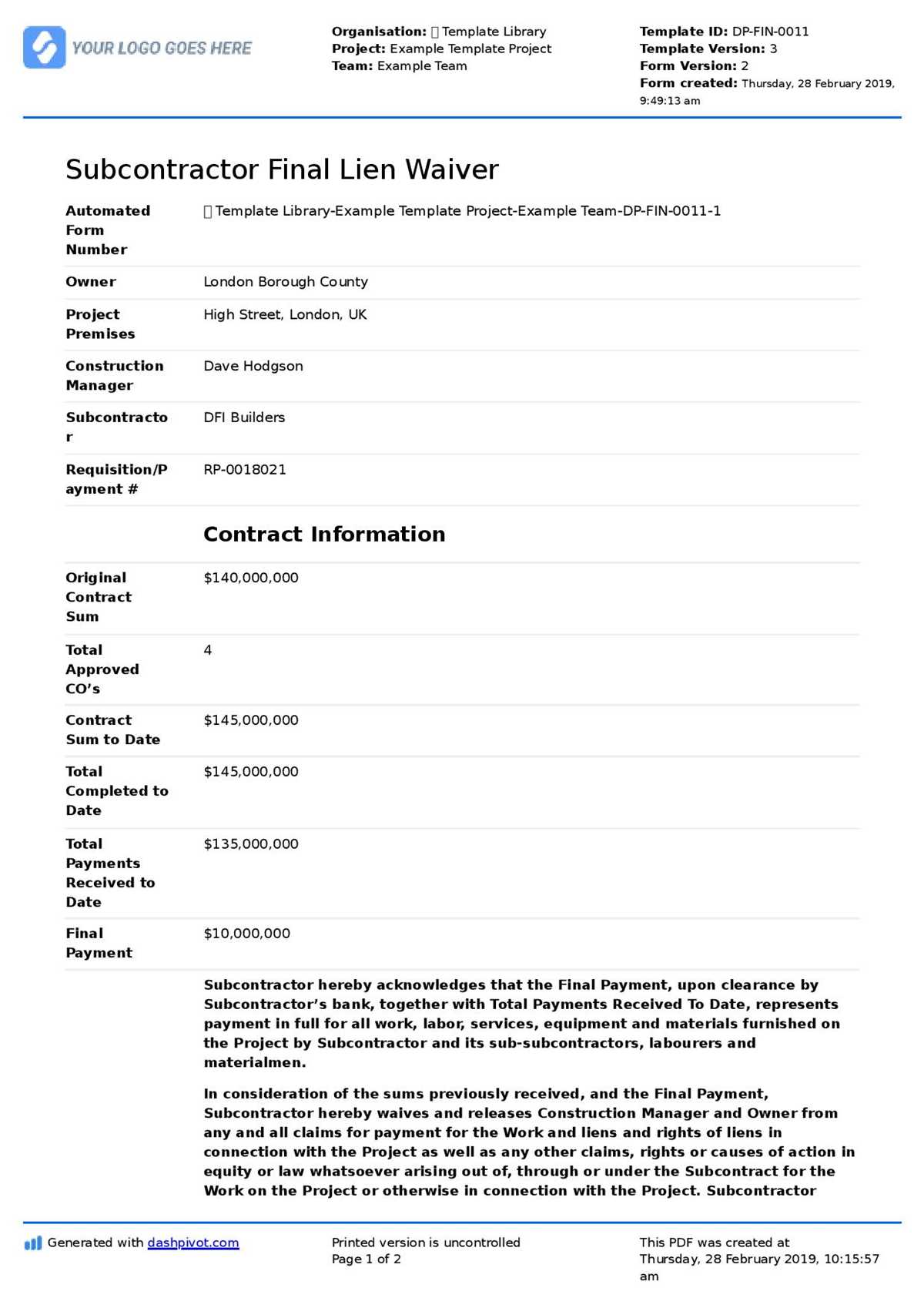
Start by entering the full legal names of all parties involved. This typically includes the contractor, subcontractors, property owner, and any other relevant individuals or companies. Make sure that all names are spelled correctly to avoid confusion later.
Next, include the project’s specific details, such as the address of the property and a description of the work completed. Be clear and concise, specifying the type of labor or materials provided. This ensures both parties have a clear understanding of the scope of the project.
Indicate the amount that has been paid or settled. This is often the most critical part of the document. It’s important to be accurate with the dollar amount to avoid any future disputes regarding payment. If the payment includes multiple installments, break it down as needed.
For each section that asks for dates, fill them in carefully. Include the date when the work was completed, the date the payment was made, and any other dates that are relevant to the project or agreement. Accuracy with dates helps maintain a clear timeline of the transaction.
After filling in all necessary information, review the document for accuracy. Check that every detail, including amounts, dates, and names, is correct. This review step helps prevent mistakes that could lead to issues down the line.
If the document requires signatures, ensure that both parties sign and date the release where indicated. It’s important that signatures are provided by the right individuals, and that they are dated properly to maintain the legal integrity of the agreement.
- Double-check all entered information before submitting.
- Ensure that signatures and dates are completed as required.
- If unsure about any clause, seek legal assistance to confirm accuracy.