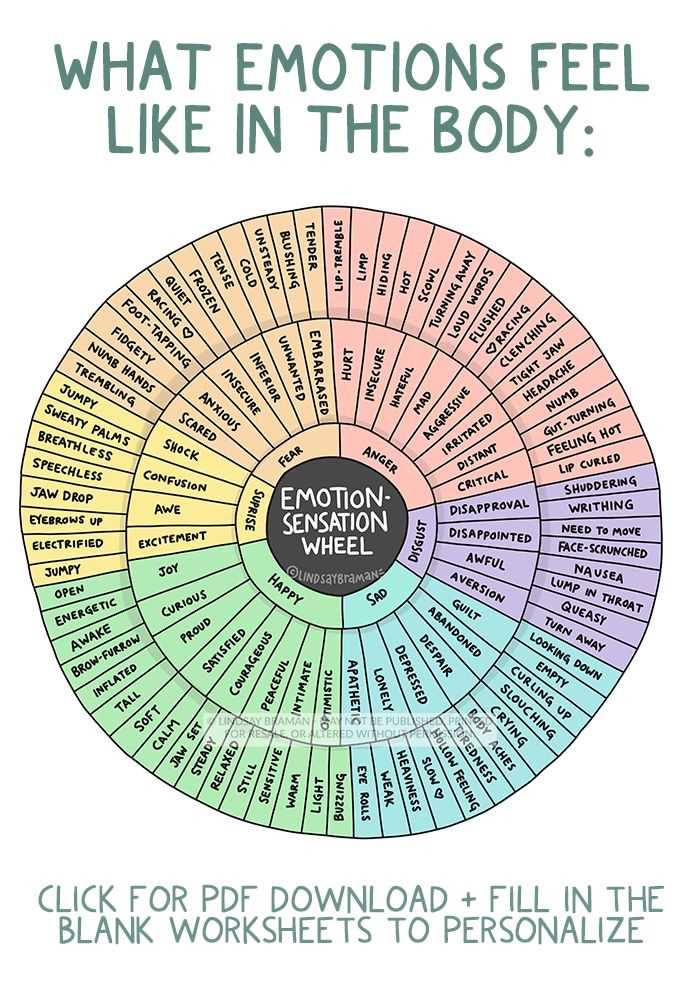
To start recognizing and naming your emotions, try using a visual tool that breaks down different feelings into categories. This method can help you identify what you’re experiencing more clearly and guide you toward expressing it accurately.
Once you have the visual chart, focus on one emotion at a time. Circle the feeling that most closely matches your current state, then explore related emotions. This can be helpful for pinpointing deeper feelings that may be harder to express directly.
Using this tool regularly can enhance emotional awareness and improve your ability to communicate feelings. It’s a practical way to build self-awareness and emotional literacy, especially during moments of stress or confusion.
Additionally, you can customize this chart to track specific emotions that are important to you or your personal growth. Tailor the categories and color schemes for a more personalized and engaging experience.
How to Use a Visual Tool to Identify and Express Your Feelings
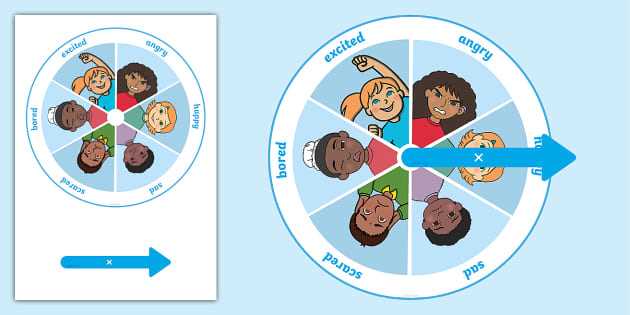
To get started, download a chart that organizes various feelings into categories. This type of visual guide makes it easier to pinpoint your current emotional state by offering a structured approach to labeling your feelings.
Once you have the chart, use it by selecting the emotion that most closely matches what you’re experiencing. Each category contains related feelings that can help you better understand the complexity of your emotions in that moment.
If you find it difficult to describe your emotions, begin with the broader categories. Once you identify the general feeling, you can narrow it down to more specific emotions by referring to the chart’s inner segments.
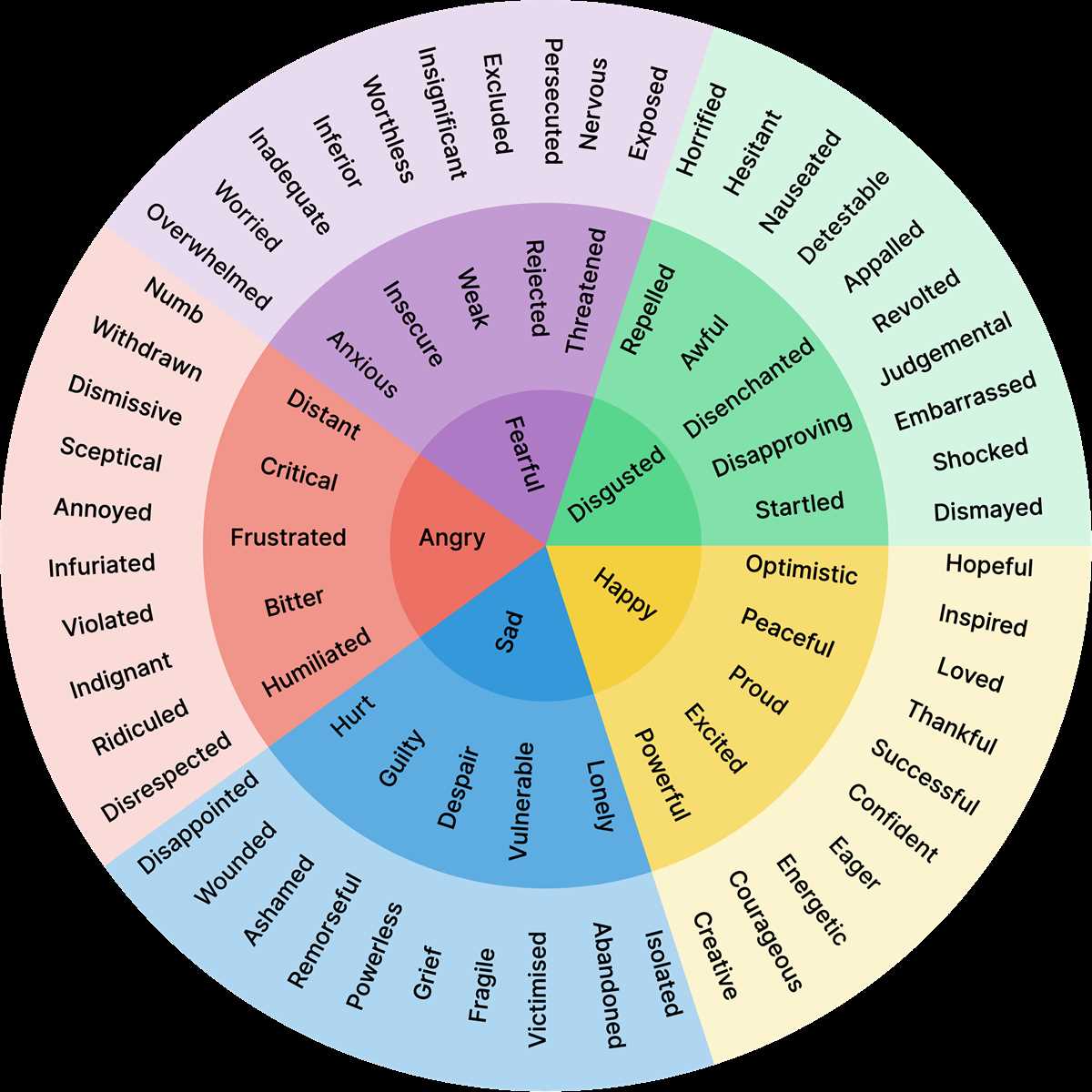
Regular use of this tool can significantly improve your emotional awareness. It encourages you to check in with yourself and evaluate how you feel throughout the day, promoting emotional clarity and self-reflection.
For a more personalized experience, feel free to adjust the categories to reflect your unique emotional experiences. This could involve adding new emotions or altering the layout to better suit your personal growth or current needs.
To make it easier to track changes in your emotional state over time, consider recording your findings. Keeping a log of your daily emotional check-ins can help you identify patterns and triggers, enabling you to address recurring issues more effectively.
By incorporating this tool into your daily routine, you’ll build better emotional intelligence. The ability to identify, understand, and express your feelings improves mental health and strengthens your communication with others.
How to Download and Print an Emotion Chart for Personal Use
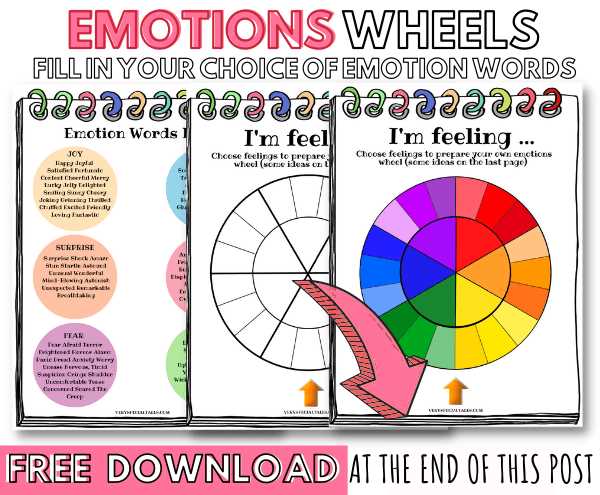
To get started, find a reliable website offering this type of visual guide. Once you locate a design that suits your preferences, click the download link, and save the file to your device. The most common formats are PDF or JPEG, which are easy to open and print on most systems.
After downloading, open the file and review the print settings. Adjust the size according to your desired output, ensuring that it fits your paper or any other material you plan to use. For accuracy, set your printer to the highest quality available.
Once the settings are adjusted, print the design. If you prefer using the chart multiple times, consider printing it on a thicker paper or lamination sheet for durability. This ensures it withstands repeated use, making it a long-lasting tool for tracking your feelings.