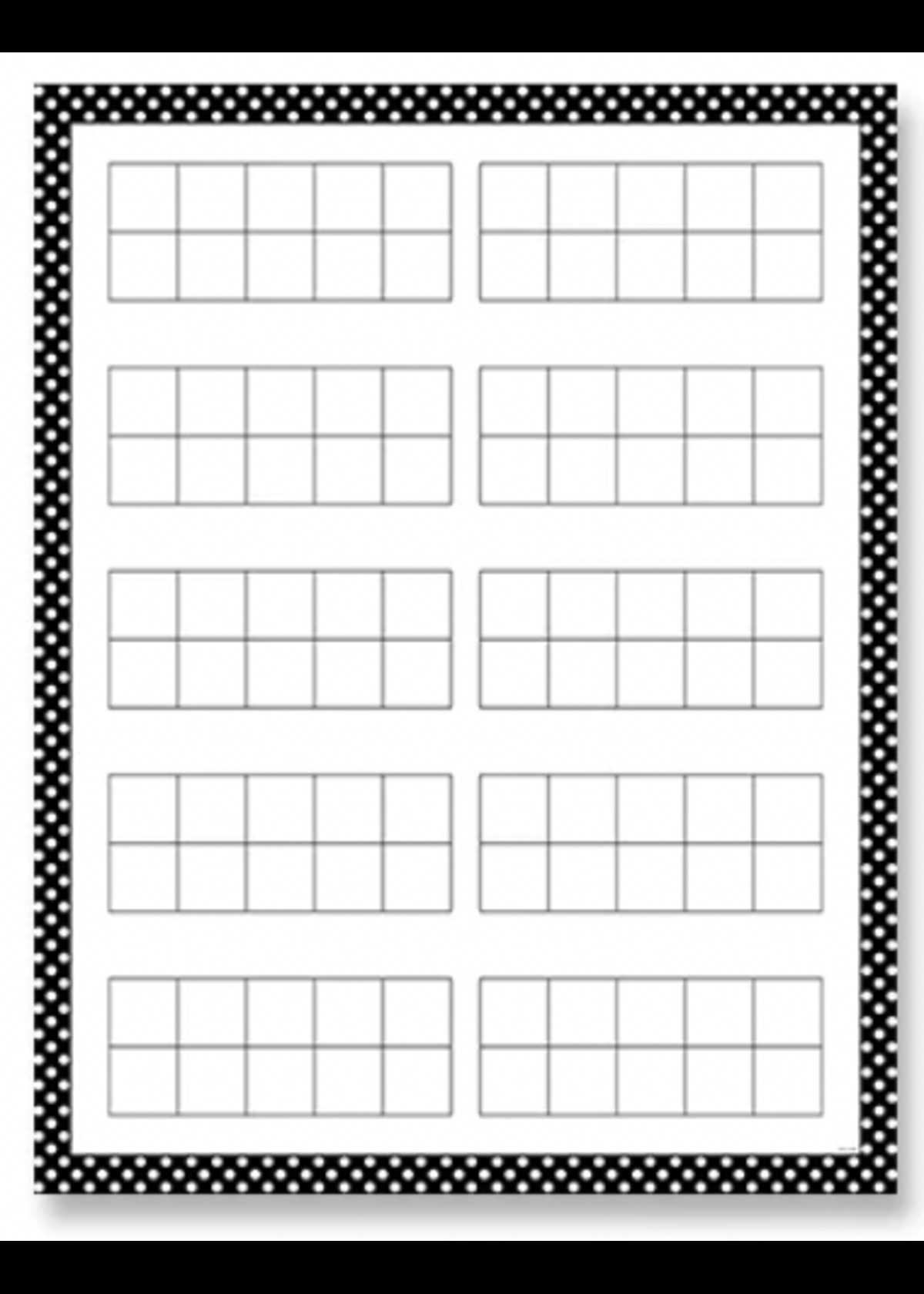
To make counting and basic arithmetic easier for young learners, consider using tools that visually represent numbers. These tools help children recognize patterns and grasp basic concepts like addition and subtraction. One effective method is to incorporate a grid with spaces for placing counters or objects, which helps children link numbers to physical quantities. These visual aids also support number recognition and can be used to introduce concepts like number bonds or place value.
For teachers or parents, there are numerous ways to create and use these visual grids. You can either find them online or craft your own with simple materials. The idea is to provide a visual reference that supports learning while making math more engaging and less abstract for children. With a little creativity, they can be adapted to various learning levels, helping to strengthen early mathematical thinking.
Having these resources ready for use in the classroom or at home allows for a hands-on approach to learning that children find enjoyable. Whether you’re working with one child or a group, these resources offer a straightforward way to foster foundational math skills that will be built upon in later stages of education.
Ten Frames Free Printable Guide
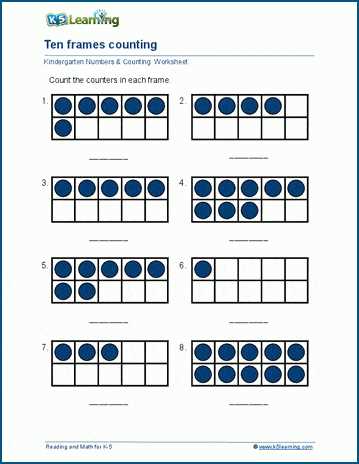
To get started, print a grid that consists of ten boxes, each of which can be filled with counters or any small objects. This tool allows children to visually represent numbers, making it easier for them to understand quantities and relationships. The grid is designed to help them focus on the concept of “how many” in a more concrete way, and it is often used to assist with counting and simple addition and subtraction problems.
For best results, use counters that are distinct in color or shape, so children can easily differentiate between the objects and count them. You can also use buttons, coins, or other small items that can fit within the boxes. The goal is to reinforce number concepts by physically placing items in the boxes, which helps children understand the connection between written numbers and actual quantities.
Start by filling one box with one object, then move on to two, three, and so on. This simple process allows children to visualize numbers up to ten and strengthens their counting skills. It’s also useful for demonstrating number patterns. For example, when you place five items in one row, it shows how numbers can be grouped and organized. This can also serve as an introduction to grouping in math.
Once your child is comfortable with counting one by one, you can move on to using the tool for basic addition. Ask them to fill boxes with objects to represent simple addition problems, such as “How many in total if you put three in one box and two in another?” The visual representation makes it easier for them to understand that three plus two equals five.
For subtraction, the tool is just as effective. You can ask the child to remove a certain number of objects from a set and then count how many are left. This reinforces the idea of taking away and shows how numbers decrease. The clear visual representation of subtraction makes it simpler for young learners to understand the concept.
Once children master counting and simple operations, introduce more complex activities, like comparing numbers or working on number bonds. You can also use the grid to explore concepts such as even and odd numbers by filling the boxes in different ways. You could fill boxes alternately, for example, to help children grasp the pattern of odd and even quantities.
These grids can also be incorporated into other learning activities, such as writing numbers or completing simple word problems. Children can practice writing the numbers they represent in each box, combining their visual and writing skills. Incorporating different modes of learning helps reinforce mathematical concepts more effectively.
Lastly, make sure to adjust the difficulty as your child progresses. Once they are confident with numbers up to ten, you can print more advanced grids or extend the activity by using grids with more boxes. The flexibility of the tool allows for customization, ensuring it remains helpful as children’s math skills develop.
How to Use Ten Frames for Early Math Skills
Start by introducing the grid with ten squares, each one representing a unit. This visual tool helps young learners grasp the concept of counting and organizing numbers. Using objects like counters, buttons, or coins, have children place one item in each box as they count. This method enhances their ability to visually comprehend numbers and their sequential order.
Once your child is familiar with basic counting, begin using the grid to demonstrate addition. Fill the first few squares with objects, then add more to the remaining squares. For example, place three objects in the first row and two in the second row, and have the child count all the items to find the total. This activity helps children understand that addition is the combination of two or more groups.
Similarly, subtraction can be practiced by removing objects from the grid. Start by filling the entire grid, then ask the child to take away a set number of items. The child can count the remaining objects to understand how numbers decrease. This activity directly ties into the concept of subtraction and helps children visualize the process.
For more advanced activities, introduce number comparisons. Use two separate grids and fill each with a different number of objects. Ask the child to compare the two groups and determine which has more or fewer objects. This can be extended to teaching concepts such as greater than, less than, and equal to.
Once children are comfortable with basic operations, you can use the grid to teach number bonds. For example, start by filling the grid with ten objects. Then, challenge the child to break the set into two parts, such as five in one row and five in another. This teaches them that ten can be made up of different combinations, which is a foundation for understanding addition and subtraction facts.
The grid also aids in recognizing patterns. Place objects in alternating rows, or group them in sets. This visual approach helps children identify number patterns and prepares them for more advanced mathematical concepts such as multiplication and division later on.
To enhance learning, incorporate writing exercises. After filling the grid, ask the child to write the corresponding number or draw additional objects to match the grid. This connects the visual and written forms of numbers, reinforcing their understanding.
As the child progresses, introduce grids with more boxes. This will help them practice with larger numbers and develop a deeper understanding of counting, grouping, and basic arithmetic. The flexibility of the grid allows for ongoing development, providing new challenges as the child’s math skills improve.