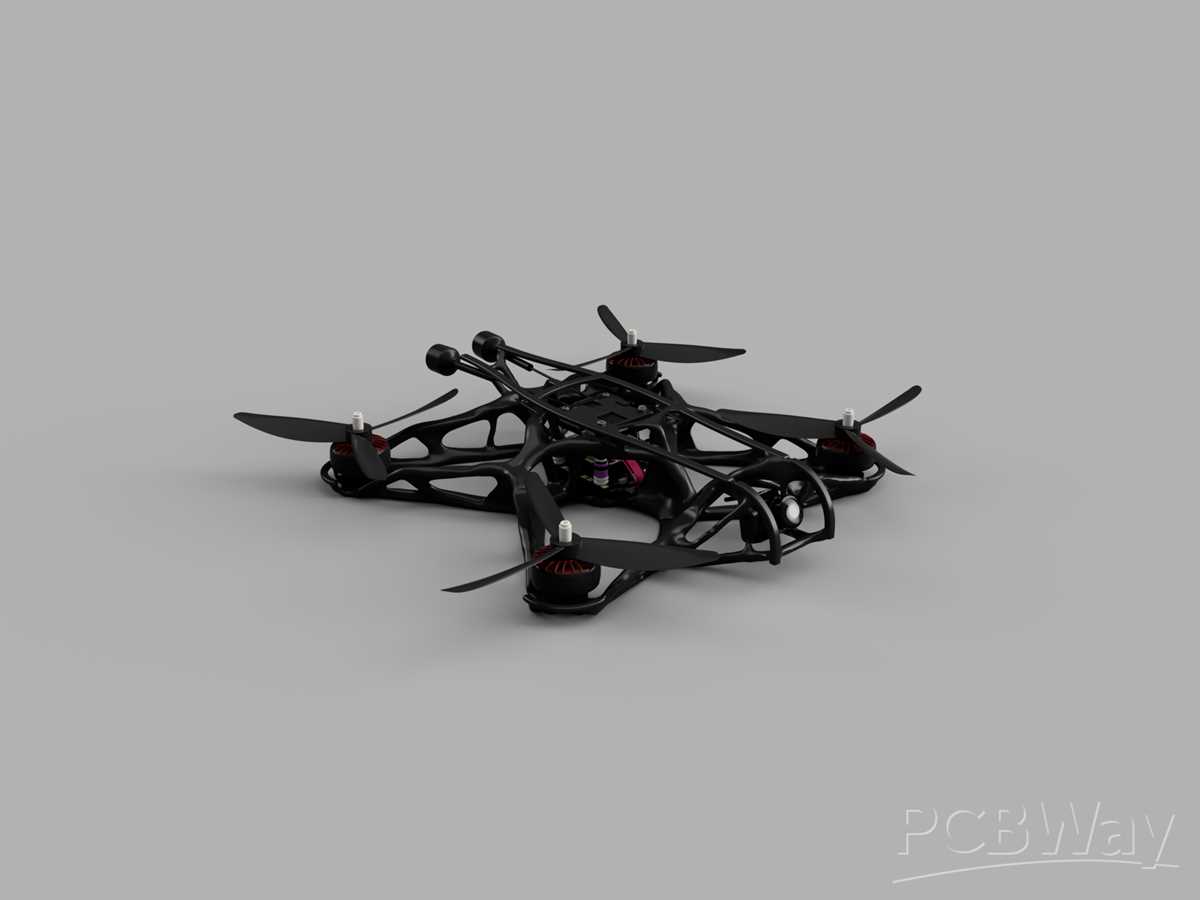
Choose a 5-inch quadcopter frame layout with 2207 or 2306 motors rated around 1700–1900KV for 6S batteries if you want a balanced mix of speed and control. Print structural parts from PETG, ABS, or nylon with 40–60% infill and at least 4 perimeter walls to increase crash resistance.
Design the airframe with 4 mm to 6 mm thick arms and reinforce motor mounts with additional ribs. Keep stack mounting holes at standard 30.5×30.5 mm or 20×20 mm spacing to fit common flight controllers and ESC boards without custom adapters.
For stable video transmission, position the camera between 19 mm or 20 mm side plates and tilt it 20–35 degrees for racing setups. Isolate the electronics stack using soft silicone grommets to reduce vibration transferred from the brushless motors.
Limit total takeoff weight to 650–750 grams for a 5-inch build to maintain responsive handling. Route antenna and receiver wires away from power leads to minimize interference and maintain a clear live video feed during high-throttle maneuvers.
3D Printable FPV Drone
Use a 5-inch quadcopter configuration with 4 mm thick arms and motor mounting patterns set to 16×16 mm or 19×19 mm to match common brushless units. Print structural components in PETG, ABS, or nylon at 0.2 mm layer height, 4–5 perimeter walls, and 50% infill to improve impact tolerance during crashes.
Keep the wheelbase between 210 mm and 225 mm for balanced handling. Maintain stack mounting holes at 30.5×30.5 mm or 20×20 mm spacing so standard flight controllers and 4-in-1 ESC boards fit without modification. Reinforce standoff joints and camera side plates with thicker wall sections to prevent frame flex under throttle.
Select motors rated 1700–1900KV for 6S LiPo packs with 5-inch propellers to achieve strong thrust while controlling current draw. Target a total mass under 750 grams including battery to preserve responsive pitch and roll behavior during rapid maneuvers.
Route power leads separately from receiver and video transmitter antennas to reduce signal noise. Mount the camera with adjustable tilt between 20 and 35 degrees for racing setups, and secure electronics with soft grommets to limit vibration transmitted from rotating components.
Choosing Frame Design and Filament for Impact Resistance
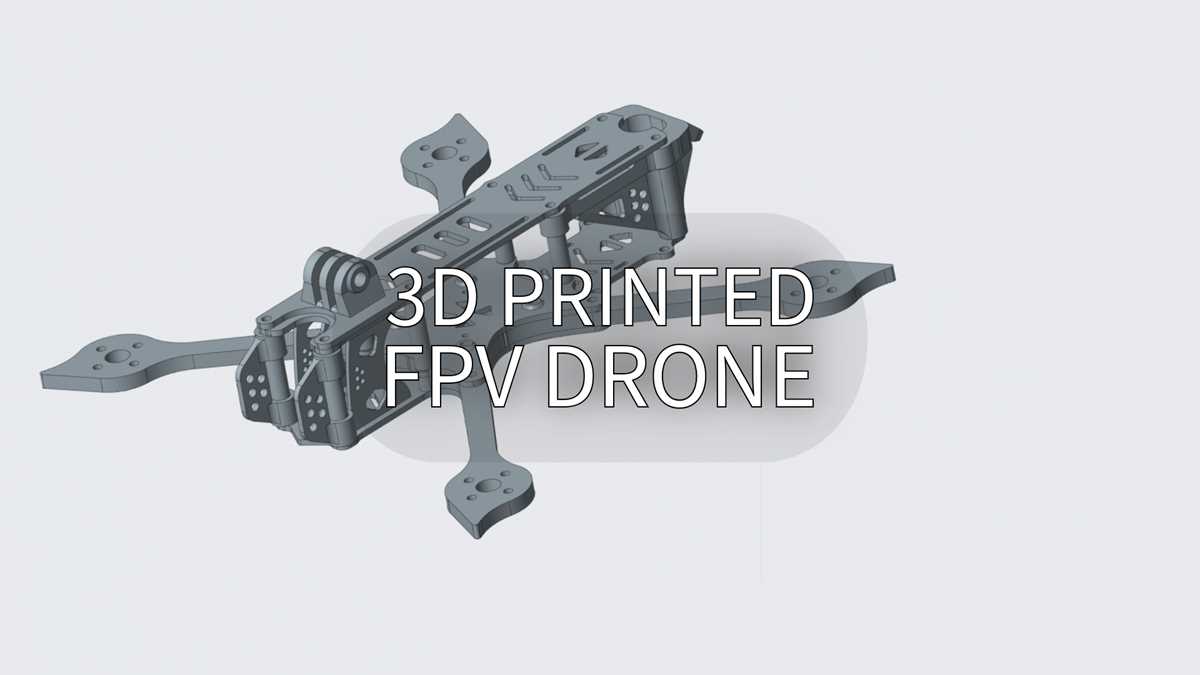
Select an X-style quadcopter layout with separate arms at least 4–6 mm thick to localize damage after crashes. Independent arms are easier to replace than a single-plate base, reducing repair cost and downtime.
Use materials with higher impact strength than standard PLA. Recommended options:
- PETG for moderate flexibility and easier printing
- ABS for better heat tolerance and structural rigidity
- Nylon or carbon-fiber–reinforced blends for maximum toughness
Print load-bearing components with 4–6 perimeter walls and 45–60% infill. Gyroid or cubic infill patterns distribute force more evenly than simple grid structures, lowering the chance of cracks along layer lines.
Orient arms horizontally on the build plate so layer lines run across the width rather than along the length. This reduces splitting under motor torque and hard landings.
Reinforce motor mounts with thicker outer rings and add fillets at arm-to-body joints. Sharp internal corners create stress concentration points that increase fracture risk during high-speed impacts.
Maintain arm width between 12 and 16 mm for 5-inch propeller setups. Thinner arms save weight but bend more under load, affecting flight stability and increasing fatigue over time.
Test durability with controlled drop trials from 1–1.5 meters onto a firm surface before installing electronics. Inspect for layer separation, micro-cracks near screw holes, and deformation around standoffs to confirm structural reliability.