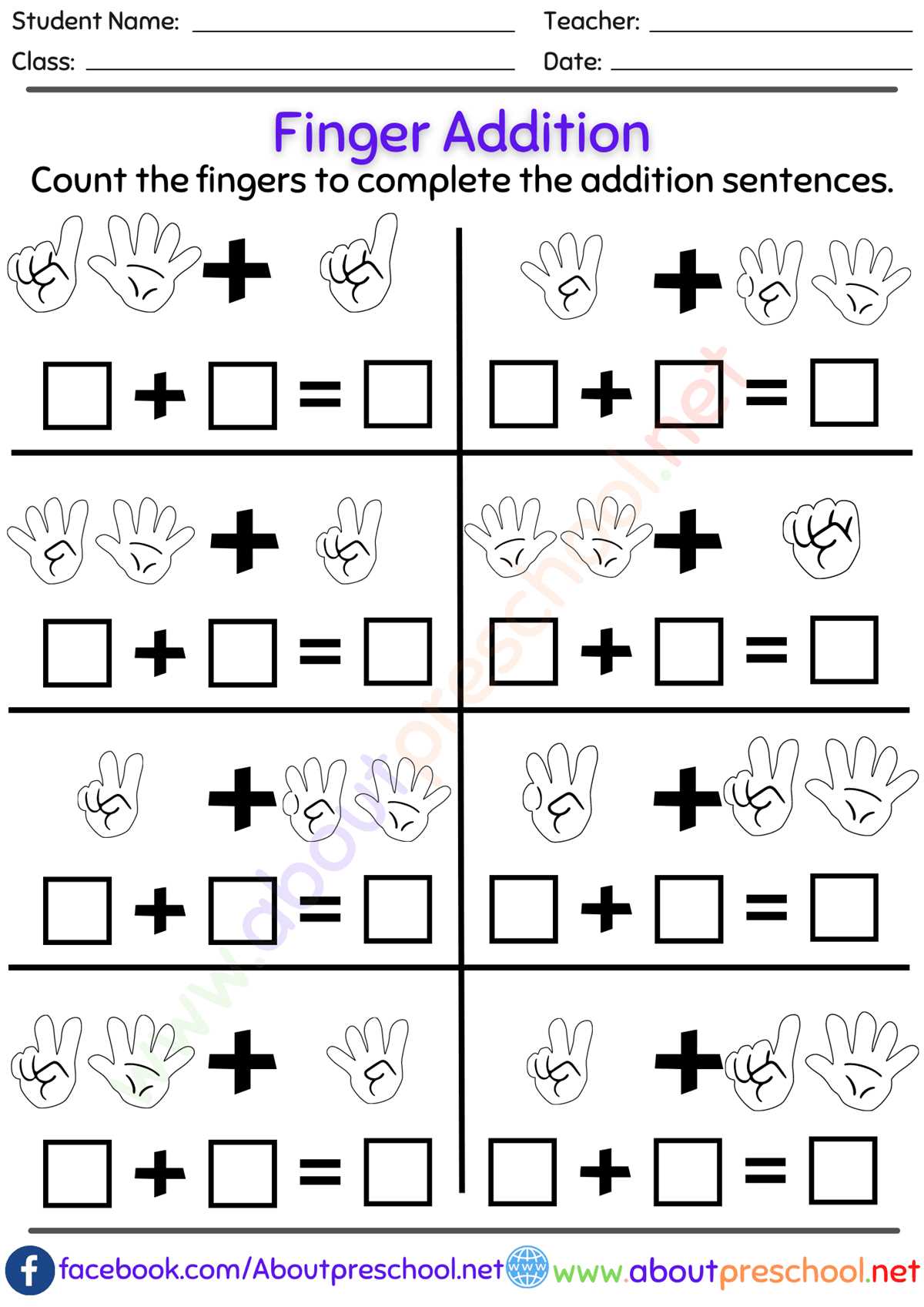
To make learning simple math enjoyable, use clear, visually appealing exercises that gradually increase in difficulty. Children should begin with basic counting tasks, such as identifying numbers or matching groups of objects to their corresponding numeral. These tasks help build a strong foundation before tackling more complex math operations.
Once students understand numbers, you can introduce problems involving combining groups, like “2 apples + 3 apples = ?”. This type of exercise helps them connect numerical symbols to real-world scenarios, reinforcing the concept of addition. To keep things engaging, consider adding colorful illustrations or fun themes related to animals, shapes, or nature that capture children’s attention.
It’s also helpful to offer a variety of formats. For instance, mix different types of problems–some with pictures, some with numerical symbols–to keep the learning process dynamic. Incorporating fun activities like number puzzles or games alongside standard exercises will encourage children to practice more while having fun. By adjusting the difficulty level as they progress, kids will steadily improve their skills in a comfortable and supportive environment.
Effective Math Exercises for Young Learners
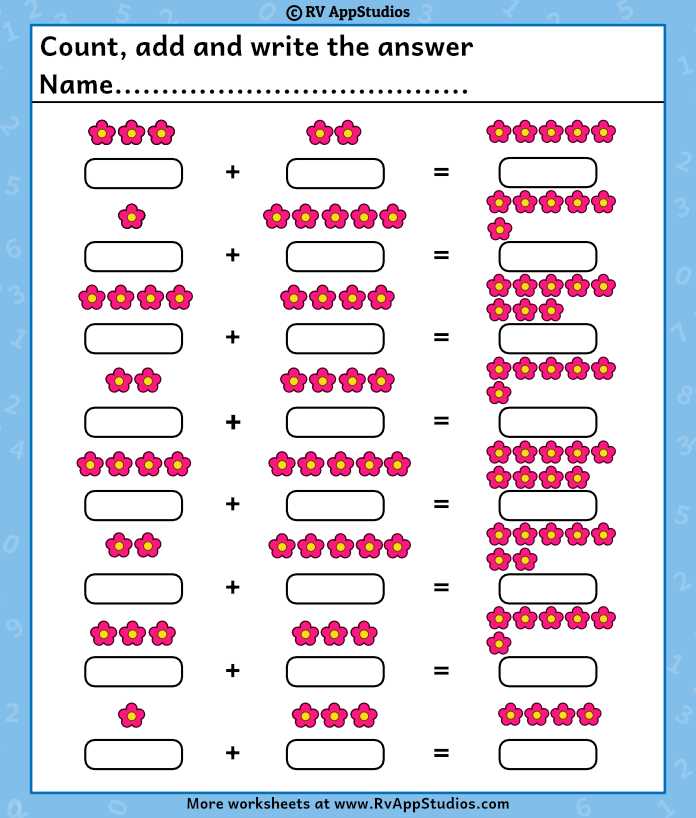
Start with basic number recognition activities, such as matching numbers to objects or counting items in groups. This provides a solid foundation for future operations. For example, you can give children simple tasks where they match the number 4 to four apples or four dots. These exercises make numbers more tangible and easier for children to grasp.
As children become comfortable with numbers, introduce simple combining exercises. Use visual aids like pictures or number lines to demonstrate how two groups of items come together to form a larger group. For instance, you could present a picture of two apples and three apples, asking how many apples there are in total. This helps them visualize the concept of “adding” two groups together.
Include a variety of question formats to maintain interest. One effective method is to mix different types of problems, such as using both pictures and symbols. For example, you can provide an image of a basket with five apples and ask, “How many apples would there be if you added two more?” This engages children by presenting the same concept in various forms, ensuring that learning stays dynamic.
Finally, make sure to adjust the complexity of the problems as children progress. Start with single-digit numbers and gradually introduce problems involving higher numbers as they grow more confident. Also, include fun activities such as number puzzles or interactive games to reinforce the material. These playful elements keep children motivated and ensure steady progress in their math skills.
How to Choose the Right Math Exercises for Young Learners
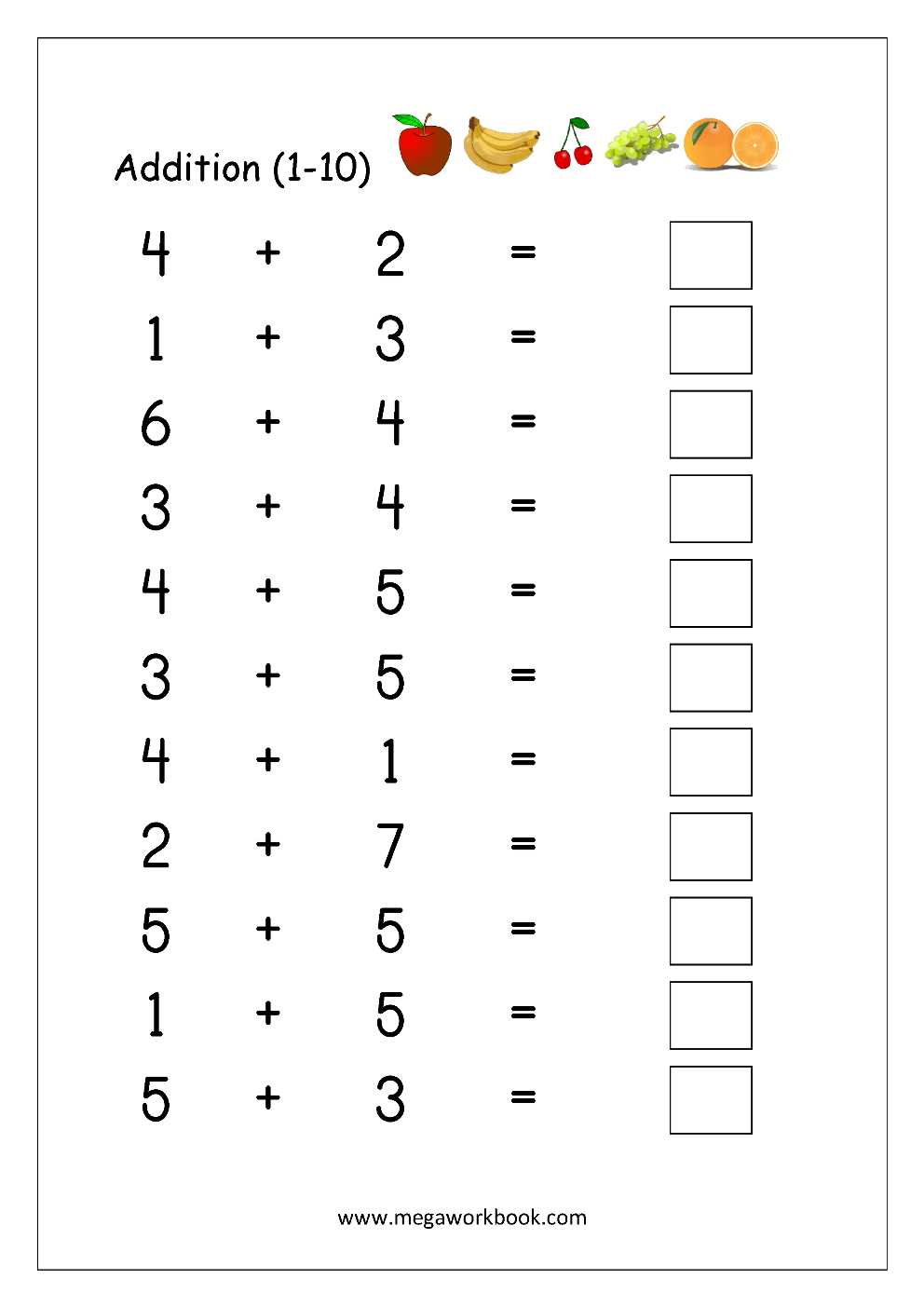
Select practice activities that are visually engaging and straightforward. Look for problems that use familiar objects, like animals or fruits, to represent numbers. This helps children connect abstract concepts to real-world examples. Additionally, ensure that the problems are simple and allow room for hands-on learning, such as using manipulatives like blocks or counters to demonstrate the problems. These types of exercises build a strong, practical foundation for understanding early number concepts.
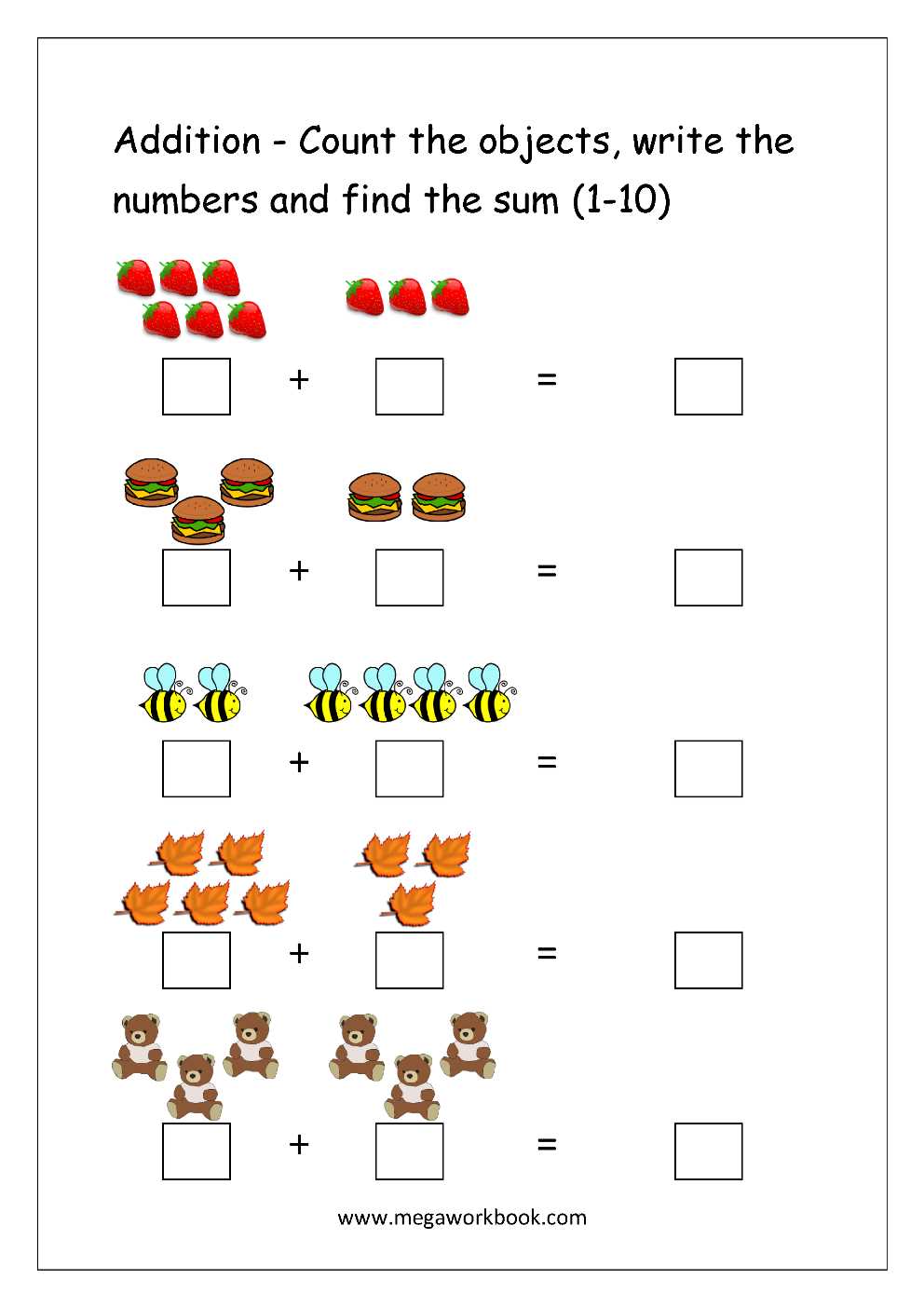
Gradually increase the difficulty of the exercises as the child’s confidence grows. Begin with single-digit sums and work up to two-digit numbers as the child becomes more comfortable with the concept. Make sure to incorporate variety in the tasks, such as using both images and written numbers, to maintain interest and provide a well-rounded learning experience. It’s also important to ensure that the problems are not too complex, so children can enjoy learning without feeling overwhelmed.