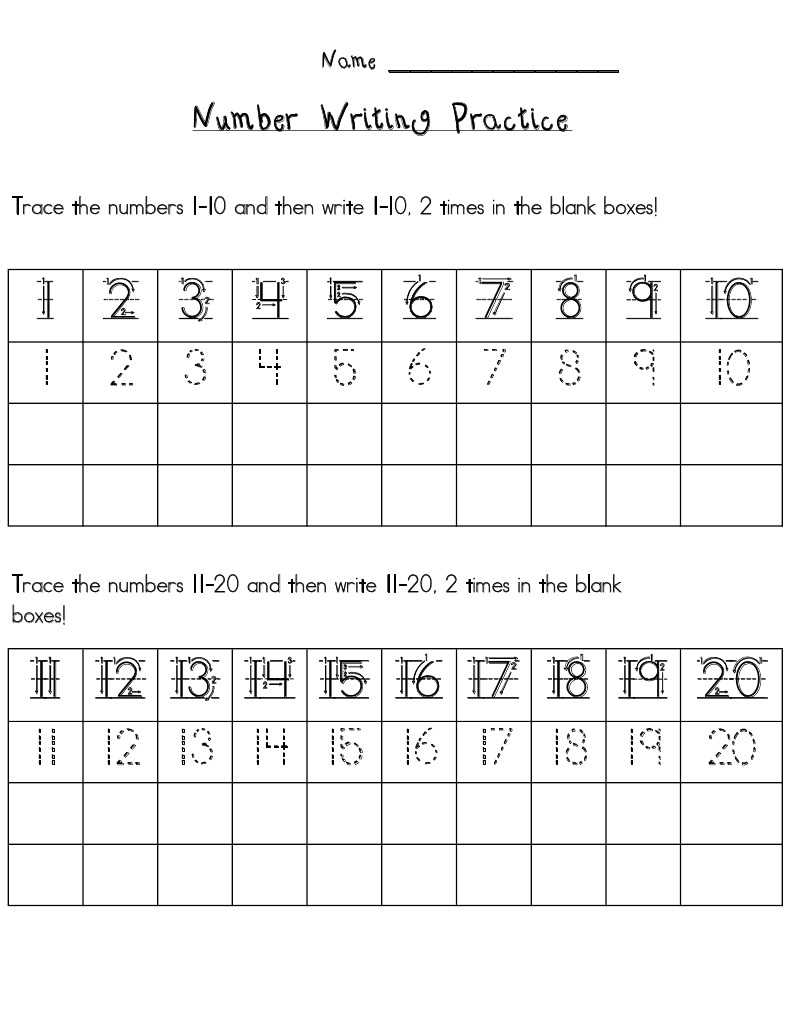
Start by helping children familiarize themselves with the digits 1 through 20 through engaging exercises. A simple yet effective method involves guiding them to recreate these figures in a clear and organized format. This approach builds both recognition and manual coordination, allowing kids to gain confidence as they replicate each character with precision.
To ensure the process is enjoyable and educational, include a variety of techniques. For example, provide spaced guidelines that allow room for improvement as children develop better control over their hand movements. Using lined sheets with clear templates helps prevent confusion and gives structure to the activity.
Incorporating visual aids alongside written exercises can speed up the learning process. Displaying numbers with corresponding objects or images encourages a deeper connection to each figure. These visual associations will enhance recall, making the task both fun and informative.
Gradually increase the complexity as children progress. Begin with easy shapes and move towards more intricate designs. By keeping the exercises progressive and tailored to individual skill levels, the learning experience becomes more rewarding and achievable.
Handwriting Exercises for Numbers 1-20
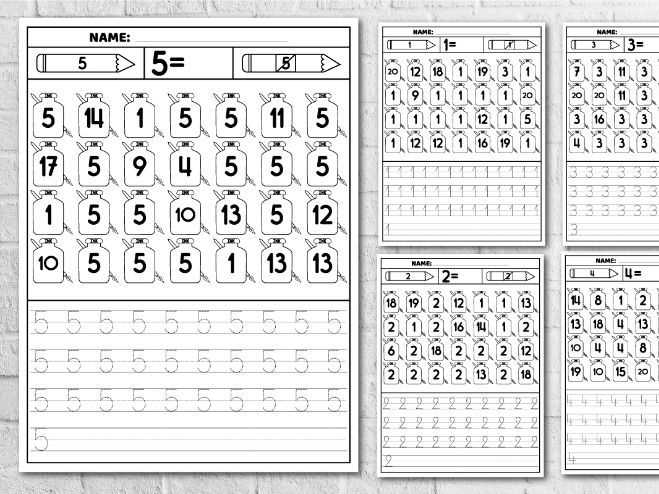
To improve accuracy and consistency, use templates where each digit is shown with dashed lines for tracing. This helps children learn the correct starting point and direction of strokes for every character. Repeated tracing allows the child to develop muscle memory, reinforcing the proper shape and proportions of each numeral. These activities should be done slowly at first, focusing on precision over speed.
When creating exercises, include spaces for freehand writing after tracing. This transition helps in reinforcing what has been learned, allowing for independent execution. To make the activity more engaging, incorporate visual elements like counting objects or patterns that correspond to each numeral. Gradually reduce the assistance with dashed lines as the child gains confidence in forming the digits correctly.
For long-term improvement, encourage repetition with different styles. After mastering basic forms, introduce variations, such as writing with different tools like markers, colored pencils, or on alternative surfaces (e.g., dry erase boards). This variety prevents monotony and keeps children excited about practicing. Adjust the difficulty level as the child progresses by increasing the space between digits and introducing larger sets of numbers to trace and write.
How to Design Simple Worksheets for Number Tracing 1-20
Begin by choosing a clear, legible font that helps young learners distinguish shapes easily. Select fonts with simple strokes and enough space between each character. Common choices include sans-serif typefaces like Arial or Comic Sans, which have easy-to-follow forms for beginners.
Incorporate dashed lines for each digit to guide students as they trace. These lines should be bold and simple, allowing enough space for children to trace over them without overcrowding. The dashes should be consistent, with a slight gap between each stroke to encourage precise movements.
For a balanced layout, position each numeral within its own box, providing ample space around the figure. This prevents the child from feeling confined and allows the tracing activity to remain focused on one number at a time. The boxes should be large enough to accommodate the number’s shape, with room for error.
To maintain engagement, integrate subtle visual cues alongside the digits. Small images or illustrations that relate to the specific number can reinforce the learning process. For example, if the number “4” is being traced, you might add four simple shapes or animals next to the number.
Consider including a step-by-step tracing method for each number. Begin with a simple dotted outline, followed by one with progressively fewer guide points, and finally, leave the entire figure blank for independent practice. This tiered approach helps students build confidence as they develop their skills.
Finally, ensure the worksheet is visually appealing without being overwhelming. Light colors for backgrounds and borders create a calm environment, while keeping the focus on the numbers themselves. Overloading the page with too many elements can distract learners from the task at hand.