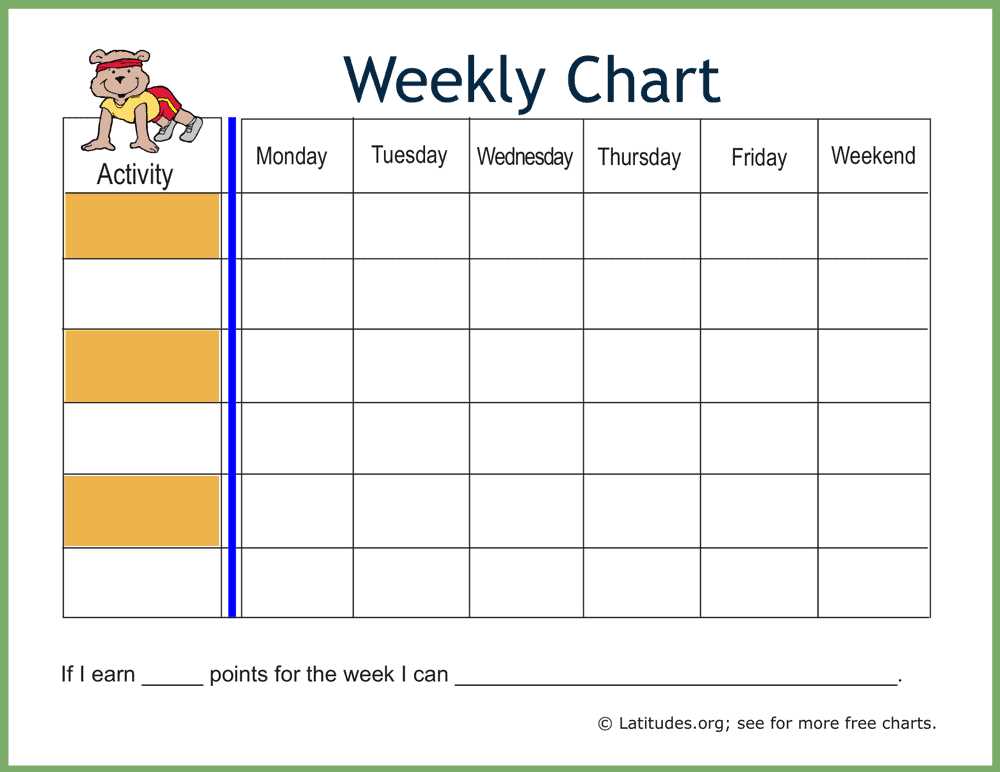
Select a seven-day planning sheet with clearly divided columns and 30–60 minute time blocks to manage tasks, study sessions, or meal prep without overlap. A layout with vertical days and horizontal time slots works well for hourly scheduling, while horizontal day rows suit habit tracking and chore lists.
Download files formatted for A4 (210×297 mm) or US Letter (8.5×11 in) at 300 DPI to keep lines sharp and text readable after printing. Leave margins of at least 10–12 mm to prevent cutoff when using home printers. PDF format preserves alignment and spacing better than editable image files.
Print on 90–120 gsm paper for durability during daily handling. Use grayscale mode to keep grid lines clear without heavy ink coverage. Store blank planning sheets in a binder with labeled tabs for work, school, fitness, and household tasks to simplify organization and quick access.
Weekly Chart Printable
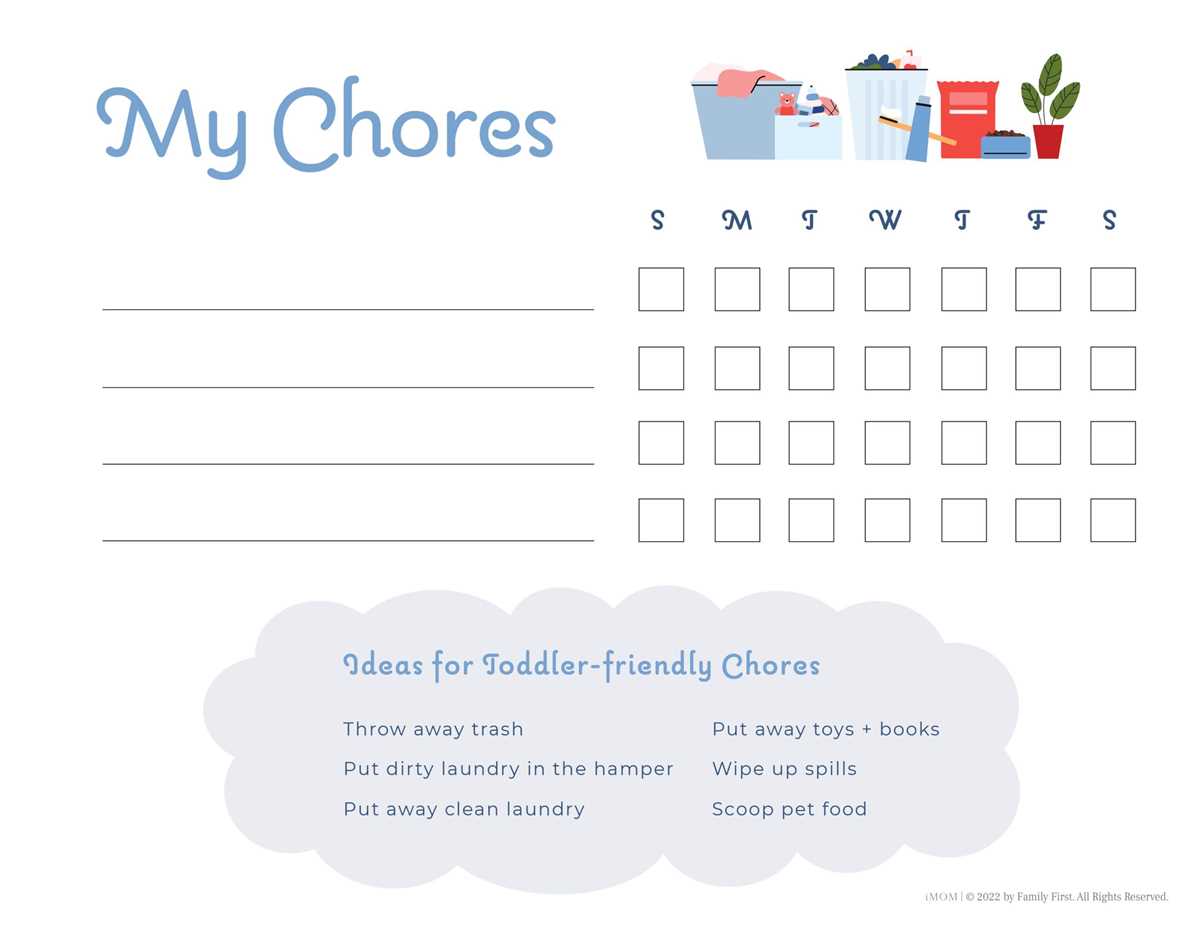
Use a seven-day planner sheet with clearly separated columns and visible grid lines to track appointments, assignments, and home duties without overlap. Choose layouts that include labeled day headers and at least 5–7 rows per day for structured task grouping.
For time-based scheduling, select templates divided into 30-minute or 1-hour intervals from 6 AM to 10 PM. This format suits work shifts, study blocks, and training sessions, allowing precise allocation of 14–16 active hours per day.
For habit tracking or chore management, opt for a grid with checkboxes aligned next to task names. A layout offering 10–15 rows per day provides enough space for recurring responsibilities such as cleaning, reading, exercise, and meal prep.
Print planning sheets at 100% scale on A4 or US Letter paper with 300 DPI resolution. Use 100 gsm paper to prevent ink show-through and keep lines crisp after multiple annotations.
Store completed planning pages in a dated binder section to review progress, identify scheduling gaps, and adjust task distribution for the next seven-day cycle.
How to Choose the Right Weekly Chart Layout for Work Study or Home Tasks
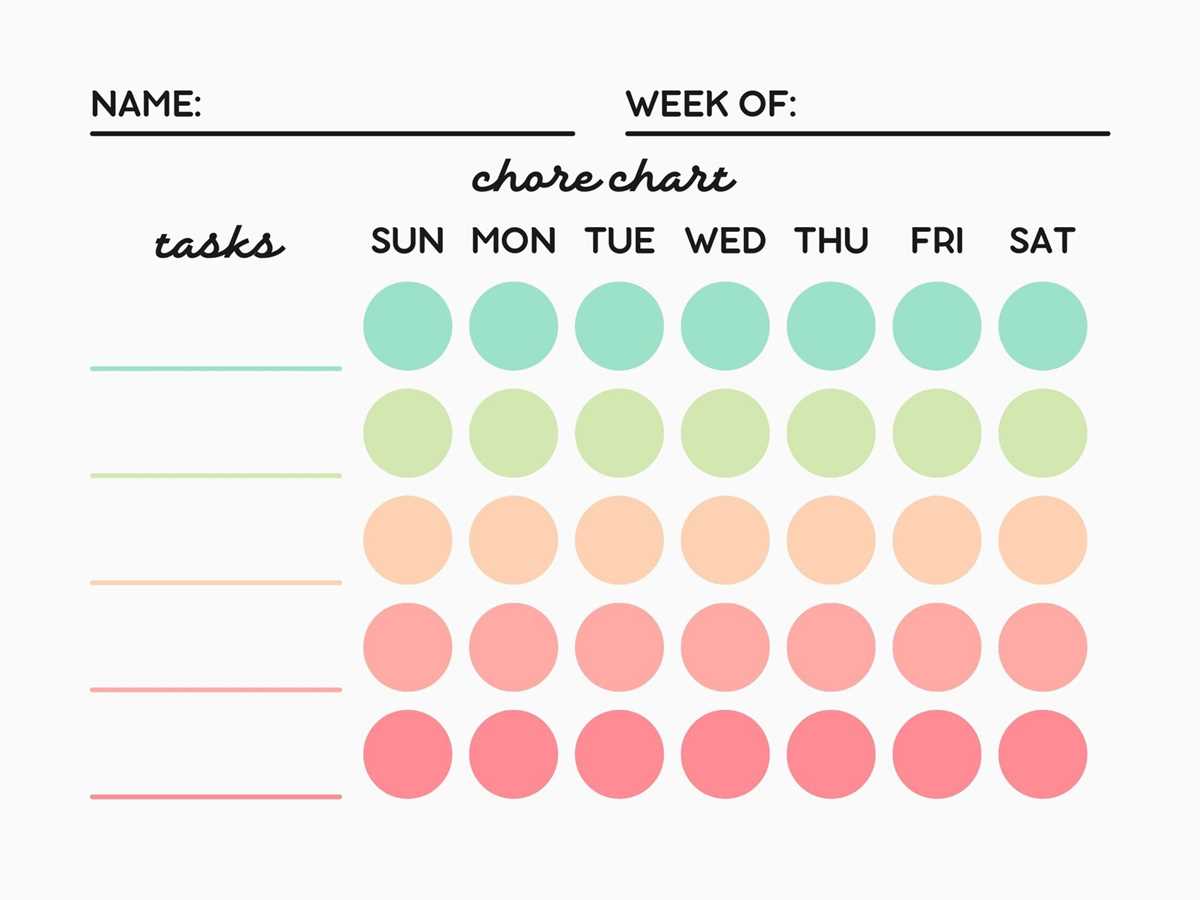
Select a layout based on how your time is structured rather than appearance. If your day revolves around fixed appointments, choose a planner grid divided into hourly or 30-minute blocks from early morning to evening.
For project-based work or university assignments, use a column format with one column per day and 8–12 blank lines beneath each header. This allows grouping tasks by priority instead of strict time slots.
- Hourly timeline format for meetings, shifts, and classes
- Task list format with checkboxes for homework and reading
- Matrix grid for tracking multiple subjects or clients
- Minimalist layout with wide margins for notes
For household management, choose a template that includes sections for chores, meals, and errands. A design with 5–7 rows per category helps distribute cleaning, shopping, and family activities evenly across seven days.
- Estimate average daily tasks
- Decide between time-based or list-based structure
- Check available writing space per section
- Print a test copy at 100% scale
Keep line spacing at least 7–9 mm high to allow clear handwriting. Narrow rows limit readability and reduce usable space for longer task descriptions.
Store different planner layouts in separate digital folders labeled work, study, and home to switch formats quickly without redesigning your schedule sheet each time.