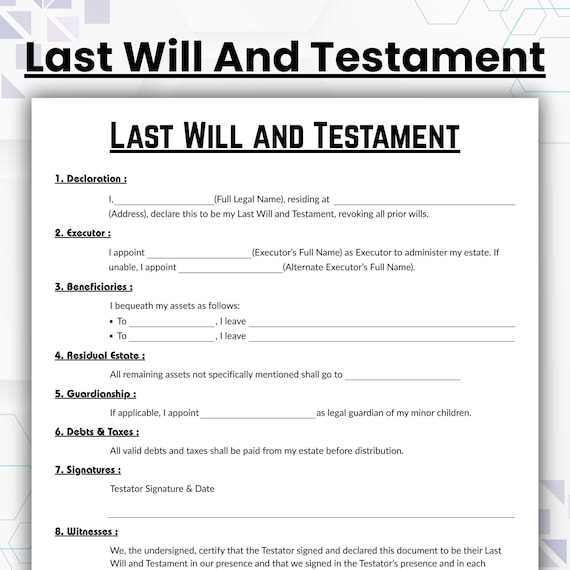
Before drafting a legal document for your estate, you should carefully consider the provisions you want to include. Focus on aspects like asset distribution, guardianship for dependents, and the appointment of an executor. Once you have a clear idea of your wishes, it’s time to look for an appropriate format that suits your needs.
Choosing a reliable format is crucial. A well-organized structure will ensure that your wishes are clearly outlined and legally binding. Many people choose ready-made forms to save time and money. These pre-designed structures often include the necessary legal language and can be customized with your specific details. Look for ones that offer sections for specific bequests, debts, and the appointment of beneficiaries.
When filling out the document, be meticulous about accuracy. Mistakes in a legal document can result in confusion or even disputes after your passing. Make sure you correctly list all properties, individuals, and any organizations involved. Double-check that you have included all necessary signatures and that your witnesses comply with local regulations. In some jurisdictions, failure to meet signature requirements could invalidate the entire document.
Lastly, ensure the document is stored safely. It is essential to keep it in a location that can be easily accessed by your executor when necessary. You may also want to consider updating the document periodically as circumstances change, such as the acquisition of new assets or changes in family dynamics. A legal document for estate planning is an ongoing responsibility, not a one-time task.
Creating Your Estate Document for Distribution
Start by selecting a reliable form that meets your needs. Look for a template with sections for assigning your property, selecting a guardian for dependents, and designating an executor. These forms often include a basic structure with pre-written legal language, allowing you to easily input your details and ensure clarity. Be sure to customize it based on your specific wishes for asset distribution.
Accurate details are crucial when filling out this legal document. Include a comprehensive list of all property, accounts, and any special instructions you want to be followed. You may also want to indicate your preferred beneficiaries and any specific gifts or bequests. This ensures that there are no misunderstandings or disputes later on about the distribution of your estate.
After completion, review the document carefully. Ensure that all signatures and witness requirements are met according to your jurisdiction’s rules. Even a minor error could invalidate the document. Store the finalized version in a secure place and inform your executor of its location. Regularly updating the document is also recommended as circumstances change in your life.
How to Choose the Right Template for Your Legal Will
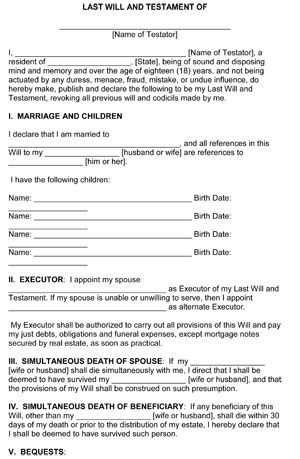
Before selecting a form, ensure that it is valid in your jurisdiction. Local laws can dictate the requirements for witnesses, notarization, and the language used in legal documents. It’s vital to understand whether the template you are considering meets these standards.
Identify the key sections that you need. A basic legal document should include sections for appointing an executor, naming beneficiaries, detailing asset distribution, and designating a guardian if applicable. If you have a more complex estate, look for a template with advanced features such as provisions for trusts or multiple beneficiaries.
Check for flexibility in customization. Some forms offer a wide range of options to adjust to your particular needs, including special bequests or funeral instructions. Make sure the template allows for easy edits, as your preferences or family situation may change over time.
Look for templates that are clearly organized and easy to navigate. Avoid overly complex or jargon-heavy formats that might create confusion. The form should have clear instructions and fields for all required information to ensure nothing is overlooked.
Consider whether the template includes provisions for updating your document. Some formats allow for periodic amendments without needing a completely new version. This flexibility is especially helpful if your life circumstances change, such as acquiring new assets or having additional children.
Review the cost of the template. While some are available for free, others might come with a fee for added features or legal guidance. Determine if you need additional legal advice when filling out the form, as some templates may provide access to consultations with legal experts.
Finally, ensure that the template is designed for your personal situation. If you have specific needs, such as appointing a guardian for children, setting up a trust, or dividing assets across multiple generations, the template should address these requirements. Make sure it’s tailored to suit your exact needs to avoid any future confusion.