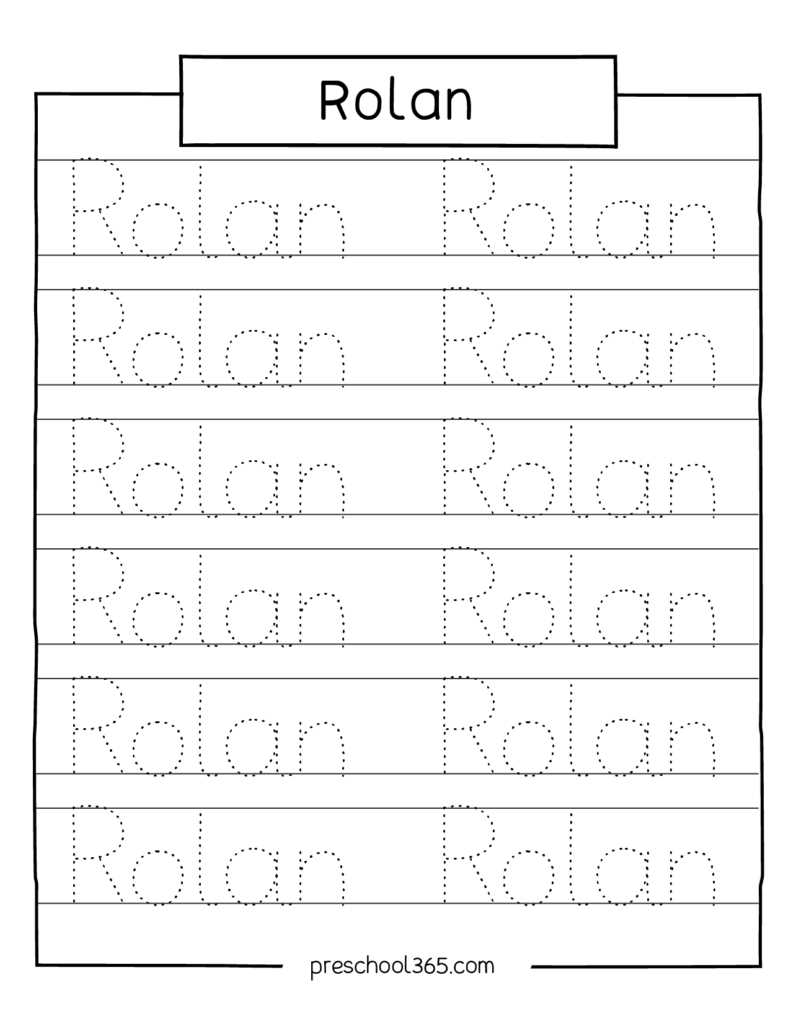
To help children develop their handwriting skills, you can craft customized worksheets that focus on writing individual characters and words. A great way to start is by selecting simple, clear fonts that are easy for young learners to follow. Use dotted or dashed lines for each letter, allowing kids to trace over them repeatedly for muscle memory. Be sure to space the letters sufficiently to make tracing comfortable.
Incorporating fun themes can increase the appeal of these exercises. For instance, including a favorite animal or activity in the background of each letter can keep the child motivated. This approach allows children to associate learning with enjoyable images, enhancing their focus and engagement.
Additionally, providing a gradual progression from larger letters to smaller ones helps build confidence. Start with wide, open shapes that are easy to trace, and as skills improve, move on to more compact forms. This structured approach gives children a sense of accomplishment as they master each new stage.
Consistency is key–offer regular practice with different sets of words and letters. Whether it’s at home or in the classroom, having these exercises readily available can support learning in a fun and interactive way. Try to mix in a variety of words that are meaningful to the child for added relevance, such as names of family members, pets, or favorite objects.
Tracing Names Printables: A Practical Guide
To help children master handwriting, one of the simplest and most effective tools is providing sheets where they can practice writing specific letters or full words. These exercises not only improve fine motor skills but also boost confidence as they see progress on the paper.
Choose clear, simple fonts that mimic real handwriting, avoiding overly complex or ornate styles. These types of fonts allow beginners to easily form each letter, helping them focus on correct formation. Stick with styles that use both upper and lower case to match common writing tasks.
Another aspect to consider is the size of the letters. Larger characters provide a manageable target for young learners to trace and replicate. Gradually reducing the size as proficiency improves helps students transition to writing without visual guides.
Introduce spaces between the words to help children understand word boundaries. This improves spatial awareness and ensures they maintain proper letter spacing, which is crucial for readability. Try to leave enough room so they can practice several times on the same sheet without feeling cramped.
Consider the use of dotted or dashed lines as tracing paths. These visual cues allow children to focus on each individual stroke. Once they become comfortable, these can be replaced with lighter guide lines or omitted entirely to encourage independent writing.
Organizing these materials by themes can also motivate kids to engage more actively. Use topics relevant to their interests, such as names of animals, colors, or even their own names. When children can relate to the words they’re tracing, the process feels more like a fun activity than a chore.
Repetition is key for muscle memory. Provide a variety of sheets with different combinations of letters, words, or even full sentences. This ensures that the learner continues to build confidence and reinforce their skills through practice.
Finally, involve children in the process by asking them to select their favorite designs or word choices. Letting them take ownership of their learning boosts enthusiasm and creates a sense of accomplishment when they complete each task.
How to Create Customizable Name Tracing Templates for Kids
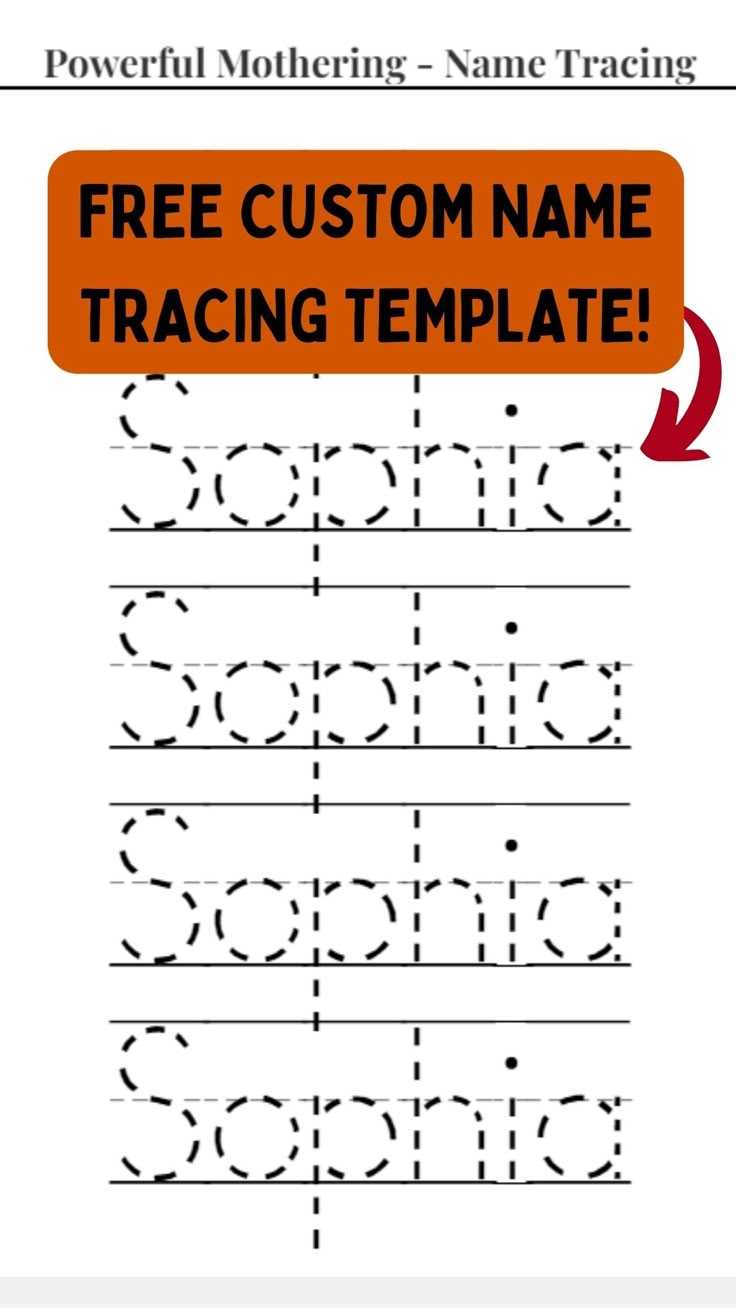
To create a customizable template for kids to practice writing, start by choosing a font with clear, simple lines. Avoid overly decorative styles, as they can be difficult for young children to follow. Consider fonts designed specifically for educational purposes, as they provide adequate space between characters and consistent letter formation.
Ensure that the space between each letter is wide enough for children to trace without feeling cramped. A spacing of at least 1.5 times the height of the letters will allow room for larger strokes. You can adjust the spacing depending on the age and motor skills of the child, offering them enough room to form each character accurately.
For maximum customization, make it easy for parents or teachers to input different names. Use a tool or software that lets them adjust text size, letter thickness, and line style, providing flexibility for different learning stages. The ability to toggle between upper and lowercase versions will also make the templates more adaptable to various skill levels.
Incorporate dotted or dashed lines for the child to follow. These guides should be consistent but light enough not to distract from the character formation. The broken lines help the child understand the structure of each letter without overwhelming them. Be sure to use a style that’s easy to erase or adjust if needed.
Include an option for printable guidelines for positioning, such as horizontal lines or boxes to help children align the text. These visual aids promote better handwriting habits and assist kids in understanding letter placement relative to the rest of the text.
It’s also beneficial to provide variations in stroke weight. A thicker outline can guide beginners, while a thinner outline might be better suited for advanced learners working on refinement. This gradual progression helps children improve their skills over time, keeping them challenged yet motivated.
Lastly, offer additional interactive features, such as the ability to change the color of the lines or background. This can make the exercise more engaging and personalized, as kids are likely to enjoy practicing with colors that appeal to them. Customization options like this keep children interested in their learning while allowing teachers or parents to adapt the activity for specific needs.