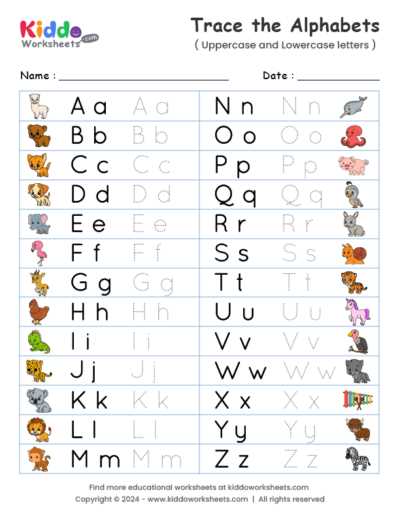
Select high-quality practice sheets to focus on forming characters clearly and consistently. Download sheets that offer guidelines to help you understand stroke order and spacing. The right format will allow you to trace and repeat each character for better mastery.
Use the practice sheets regularly, starting with larger letters to build muscle memory. Once you’re comfortable, move on to smaller characters to refine control and fluidity. Consistency is key–set aside dedicated time each day to practice, ensuring steady progress.
If you encounter difficulty with specific characters, highlight those sections and repeat them until you feel confident. Tracking your progress with dated sheets can help identify areas that need extra attention. Practice should always feel like a gradual improvement rather than a task to complete quickly.
Using Practice Sheets to Improve Handwriting
Start with larger characters to build a strong foundation. Focus on forming each symbol clearly by following the lines and curves indicated on the practice sheets. This will help you gain muscle memory and improve your control.
Once you feel confident with the larger forms, reduce the size of the symbols gradually. This step is important for refining your precision and fluidity. The smaller you go, the more attention you need to pay to the fine details.
For consistency, practice at least 15-20 minutes a day. Consistent repetition leads to smoother strokes and better overall form. Make sure you are paying attention to spacing and alignment, as this helps maintain legibility.
If certain shapes or strokes are more difficult, isolate those characters and focus solely on them for a session. Repetition of challenging sections will help you overcome difficulties and make the writing process easier.
Use different practice sheets with varying types of letters to broaden your skill set. Some sheets may focus on capital symbols, while others work on lowercase ones. This variation will ensure that your hand is accustomed to writing all types of characters.
As you improve, challenge yourself by writing without the guide lines. This will help you rely on muscle memory instead of tracing. It is important to track your progress by comparing earlier work with later attempts to see noticeable improvements over time.
Choosing the Right Practice Sheets for Handwriting
When selecting practice sheets, first consider the size and style of characters. For beginners, choose templates with larger symbols that allow more room for movement. This will make it easier to focus on each stroke without feeling cramped.
Sheets that include dotted or dashed lines provide helpful guides for letter formation. These guides help you maintain consistent size and spacing. Look for sheets that offer both uppercase and lowercase characters, allowing you to develop skills for all types of writing.
Another key factor is the type of lines used. Opt for sheets with faint lines that allow you to gradually wean off guides as you progress. The goal is to eventually write without assistance, relying on muscle memory to guide your hand.
If you are looking to work on specific symbols, choose templates that cater to certain challenges. Some sheets focus on loops or curves, while others target straight lines. Narrowing down your focus can speed up improvement in troublesome areas.
Consider the layout of the sheets. Some designs have a full-page of repetitive exercises, while others spread out each character with plenty of spacing between them. For those just starting out, sheets with wider spacing may be more helpful for learning control and precision.
It’s also important to think about how often you plan to practice. If you’re working with children, engaging designs that feature fun elements or colors may keep them motivated. For older learners, simple, clean layouts are ideal for developing consistency without distractions.
Some practice sheets also come with additional features, like tracing over a lightened version of each character or a color-coded system to differentiate between strokes. These added tools can make the learning process more visual and easier to follow.
Finally, consider variety. Use different styles of sheets to develop a versatile skill set. As you improve, switch between styles that focus on speed, control, or even calligraphy to continue challenging yourself.