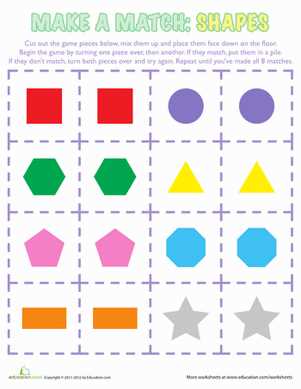
Provide your little ones with exercises that challenge their attention and memory with fun, interactive activities. These activities can be easily prepared at home, involving matching objects, animals, or shapes. They help children improve recognition skills while encouraging concentration in a playful environment.
Simple cards or flashcards with various images are a great way to develop cognitive abilities. Try matching pairs of animals, objects, or colors, ensuring that the images are clear and visually distinct. This method is ideal for toddlers as it stimulates their ability to connect visuals and reinforces learning through repetition.
Introduce activities that can be done with your child and make the experience interactive. Lay out a set of image pairs and ask them to find corresponding matches. This practice not only boosts short-term memory but also enhances hand-eye coordination. By engaging in this activity regularly, children will gradually improve their focus and increase their problem-solving abilities.
For variety, try different themes such as matching numbers, letters, or even shapes. You can create fun challenges like time limits or offer small rewards to keep them motivated. These exercises provide opportunities for learning while allowing your child to enjoy the process of discovery.
HTML
Fun Activities for Developing Memory in Young Learners
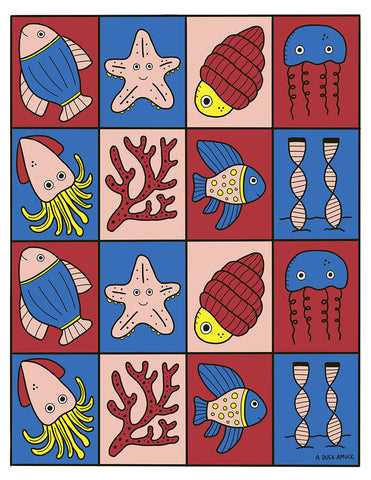
Introduce fun exercises where children match pictures or objects based on categories, such as animals, colors, or shapes. Using visuals helps improve their ability to recognize patterns and make associations quickly.
Set up simple challenges with cards featuring different items. For example, pair images of a cat with a corresponding paw print or a ball with a bouncing figure. This builds recognition skills while keeping the activity engaging.
Use contrasting visuals for increased difficulty. Try using objects with similar colors or shapes to test their attention to detail. This encourages children to slow down and really focus on their observations.
Incorporate sensory elements by having tactile cards or objects to pair. Let kids touch and feel items before matching them with their image cards. This creates a multi-sensory experience, aiding in better retention of information.
Color coordination exercises are excellent for young learners. Children can match similar colored blocks or images, helping them develop a better understanding of shades and hues while improving fine motor skills.
Introduce numbers and letters alongside visuals. By having a set with numerals paired with corresponding objects (e.g., 3 apples), children practice both counting and recognizing symbols simultaneously.
Make use of everyday items for matching, like food, clothes, or animals. Use real-life objects to encourage learning about the world around them while associating images with tangible experiences.
Finally, rotate the themes regularly. Fresh sets with new visuals keep the activity interesting, while continuing to reinforce cognitive skills. The variety in design helps children stay motivated as they see progress in their learning.
How to Create Simple Matching Game Printables for Early Learners
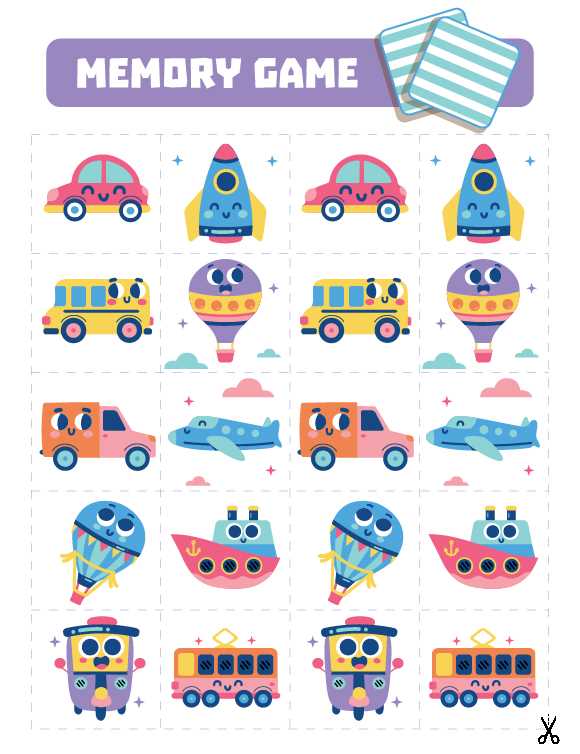
Choose a theme that resonates with young children, such as animals, shapes, or colors. This makes the activity both fun and relatable. Ensure the images you use are clear and simple, with bold outlines and vibrant colors to keep the attention of young learners.
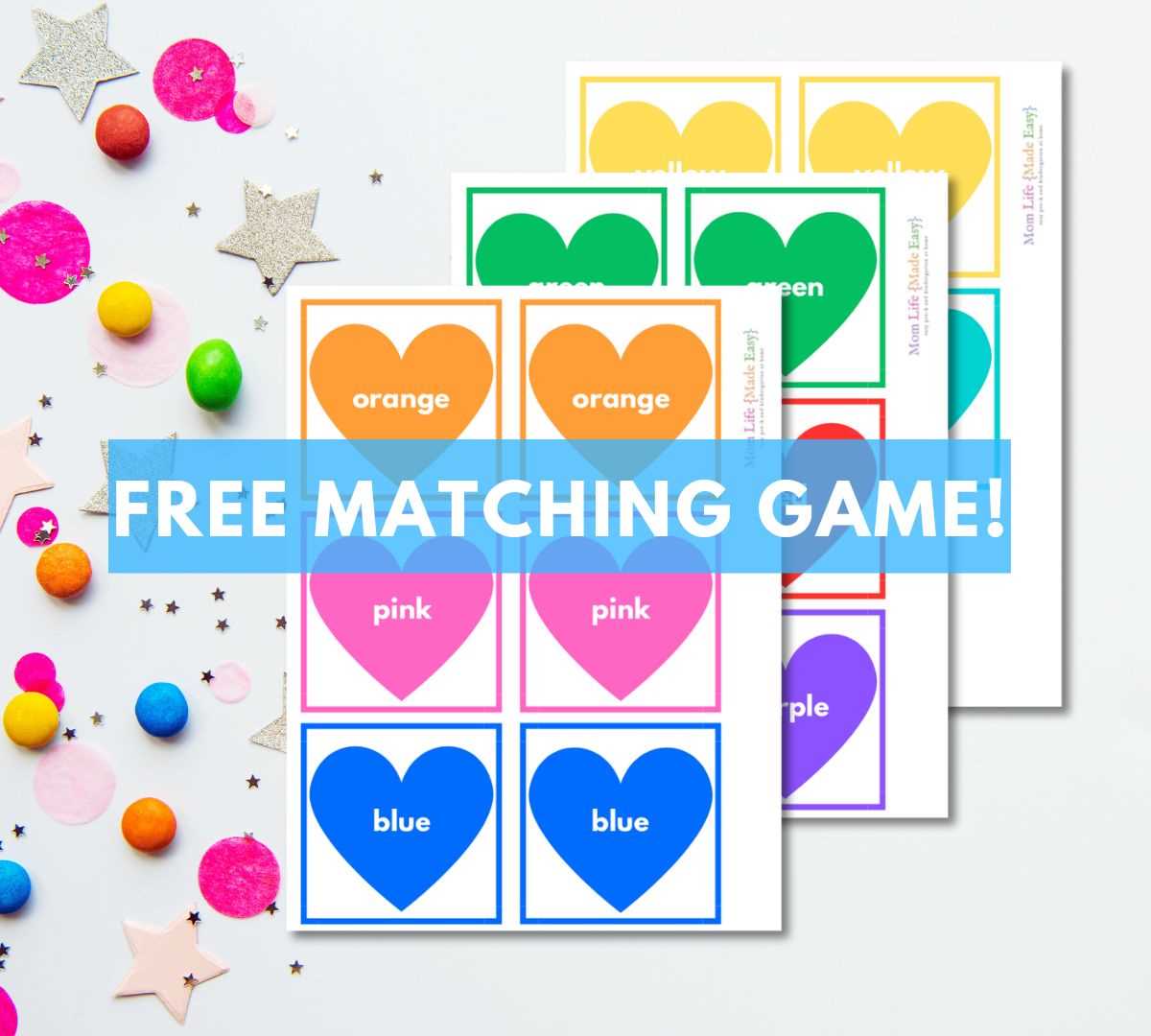
Use pairs of images that are easy to identify. For example, pair a picture of a cat with the word “cat” or a red circle with a colored red item. This allows children to practice both recognition and word association at the same time.
Design cards that are not too cluttered. Keep the size of each card appropriate for small hands to grasp and flip over easily. The design should be simple, with no additional distracting elements around the pictures or words.
- Use contrasting colors for the background and the images to make them stand out.
- Keep the layout consistent. Align cards in rows or columns to create a clear and organized structure.
- Leave enough space between each card so they are easy to handle during the activity.
If including words alongside images, choose simple, phonetic words. This helps children learn spelling and pronunciation. For example, pair a picture of a dog with the word “dog,” not a complicated word like “elephant.”
Print the designs on sturdy paper, such as cardstock, to prevent them from getting damaged easily. You may also want to laminate the cards to increase their durability for repeated use.
Consider using two sets of identical cards for matching activities. This allows children to pair the cards visually and reinforces memory skills as they recognize the pictures and words.
Finally, test the activity with a child to ensure it is both engaging and appropriate for their skill level. Adjust the difficulty by increasing or decreasing the number of cards as necessary.