
To build a strong foundation in numeracy, it’s crucial to offer children activities that combine learning with hands-on practice. One of the most effective ways to achieve this is by providing exercises that guide learners through the process of forming digits correctly. These materials allow kids to repeatedly practice each shape, reinforcing muscle memory and visual recognition.
By offering a variety of interactive templates, educators can make this task more enjoyable and engaging. The process of tracing shapes not only boosts confidence in writing but also helps children develop fine motor skills. Additionally, this method aids in reinforcing the proper formation of each figure, helping students internalize their structure faster.
It’s also beneficial to use resources that come with varied difficulty levels. Starting with simpler forms and gradually increasing complexity ensures that learners stay motivated and do not feel overwhelmed. Whether used at home or in the classroom, these exercises can seamlessly integrate into any lesson plan, allowing for focused skill development and mastery of writing numbers.
Enhancing Early Learning with Customizable Writing Practice Sheets
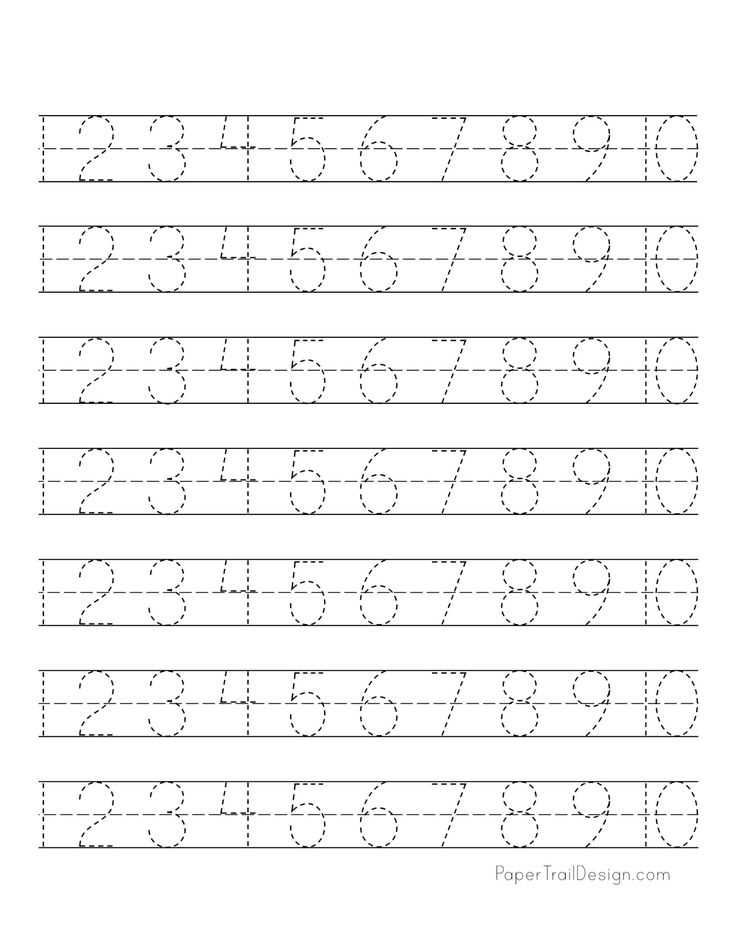
To support young learners in mastering handwriting, design engaging exercises with clear, bold symbols that are easy to follow. Make sure these pages are structured to guide learners through proper stroke formation and alignment. Avoid over-complicating the design by keeping instructions simple, leaving ample space for each character. It’s important that each segment can be followed independently without overwhelming the child.
Incorporate shapes and lines that break down each figure into manageable parts. For example, create pages where children can practice loops, straight lines, and curves, separately. These exercises build confidence and allow them to perfect the basic elements that form all characters.
Utilize patterns and progressive difficulty in exercises. Start with large, light outlines that children can trace easily, gradually reducing the size and complexity. This will help them develop fine motor skills while maintaining accuracy as they progress.
Provide options for custom variations by adjusting the font style. Use block or cursive letters to cater to different stages of learning. Custom fonts allow for targeted learning goals, such as legibility or fluid motion for more advanced learners.
It’s effective to include a mix of both upper and lower case forms. By alternating, students can gain familiarity with all types of characters from an early age, ensuring they don’t struggle later on with case-specific rules.
For additional support, you can add visual cues like arrows or numbered steps to further guide their hands. Such features can make a significant difference in building muscle memory for correct writing habits.
Introduce activities that connect writing practice to other skills. For example, after a set of characters has been written, ask the child to match them with corresponding objects or pictures. This will engage them beyond mere repetition and enhance recognition skills.
Finally, make these activities fun by adding playful designs or themes like animals, cars, or favorite colors. This element of creativity not only motivates kids but also strengthens their connection to learning by making it a more enjoyable experience.
How to Create Number Tracing Worksheets for Different Age Groups
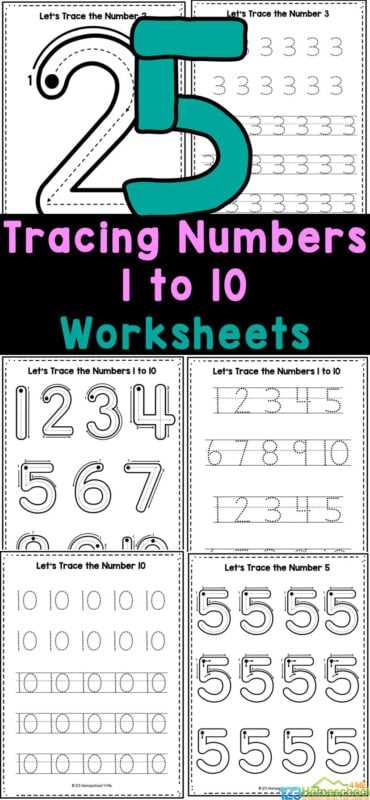
For toddlers, use large, bold symbols with ample space between each figure. Offer simple shapes that are easy to follow with a crayon or pencil. Limit complexity by focusing on just a few characters in each exercise, allowing for easy repetition. These activities should help them improve hand control and motor skills.
For preschoolers, introduce more structured forms, like dashed outlines that children can follow more precisely. Include varied designs, such as circles or zigzags, to keep engagement high. You can also add a fun element like images of animals or objects to represent each numeral to make learning more enjoyable.
For early elementary school students, incorporate more advanced designs with smaller spacing and multiple practice opportunities per figure. Consider adding activities where students can trace symbols in both ascending and descending order. This encourages both visual and cognitive recognition of each form. Add an extra layer by incorporating math-based activities like matching numerals to their corresponding quantities.
Older children benefit from more complex patterns, requiring precise tracing. Provide examples where students need to write the number on their own after following a faint outline. For a greater challenge, offer word problems or puzzles related to numbers, helping to integrate their tracing skill with basic arithmetic understanding.