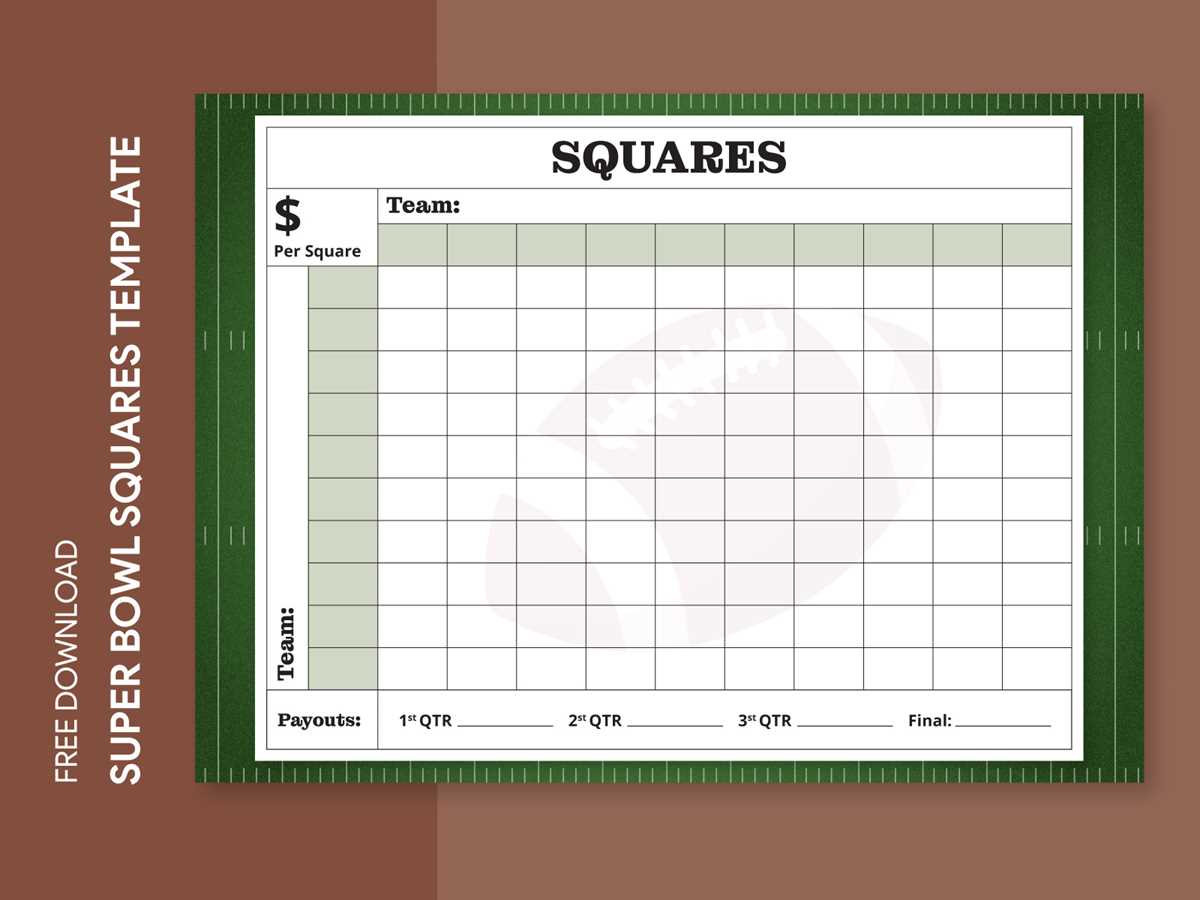
To organize a lively and engaging game for any event, start by setting up a grid where participants can select squares. Each square corresponds to a number, which will later be used in conjunction with the outcome of the event to determine winners. Ensure the grid has clearly marked rows and columns for easy navigation and selection. It’s essential to choose a size that fits the number of participants and aligns with the game’s complexity.
Next, assign random numbers to the squares. This step can either be done manually or by using an online random generator. This randomness ensures fairness and excitement as no one can predict which number will correlate with the final outcome. After assigning numbers, share the grid with participants and allow them to pick their squares, ensuring that everyone has an equal chance of winning.
As the event unfolds, keep the atmosphere interactive by updating participants on their standing. This keeps the energy high and the excitement going throughout the competition. If you want to increase engagement, consider offering prizes for the winners of each round. Customizing this simple grid system can elevate your gathering, making it memorable and fun for everyone involved.
How to Set Up a Fun Grid-Based Game for Your Game Day Event
To start, create a grid that will form the foundation of your event activity. The grid should have enough spaces to accommodate all participants, typically in a 10×10 layout. This provides a total of 100 individual cells for people to choose from. Adjust the size based on your guest list if necessary, keeping the game engaging but manageable.
Next, assign random numbers to each cell on the grid. You can do this manually or with a random number generator to ensure fairness. Once the grid is populated, give participants the chance to select their squares. Ensure that everyone has an equal opportunity to claim their spots, either through a sign-up sheet or first-come, first-serve basis.
Each number corresponds to a certain outcome during the event. For example, in a typical game, these numbers will be tied to the last digit of each team’s score at certain points during the game. Participants win based on how their number aligns with the game’s outcome at designated times, such as at the end of the first quarter, halftime, and so on.
Be sure to distribute the grid to all players in advance, whether that’s digitally or physically, so they can choose their numbers before the game starts. This can increase excitement and anticipation as the event draws closer. It also gives you time to ensure everyone knows how the game works and is ready to participate.
If you want to enhance the atmosphere of your event, consider offering prizes for winners at various stages. For example, you can give rewards for the most accurate square after each quarter or halftime. This keeps the competition going and engages players throughout the event.
For easy tracking, create a scoreboard that everyone can see. This could be a physical board or a digital display, where you update the numbers as the game progresses. This will keep participants involved, as they can see how their selections are faring in real time.
Additionally, ensure you have clear rules laid out for the event. Clarify how winners are determined, when the winning numbers will be announced, and how prizes will be distributed. This will prevent any confusion and ensure a smooth experience for everyone.
Lastly, after the game ends, take time to thank everyone for participating and share the results. If prizes were awarded, make sure they are given out promptly. This keeps the event enjoyable and leaves everyone looking forward to the next one.
Tips for Customizing Grids for Maximum Fun
Start by adding some creative visuals to the grid. Customize the background with vibrant colors or a theme related to the event. For example, if it’s a seasonal celebration, you can incorporate colors and graphics that align with that season. Make each cell visually appealing by adding simple icons or illustrations that tie into the game, making it more engaging for participants.
Incorporate fun variations into the traditional setup. You can add extra features like bonus squares, where participants win additional prizes if their numbers are selected at specific moments. You could also introduce surprise squares that change values based on random events throughout the game, adding an element of unpredictability and excitement to keep everyone on their toes.