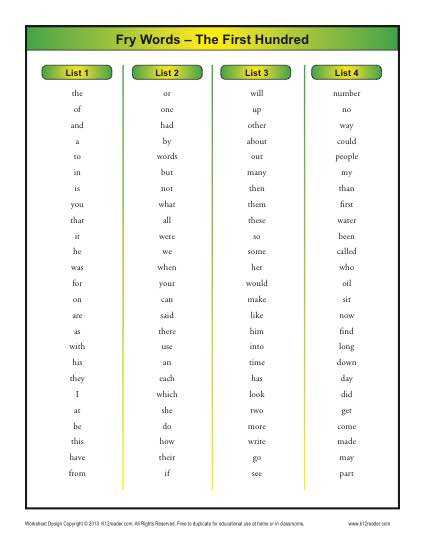
Building a strong foundation for early reading skills begins with mastering a core set of frequently used terms. A structured approach to recognizing and reading these words can significantly enhance fluency. Incorporating a dedicated list of these essential terms into daily lessons is one of the most effective methods for helping children gain reading proficiency quickly.
To make the learning process more engaging, printable resources can be a valuable tool for tracking progress and reinforcing memory. Utilizing accessible, easily printable materials ensures that the learning experience remains both consistent and hands-on, giving students the opportunity to interact with the vocabulary outside of the classroom setting.
Parents and educators should focus on a few key activities to support learners. Activities like flashcards, matching games, and regular reading practice sessions that incorporate these key terms help reinforce recognition and pronunciation. Tracking progress regularly can motivate children and provide clear insights into their growing vocabulary.
How to Use Common Vocabulary Lists for Early Reading Development
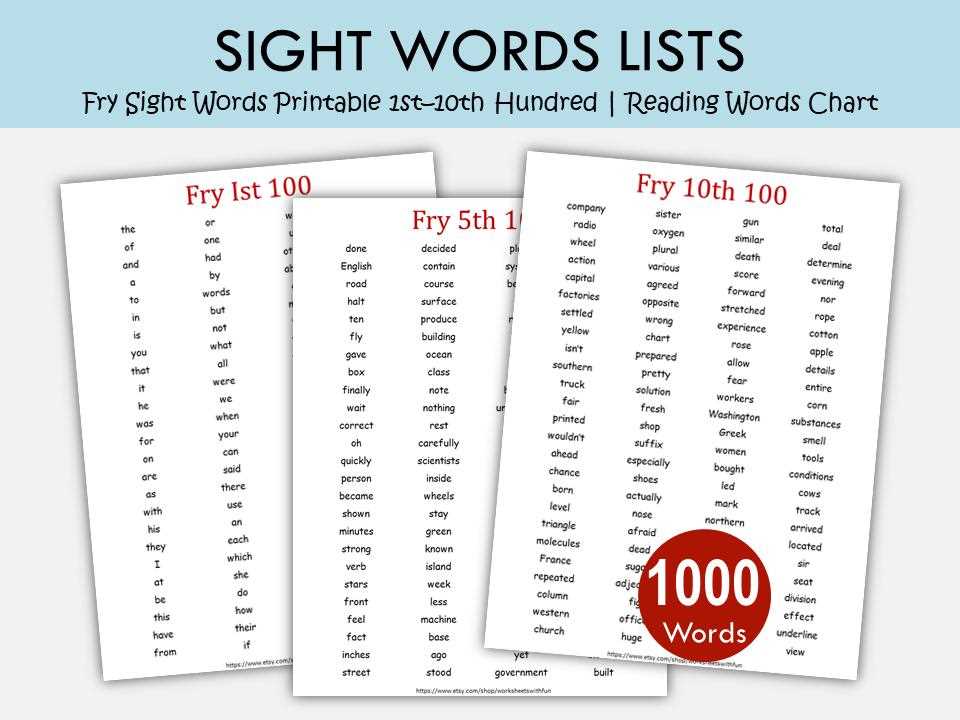
Start by incorporating the most frequently used terms into daily reading sessions. Begin with a small set of the most common terms, and gradually increase the difficulty level as the learner becomes more comfortable with the basics. Regular exposure helps with both recognition and recall, which are key for developing fluency.
Use flashcards to reinforce memory and engage learners. Creating a set of flashcards that display each word can be a great way to practice. Take time to review the terms multiple times during the week, incorporating them into daily reading activities to strengthen word recognition and improve overall reading confidence.
Finally, build practical reading exercises using familiar sentences or stories that include these terms. Create activities like matching words to pictures, identifying words in a short story, or using the words in context. These activities create a deeper connection with the terms and help learners build comprehension skills alongside recognition. Regular practice in this format accelerates reading development and builds a solid foundation for further learning.
Effective Strategies for Teaching Common Vocabulary to Young Learners
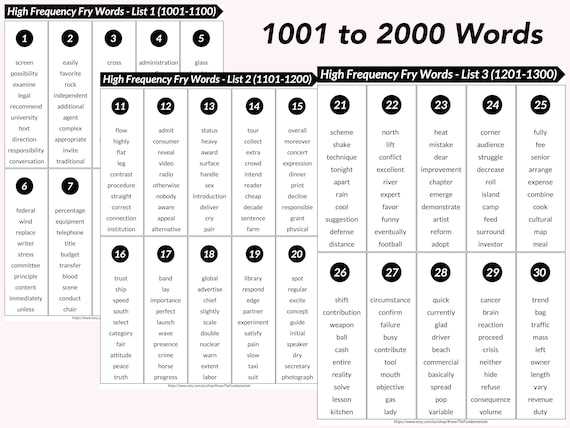
Start with repetition. Children learn best when they are exposed to words multiple times in different contexts. Present a small set of words, and review them consistently through various activities. Flashcards, games, and songs are effective ways to engage young learners and reinforce these terms in a fun and memorable way.
Incorporate visual aids to create stronger associations. Using images, videos, or objects that correspond with each word can help solidify their meaning and make the learning experience more interactive. For example, pair the word with a picture, or use the term in a short sentence and show an image of the scene or action.
Another method is the use of context. Teach words within the context of short phrases or simple sentences. This helps learners understand how words are used in everyday language, and encourages them to recognize words in context rather than just in isolation.
Engage learners with word games. Activities like word hunts, crossword puzzles, or memory matching games keep children excited and challenged while reinforcing the recognition of common words. Make these games part of daily practice to keep the learning process dynamic and enjoyable.
Provide regular practice through reading aloud. Encourage young learners to read stories that use the target words often. Point out these words as they appear in the text, and ask the learner to identify them. This will build both recognition and confidence in using the words in different situations.
Finally, celebrate progress. Rewarding achievements, whether big or small, reinforces positive learning habits and boosts the learner’s confidence. Recognize each milestone, and continue to introduce new words at a manageable pace to maintain enthusiasm and momentum in their learning process.
Resources for Monitoring Vocabulary Mastery
Creating a structured system for tracking vocabulary mastery can greatly enhance the learning process. Start with simple checklists that mark progress for each term learned. These checklists should be divided into manageable sections to ensure students don’t feel overwhelmed, allowing them to see their growth clearly.
Visual aids, such as progress charts, are an excellent tool to track vocabulary acquisition. These charts can be broken down into categories like “Mastered,” “In Progress,” and “To Learn,” which gives both the learner and the instructor a quick overview of the student’s progress. A color-coded system can make it easier to distinguish between these categories.
For more interactive tracking, printable flashcards can be paired with tracking sheets. On the back of each card, students can mark their familiarity level with each word, noting if it’s mastered or still needs work. This method is particularly engaging and offers students a way to actively participate in their learning.
Incorporating quizzes on a regular basis can also help in tracking progress. These quizzes should be designed to test recall and application of the vocabulary in different contexts. Results from these assessments can be recorded in a separate sheet to monitor improvements and identify areas that need additional focus.
Sticker charts or other reward-based systems work well for younger learners. After mastering a group of words, students can place a sticker next to the corresponding words on their tracking sheet. This positive reinforcement encourages continued effort and makes the learning process more enjoyable.
Finally, use periodic assessments that challenge students to recall and apply the terms in different contexts. This will allow you to assess both their retention and comprehension of the vocabulary. Keep track of their performance over time, noting areas that require further reinforcement.